
Table Of Contents
IndiGo
When you think of “indigo,” the first image that often comes to mind is the deep, rich blue sitting between blue and violet in the rainbow.
However, in India, the word instantly evokes something far more modern: the country’s biggest airline.
So how did a low-cost carrier founded less than two decades ago end up with a name that traces its roots back thousands of years to an ancient dye?
The answer is both simple and brilliant.
“IndiGo” = India + Go
The airline’s official name is IndiGo (stylised with a capital “I,” “G,” and “o” in lowercase to emphasize motion).
According to its founders, Rahul Bhatia and Rakesh Gangwal, the name is a deliberate portmanteau of “India” and “Go.”
It was conceived in 2005 as a reflection of their vision: “India on the Go.”
At a time when India’s economy was accelerating, and its middle class was expanding rapidly, the founders wanted a brand that captured the energy, ambition, and restlessness of a nation in motion.
Affordable air travel, they believed, would be the wings that put modern India literally and figuratively “on the go.”
There is no direct connection to the historical indigo dye or the colour itself, despite the happy coincidence that the airline’s distinctive blue livery echoes the very shade that once made India famous across the ancient world.
From 1 Aircraft To India’s Skies
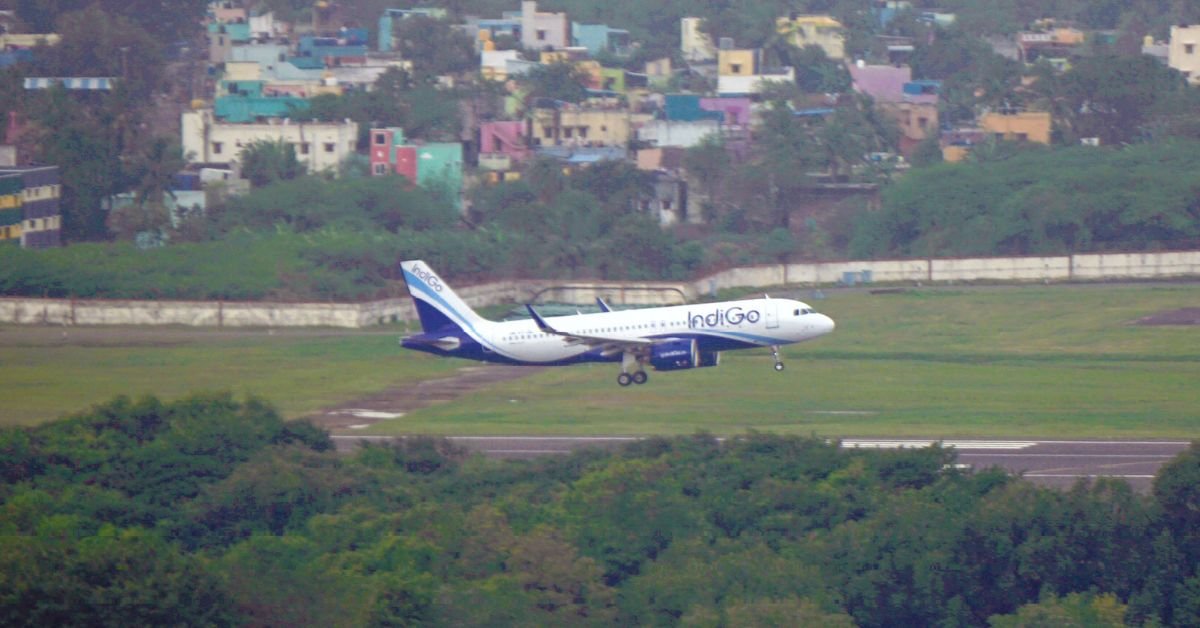
IndiGo took its first flight on 4 August 2006, operating a single leased Airbus A320 from New Delhi to Imphal via Guwahati.
What started as a bold bet, placing an order for 100 Airbus aircraft right from the outset, quickly transformed into one of India’s greatest aviation success stories.
Today, nearly 20 years later:
- IndiGo commands approximately 64% of India’s domestic market share.
- It operates over 2,700 daily flights to 137 destinations (94 domestic + 43 international).
- The fleet consists entirely of fuel-efficient Airbus A320-family aircraft (A320, A321, and ATRs for regional routes), making it one of the world’s largest single-type operators.
- It consistently ranks among the most punctual major airlines globally.
Why The Name Still Feels Perfect
Even though the historical indigo dye and the airline share no etymological link, the name has aged beautifully:
- “Indi” proudly announces its Indian identity.
- “Go” conveys speed, affordability, and accessibility—the core promise of a low-cost carrier.
- The vibrant blue branding is instantly recognisable at airports across the country.
In a poetic twist, the ancient indigo trade once connected India to the world through commerce.
Today, IndiGo connects millions of Indians to the world, and to each other, through the skies.
Next time you spot that familiar blue tailfin at the gate, you will know the story: a modern Indian dream, distilled into six simple letters.
IndiGo. India on the Go.
About Author