
Table Of Contents
The Tragic Incident: A Life Cut Short By Hate
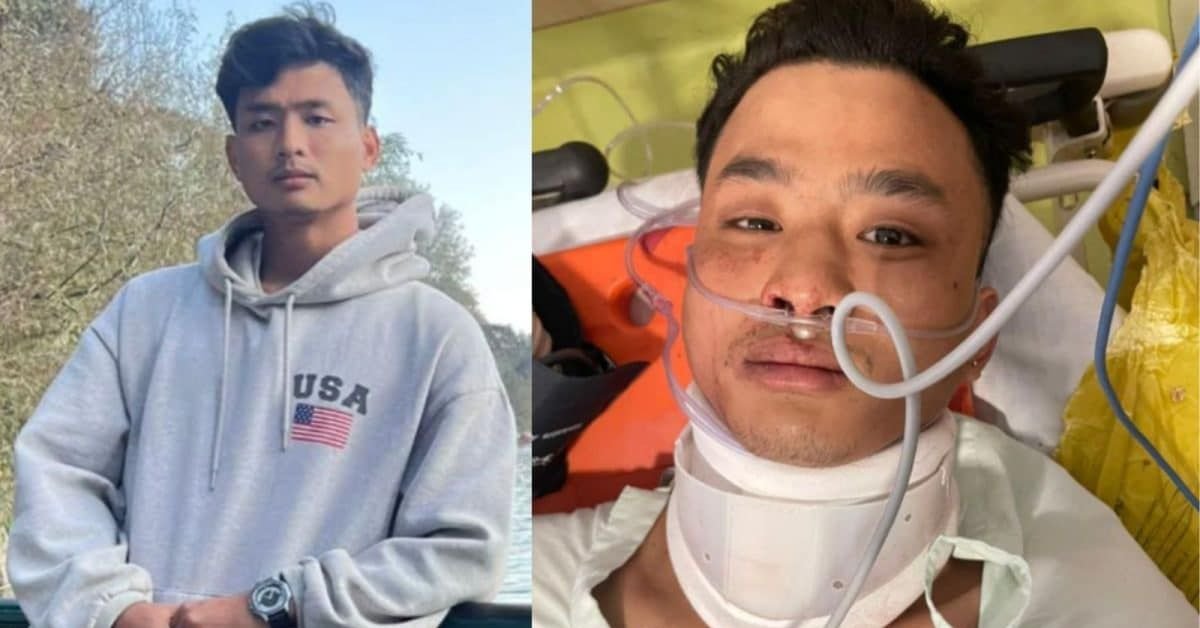
On December 9, 2025, in Dehradun’s Selaqui area, 24-year-old Anjel Chakma, a final-year MBA student from Tripura, and his younger brother Michael were out buying groceries.
A group of six men approached them, hurling racial slurs such as “Chinki,” “Chinese,” and “momo.”
When Anjel calmly responded that they were Indians from Tripura, the situation escalated into violence.
Michael was struck on the head, reportedly with a metal bracelet, while Anjel was stabbed multiple times in the neck, abdomen, and back, causing severe spinal cord damage.
Despite weeks of intensive medical care, Anjel succumbed to his injuries on December 26, 2025.
He was a dedicated student who had secured a job placement, pursued his MBA through an education loan, and came from a family committed to national service; his father is a serving Border Security Force (BSF) jawan.
This was not a simple altercation; it was a racially motivated hate crime that has deeply shaken communities across India.
Persistent Racism Faced By Northeast Indians
People from the Northeast, including the Chakma community in Tripura, often face discrimination when relocating to other parts of India for education or work.
Racial slurs, stereotyping based on physical appearance, and feelings of exclusion are unfortunately common.
In the worst cases, this bias leads to physical violence.
Such incidents reveal a troubling societal challenge: prejudice that treats fellow citizens as outsiders.
While India celebrates unity in diversity, repeated acts of racism erode this core value and hinder the full integration and contributions of Northeast Indians.
Response From Authorities And Society
Uttarakhand Police have upgraded the case to include murder charges.
Five of the six accused, Avinash Negi (25), Suraj Khwas (21), Sumit Kumar (25), Shaurya (18), and Ayush Badoni (18) have been arrested, with the two minors sent to a juvenile facility.
The sixth suspect, Yagya Awasthi, believed to be the main accused, is absconding and is thought to have fled to Nepal.
Police have announced a ₹25,000 reward for information leading to his capture, and a team has been dispatched to trace him.
Uttarakhand Chief Minister Pushkar Singh Dhami has described the incident as “unacceptable,” assured strict action, conveyed condolences to the family, and activated dedicated support cells for Northeast residents in the state.
Leaders from Northeast states, including the chief ministers of Tripura, Assam, and Meghalaya, have strongly condemned the attack.
Anjel’s death has triggered widespread protests, candlelight vigils, and marches in Tripura and beyond.
Student organisations and community leaders are renewing demands for a national law against racial discrimination and hate crimes, a long-standing recommendation following similar past tragedies.
An Interesting Fact About The Chakma Community
The Chakma people follow a rich Theravada Buddhist tradition and are renowned for their traditional weaving skills. Artisans create intricate textiles, such as the pinon (women’s wrap skirt) and khadi, featuring distinctive geometric patterns that reflect centuries-old cultural traditions and contribute to India’s diverse artistic legacy.
Moving Forward: A Call For Reflection And Action
As representatives of THOUSIF Inc. – INDIA, we stand committed to an inclusive nation where every citizen, irrespective of region or ethnicity, enjoys safety, dignity, and equal opportunity.
Anjel Chakma’s untimely death is a profound reminder of the urgent need to address prejudice and strengthen unity.
We advocate for enhanced awareness, robust legal frameworks to combat racism, and proactive measures to foster understanding across communities.
By condemning discrimination, supporting affected families, and promoting cultural exchange, we can honour Anjel’s memory and advance India’s foundational ideals.
About Author