
Table Of Contents
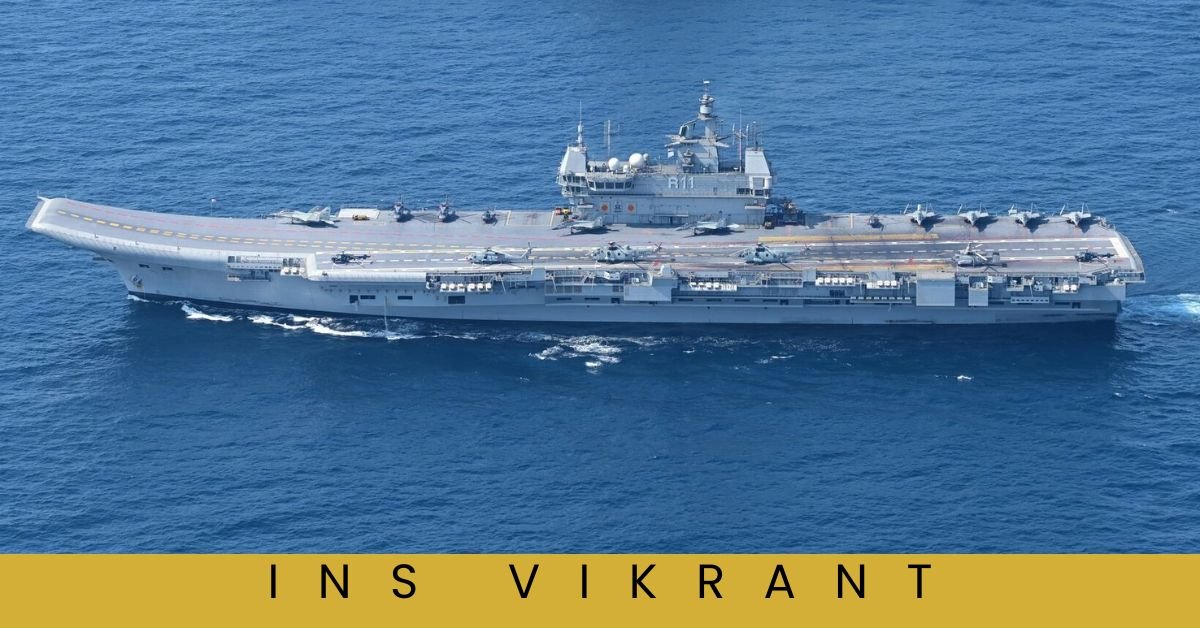
INS Vikrant
Whenever I think about symbols of modern India’s strength and self-reliance, INS Vikrant stands out.
It is not just a warship; it is a remarkable achievement built entirely by Indian talent and determination.
Here at THOUSIF Inc. – INDIA, we love sharing stories of such national milestones, and INS Vikrant truly deserves the spotlight.
In this post, we will cover everything you need to know: what it is, its rich history, key features, capabilities, and why it matters so much to India’s defence.
What Is INS Vikrant?
INS stands for Indian Naval Ship, and “Vikrant” means “courageous” or “victorious” in Sanskrit, a fitting name for this giant.
INS Vikrant is India’s first indigenously designed and built aircraft carrier, the largest warship ever made in the country.
At 262 metres long and displacing around 45,000 tonnes when fully loaded, it functions as a mobile airbase.
It can carry 30–40 aircraft, including MiG-29K fighters, Kamov helicopters, and soon the homegrown Naval Tejas.
With a crew of about 1,600, it has everything needed for long deployments: hospitals, kitchens, power plants, and advanced command centres.
In simple Hindi:
“INS Vikrant kya hai?”
Yeh India ka pehla swadeshi aircraft carrier hai jo samudra mein ladaku vimanon ko le jata hai aur desh ki raksha karta hai.
A Legacy Of Courage
The name Vikrant carries deep history.
India’s first aircraft carrier, also named INS Vikrant, served from 1961 to 1997 and played a decisive role in the 1971 Indo-Pak war.
Stationed in the Bay of Bengal, it launched hundreds of airstrikes that disrupted enemy supply lines and contributed significantly to the liberation of Bangladesh.
Its mere presence restricted Pakistani naval movements.
The new Vikrant honours that legacy while taking India’s naval capabilities to a whole new level, from importing ships to designing and building world-class ones at home.
How It Was Built
Designed by the Indian Navy’s Warship Design Bureau and constructed at Cochin Shipyard Limited in Kochi, Kerala, INS Vikrant was launched in 2013 and commissioned in 2022.
The project cost approximately ₹20,000 crore, but the real value lies in the thousands of jobs created and the boost to the Indian industry.
Over 76% of its components, from steel to radars and propulsion systems, are indigenous.
Powered by four gas turbines, it reaches speeds of 28 knots (over 50 km/h) and can operate for thousands of kilometres without refuelling.
How Powerful Is INS Vikrant?
This STOBAR (Short Take-Off But Arrested Recovery) carrier uses a ski-jump ramp for launches and arrestor wires for landings.
It is equipped with cutting-edge sensors, Barak-8 missile defence systems, and advanced radars.
Typical air wing:
- 26–30 fighter jets (currently MiG-29K, transitioning to indigenous aircraft)
- 10–12 helicopters for anti-submarine warfare, search-and-rescue, and more
It operates as the centrepiece of a carrier battle group, coordinating seamlessly with destroyers, frigates, and submarines.
INS Vikrant vs INS Vikramaditya: Quick Comparison
India operates two aircraft carriers.
Here is how they compare:
| Feature | INS Vikrant | INS Vikramaditya |
|---|---|---|
| Origin | Fully indigenous (India) | Modified from Russia |
| Commissioned | 2022 | 2013 |
| Displacement | ~45,000 tonnes | ~44,500 tonnes |
| Length | 262 metres | 284 metres |
| Aircraft Capacity | 30–40 | 30–36 |
| Indigenous Content | Over 76% | Primarily foreign systems |
| Key Advantage | Modern, lower maintenance | Proven operational experience |
Both are formidable, but Vikrant represents India’s push toward complete self-reliance.
Current Operational Status
INS Vikrant is fully operational and forms a core part of the Indian Navy’s blue-water fleet.
It regularly conducts deployments across the Indian Ocean and Arabian Sea, participates in multinational exercises, and strengthens India’s maritime security.
Having two active carrier battle groups places India among a select group of nations with such capability.
Fun Trivia
Did you know the original INS Vikrant was so feared during the 1971 war that Pakistan deployed a submarine specifically to hunt it? However, did Indian forces successfully protect the carrier throughout the conflict?
Another impressive fact: The flight deck of the current INS Vikrant is larger than two full-size football fields combined.
Final Thoughts
INS Vikrant is more than a ship; it is a powerful symbol of India’s innovation, resolve, and growing global stature.
From its heroic predecessor in 1971 to this modern marvel, the Vikrant name embodies victory and pride.
At THOUSIF Inc. – INDIA, we are proud to highlight achievements that make our nation stronger.
If this post inspired you, explore our other articles on Indian technology, defence, and innovation.
We would love to hear your thoughts in the comments!
Jai Hind!
About Author