
Table Of Contents
In Odisha, a man walked into his local bank branch one morning carrying his deceased sister’s skeletal remains.
He needed ₹15,000 from her account to pay for her funeral.
He had tried navigating the paperwork before and failed.
Nobody had explained the process to him, and he had no one to help him navigate a system that was technically designed to serve him but, in practice, built for someone else entirely.
So he brought his sister with him.
As proof.
As a last resort.
That story traveled across India in a matter of hours.
It went viral not because it was shocking but because it was familiar.
Millions of Indians recognized the feeling behind it immediately, not necessarily from their own experience, but from their parents’, their neighbors’, their local vegetable vendor’s.
The formal banking system, for a very large portion of this country, is something you endure rather than something you trust.
Everything that follows connects back to that.
The Number Everyone Is Misreading
In a single fortnight in April 2026, Indians withdrew ₹61,000 crore from the banking system.
Total cash in circulation crossed ₹42.3 lakh crore, a record and the highest figure India has seen since demonetization in November 2016.
The year-on-year growth rate hit 11.8 percent, the sharpest spike since early 2017.
Every headline framed this as a paradox.
India processes 46 percent of the world’s real-time digital transactions.
UPI handles billions of payments every month.
How can the most digitally advanced payments economy on earth simultaneously be hoarding physical cash at historic levels?
The answer, once you see it clearly, is not a paradox at all.
It is a consequence.
India did not build a digital payments system and watch cash disappear.
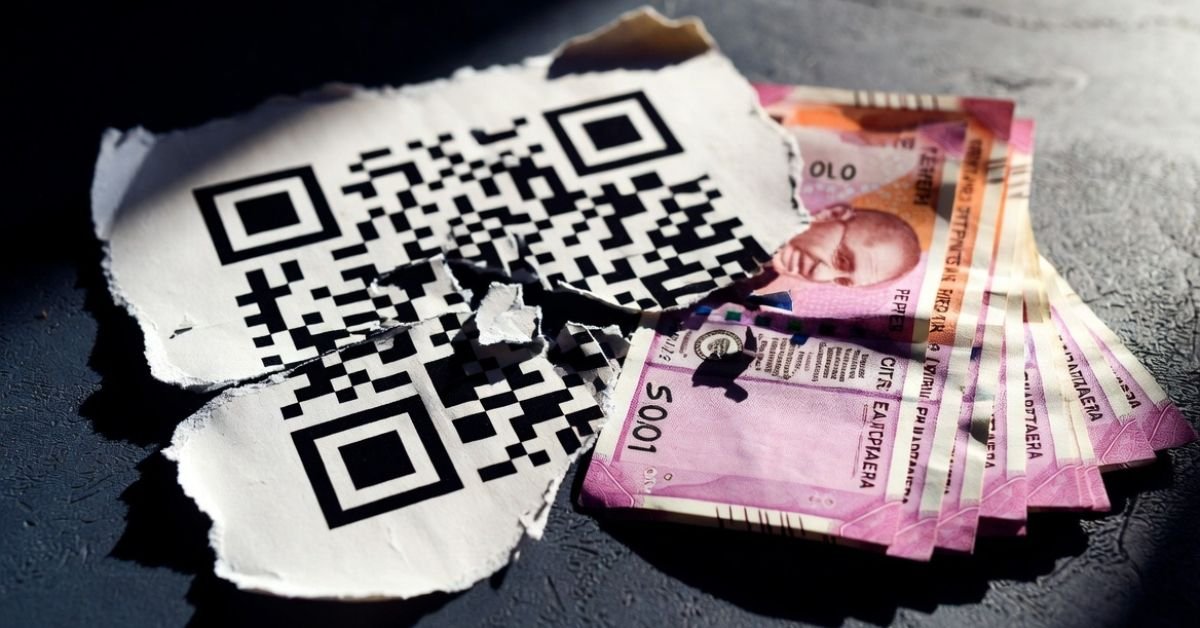
India built a digital payments system, used the data it generated to send tax notices to vegetable vendors, and then watched those vendors tear down their QR codes and return to cash.
The system worked exactly as designed.
The consequences were never thought through.
The Moment Digital India Turned On Its Own Users
In mid-2025, the Karnataka Commercial Taxes Department made a decision that looked entirely reasonable on paper.
They had access to UPI transaction data.
They used it to identify traders whose annual inflows had exceeded the mandatory GST registration threshold, set at ₹40 lakh for goods and ₹20 lakh for services under Indian law.
They sent out approximately 9,000 notices covering around 18,000 instances.
From a compliance standpoint, it was a straightforward exercise.
Then the notices arrived.
Shankargouda Hadimani, a 48-year-old vegetable vendor in Haveri, received a ₹29 lakh demand.
The department’s data showed ₹1.63 crore passing through his UPI account over four years.
What the data could not see, because nobody had programmed it to look, was that Shankargouda sold onions, tomatoes, and spinach.
Vegetables.
Goods are entirely exempt from GST regardless of turnover.
His ₹1.63 crore was not taxable revenue.
It was four years of ₹30 and ₹50 transactions from customers buying dinner ingredients on their way home from work.
He was not a tax evader.
He was a vegetable vendor who had done exactly what the government asked him to do.
He had gone digital.
He had put up the QR code.
He had participated in the formal economy.
Moreover, the formal economy responded by sending him a ₹29 lakh notice.
Across Karnataka, the reaction was immediate.
Traders in Bengaluru, Mysuru, and Davanagere pulled down their QR codes.
Markets that had gone cashless put up “Cash Only” signs.
A full UPI boycott was called.
The Chief Minister eventually intervened, clarified that notices were inquiries rather than final demands, and waived arrears for traders willing to register going forward.
However, that is not the point.
The point is what those traders learned.
They learned that going digital made them visible.
Moreover, being visible made them vulnerable.
Cash made them invisible.
Moreover, invisibility in a system they could not trust or navigate felt like the only rational choice available to them.
This is not de-formalization caused by ignorance.
This is the de-formalization caused by experience.
Those traders understood the system perfectly.
That is precisely why they left it.
The Distrust That Was Already There
The Karnataka episode did not create India’s distrust of formal institutions.
It confirmed what millions of people already believed.
India has one of the lowest levels of institutional trust among major economies.
Not trust in people; Indians are famously warm and community-oriented.
Trust in systems, in processes, in the idea that a formal institution will treat you fairly when things go wrong.
That distrust has been earned over decades, through bank branches that closed before the queue moved, through forms demanding documents ordinary people do not possess, through a demonetization in 2016 that removed 86 percent of the currency in circulation overnight, and through asking over a billion people to trust that the formal system would sort itself out.
Add to this the quiet mathematics of savings accounts.
When interest rates on deposits run below actual inflation, as they have for extended periods in India, keeping money in a bank account means watching your savings lose purchasing power in real terms.
When the gold your family bought years ago has multiplied by three to four times in value while your savings account earned 3.5 percent annually, the logic of formal saving becomes genuinely difficult to argue with.
MCX gold touched ₹1,93,096 per 10 grams at its 2026 peak.
Families that sold and pocketed those profits kept the proceeds as cash, not because they were financially unsophisticated, but because cash felt safer than a deposit in an institution they did not fully trust.
Economists call this precautionary demand.
That label makes it sound like an irrational quirk.
It is neither irrational nor a quirk.
It is the entirely logical behavior of people who have learned, through direct experience, that formal institutions are not reliably on their side.
The Other Forces At Work
Two additional pressures are worth understanding, though neither sits at the heart of this story the way distrust does.
Indian elections, at every level, consume enormous amounts of physical cash.
Transport, booth management, rally logistics, and voter mobilization in remote constituencies cannot be conducted through UPI because it creates a record that is sent to the Election Commission.
Cash leaves the banking system before every election and does not return through formal channels after results are declared.
As long as elections are financed the way they currently are, this will remain a structural feature of India’s cash demand.
Rural India is also spending more.
After a period of subdued consumption, agricultural incomes are recovering, and government transfer programs are putting money into the hands of people who had very little before.
Rural markets, weekly haats, local input suppliers, and daily wage transactions still primarily rely on cash because it is the only system that works reliably and universally in those environments.
As rural incomes grow, cash demand grows with them.
This is the one genuinely healthy component of the current surge: people at the bottom of the income pyramid are earning and spending more.
The fact that they do it in cash is a reality to be accommodated, not a problem to be corrected.
What It Does To Your EMI
All of this has a direct consequence for anyone who borrows money in India.
Banks need deposits to make loans.
When cash leaves the banking system at scale, banks face a liquidity squeeze and borrow from costlier sources to fund their loan books.
That cost is passed on to borrowers.
Major Indian banks have seen their credit-to-deposit ratios climb above 80 percent during periods of elevated cash outflows, meaning withdrawals are outpacing deposits at a rate that puts genuine pressure on lending capacity.
The chain that follows is mechanical.
Lending costs rise; home and car loan rates follow; fewer people borrow; real estate slows; construction falls; and employment in those sectors contracts.
If you have a floating-rate home loan, periods of elevated cash outflows from the banking system are worth watching closely.
UPI Is Not Losing. The Promise Behind It Is.
UPI itself is not in trouble.
Billions of transactions flow through it every month, and that number continues to grow.
The technology works.
The adoption is real.
What is in trouble is the trust that was supposed to flow from digital adoption into the broader formal financial system.
The implicit promise of Digital India was straightforward: go digital, become visible, and the system will reward you.
The Karnataka episode publicly and loudly broke that promise.
The lesson that spread through every market and every trade association was simple and devastating: being seen by the system is dangerous.
Fixing that does not require a better app, faster servers, or wider network coverage.
It requires the government, the tax authorities, and the banking system to demonstrate, through consistent and fair behavior sustained over years, that visibility in the formal economy is genuinely safe.
That the data generated by digital transactions will be used to help people, not to trap them.
Until that demonstration is made convincingly, cash will remain the rational choice for a very large number of Indians.
Not because they fear technology.
Because they have learned, through direct experience, to be careful about what technology reveals about them to people who hold power over their lives.
The Honest Takeaway
India’s cash surge is not a story about technology failing.
It is a story about trust failing.
The country built a payments infrastructure that is genuinely world-class and then operated it in ways that made the most vulnerable users feel exposed and punished.
The vegetable vendor who tore down his QR code was not rejecting modernity.
He was protecting himself from a system that had demonstrated it could not be trusted with the information he gave it.
Cash is not the enemy of Digital India.
Distrust is.
Moreover, distrust cannot be updated overnight, unlike a payments app.
About Author