
Table Of Contents
A Single Question That Traveled Around the World
On 19 May 2026, a 28-year-old reporter in Oslo asked one question.
That question reached India before her lunch did.
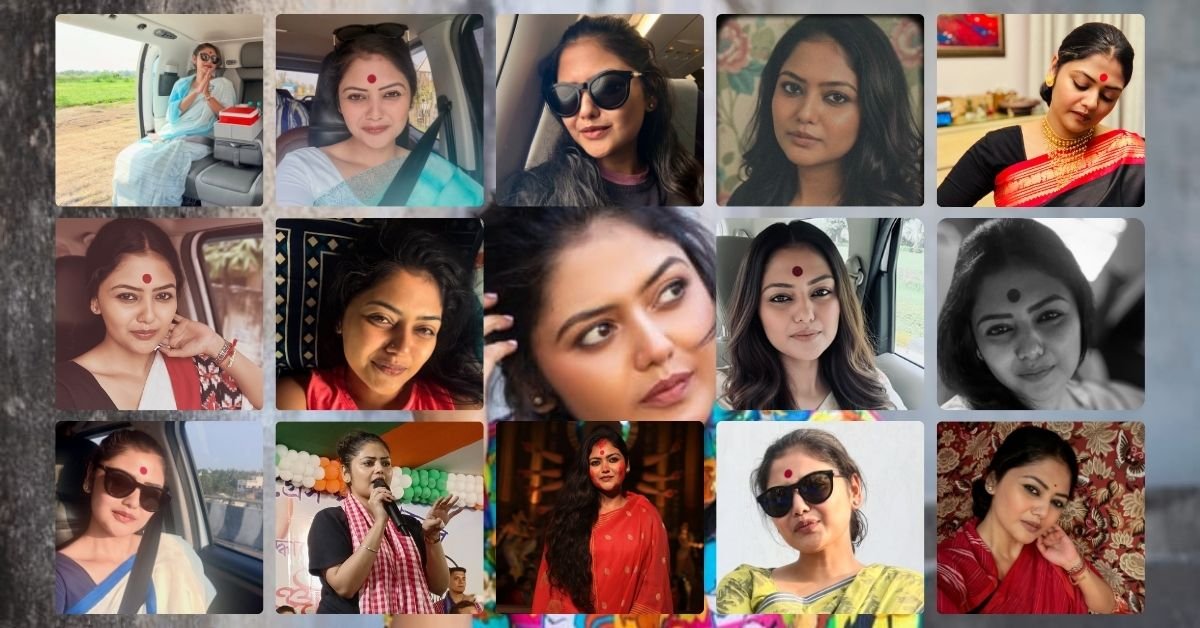
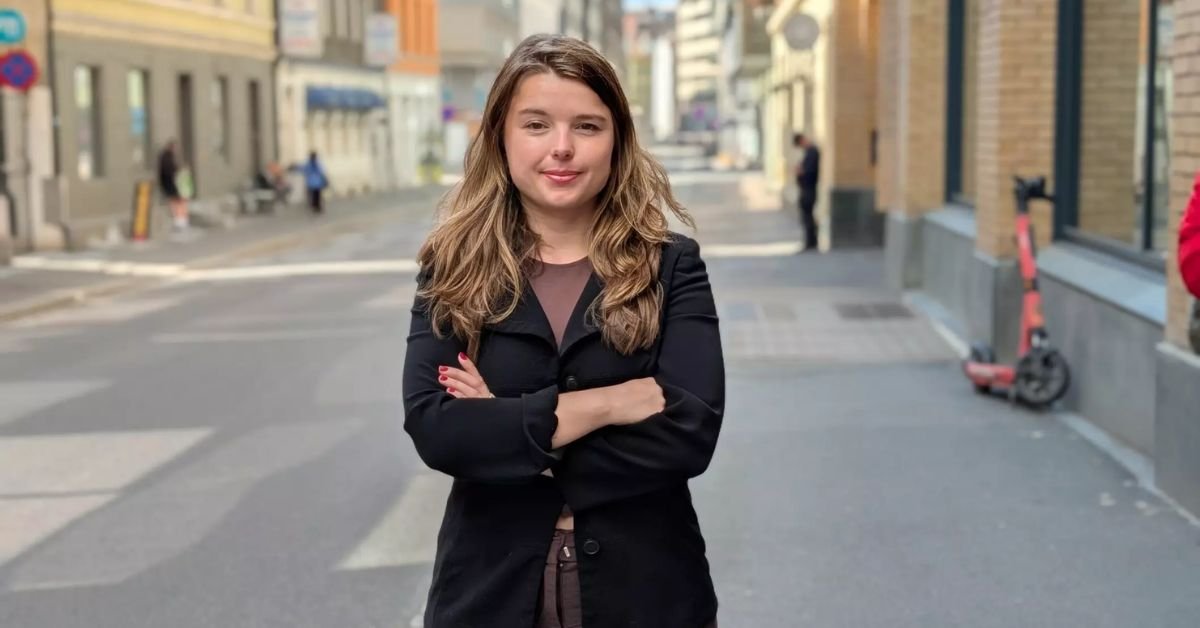
The reporter was Helle Lyng Svendsen, a journalist and commentator with the Norwegian daily Dagsavisen.
The setting was a joint press appearance between Indian Prime Minister Narendra Modi and Norwegian Prime Minister Jonas Gahr Støre.
The two leaders had read out their joint statement and were walking off the dais without taking questions.
Lyng called out from the press gallery.
She asked Modi why he would not take questions from what she described as the world’s freest press.
Neither leader responded.
They kept walking.
However, the 16-second clip of that moment did not stop walking.
It traveled across X, TikTok, Instagram, and Indian prime-time television in a matter of hours.
By the next morning, Helle Lyng was the most talked-about journalist in two countries that had barely exchanged a press release until then.
This is the full story of who she is, where she came from, what actually happened that day, and how two very different press cultures reacted to the same 16 seconds of video.
Quick Facts About Helle Lyng
| Detail | Information |
|---|---|
| Full name | Helle Lyng Svendsen |
| Age at time of viral moment | 28 |
| Nationality | Norwegian |
| Based in | Oslo, Norway (previously North Carolina, USA) |
| Current role | Commentator, Dagsavisen |
| Previous role | US Correspondent, Nettavisen |
| Education | Master’s in Political Communication, University of Amsterdam |
| Earlier degree | Bachelor’s in Economics |
| Languages | Norwegian, English |
| Date of viral moment | 19 May 2026 |
| Location | Oslo, Norway |
Early Life And Roots In Norway
Helle Lyng Svendsen grew up in Norway.
Public details about her childhood and family are limited, which is typical for working journalists in Scandinavia, who tend to keep their personal lives private until something pushes them into the spotlight.
What we do know is that she grew up in a society that takes press freedom seriously.
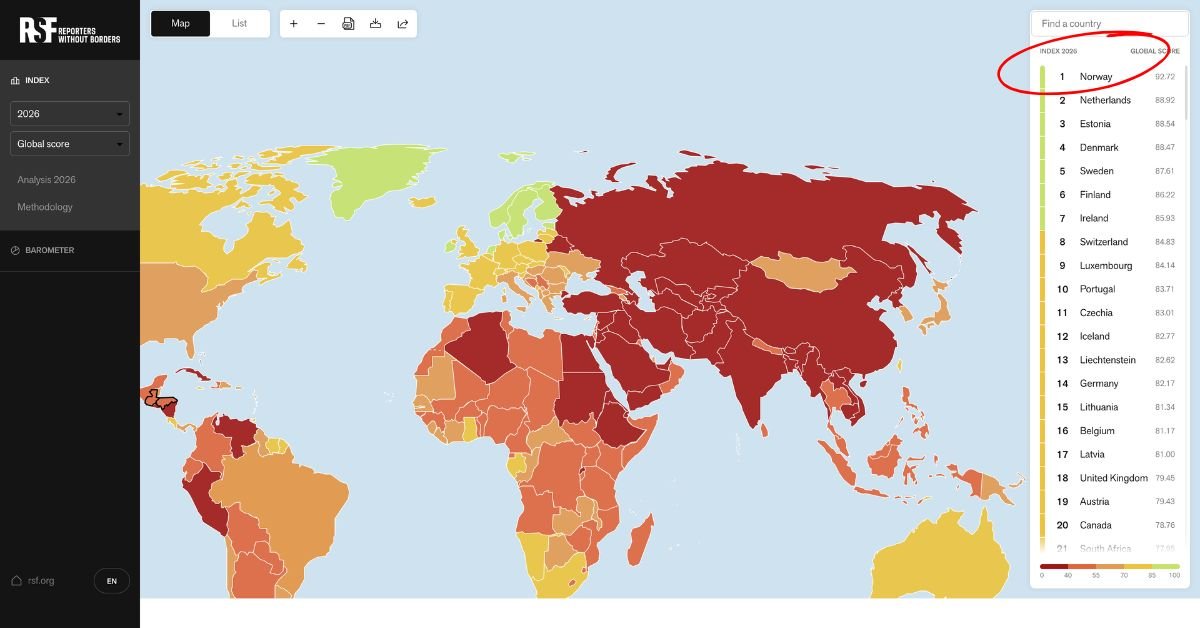
Norway ranks first on the World Press Freedom Index.
It has held that position year after year.
Norwegian schools teach civics with a strong emphasis on accountability, debate, and the media’s role in keeping leaders honest.
Reporters in Oslo can walk up to a sitting cabinet minister at a tram stop and ask a follow-up question on yesterday’s policy.
Nobody finds this strange.
This is the world Helle Lyng was raised in.
Her early years gave her two things that would later matter.
The first was a sense that questioning power is part of the job, not an act of rudeness.
The second was a quiet familiarity with authority figures, which is something many Scandinavian children pick up before they finish school.
Politicians in Norway are not treated as untouchable.
They are public servants who happen to hold office for now.
Whether these cultural assumptions are universally good or universally bad is a separate debate.
What matters for understanding Lyng is that they shaped how she sees her own work.
A Year In The American South
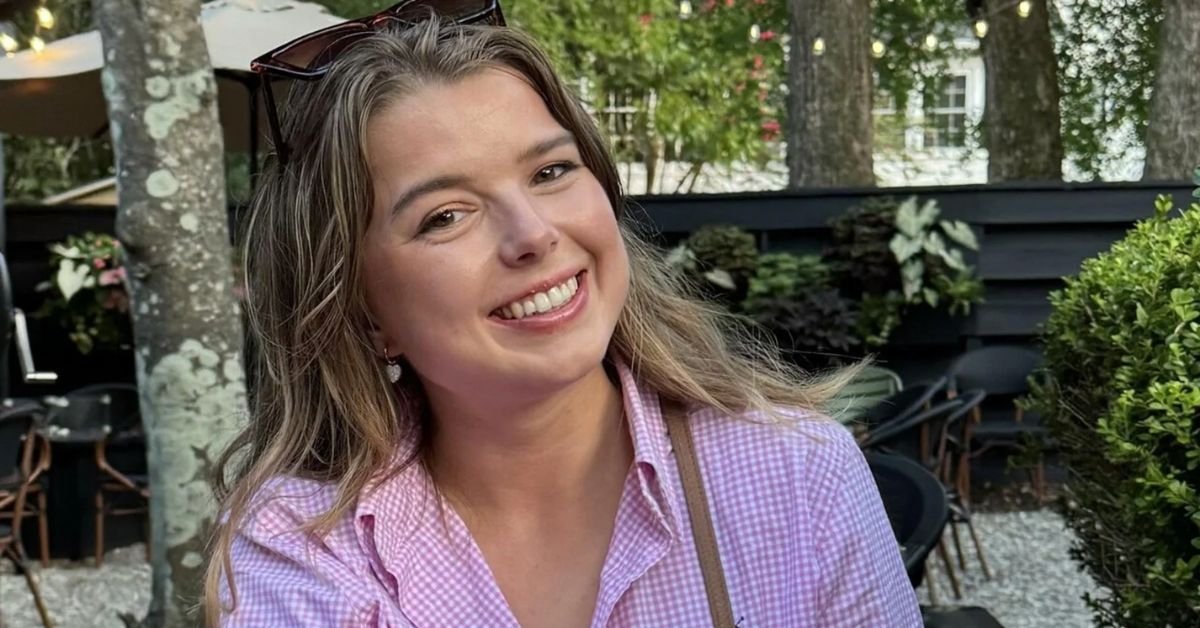
During the 2014 to 2015 school year, Helle Lyng went to the United States as an exchange student.
She landed in North Carolina.
For a Norwegian teenager, the American South is a different planet.
Different food.
Different politics.
Different relationships between citizens and authority.
Different church culture.
Different small talk.
She stayed long enough to make friends, learn the rhythms of life in a southern town, and develop fluency in American English that would later shape her career.
The experience clearly left a mark.
She returned to North Carolina years later as a working journalist, by her own account, treating it like a place she already understood.
That exchange year is more important to her story than it looks at first glance.
It gave her two career pillars at once.
A grounded view of the United States that few of her Norwegian peers had.
Moreover, her familiarity with American culture would later make her the natural choice when Nettavisen needed a US correspondent for the 2024 election cycle.
It also gave her something less visible.
A sense of how big a country can be, and how different press cultures can look across borders.
Anyone who spends a year in a small southern American town quickly learns that not every democracy treats media the way Norway does.
Even within the United States, the relationship between local press and local power varies block by block.
That cross-cultural sensitivity would come back into play later.
University In Amsterdam
After finishing high school in Norway, Helle Lyng pursued higher education.
She earned a bachelor’s degree in economics.
This is an unusual starting point for a future political reporter.
Most journalists in Norway come up through media studies or social science.
Economics gives a different toolkit.
It teaches you to read budgets, understand markets, and follow money.
It also teaches you to be patient with numbers, which is a useful trait for anyone covering policy.
She then pursued a master’s degree in political communication at the University of Amsterdam.
This is the part of her resume that actually explains the Oslo moment.
Political communication, as a field, studies how power talks to the public.
It looks at press conferences, campaign messaging, media framing, and the relationship between governments and journalists.
The University of Amsterdam is one of the most respected places in Europe to study this subject.
Students who graduate from that program leave with a sharp eye for how leaders use language to control what gets reported.
Helle Lyng entered the Oslo press gallery on 19 May 2026 with that exact training in mind.
She knew what a controlled press event looked like.
She knew what it meant when leaders left a podium without taking questions.
Moreover, she had a vocabulary, drawn from her academic work, to name and explain that absence in real time.
How a reader judges her actions on the day depends on whether she sees that training as preparation or as ammunition.
Both readings are honest.
Joining Nettavisen And Finding Her Beat
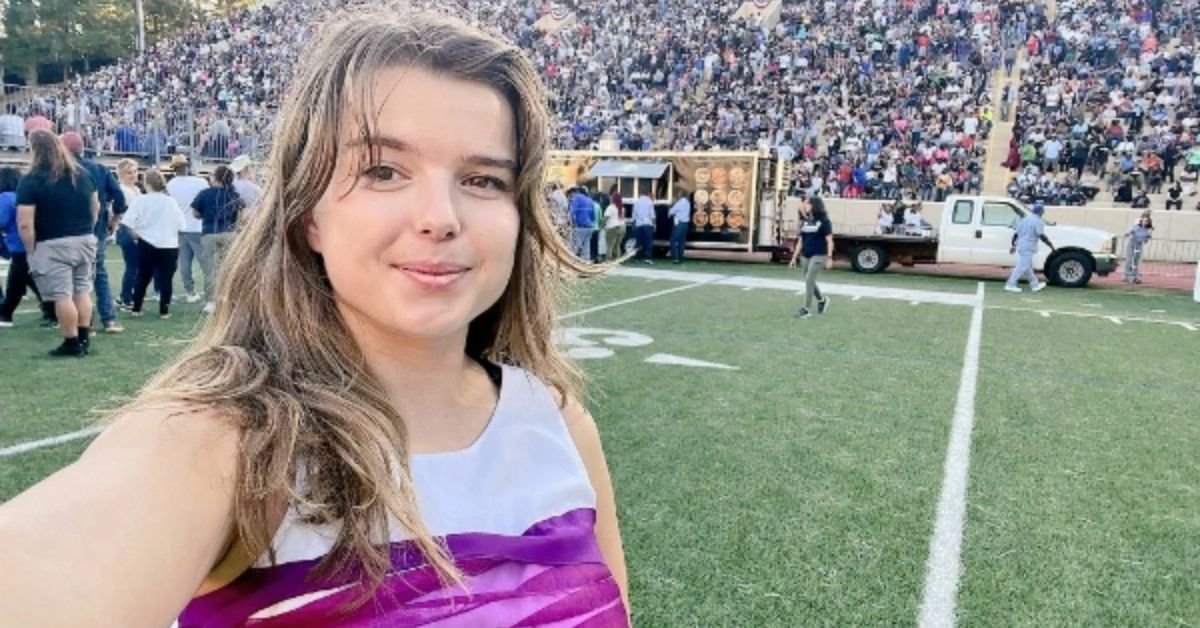
Lyng joined the newsroom at Nettavisen in 2021.
Nettavisen is one of Norway’s largest online newspapers.
It runs on a fast, digital-first model.
Reporters there cover politics, business, and breaking news for a national readership that has moved almost entirely online.
By 2022, she was a full-time economics journalist at the publication.
Her work covered the Norwegian sovereign wealth fund (often called the Oil Fund), wage negotiations, market scenarios, and the everyday questions ordinary Norwegians have about their savings and salaries.
She wrote in a clear, direct style that made complicated financial topics easy to follow.
A few patterns are worth noting from this period.
She had a talent for translating numbers into stories.
When the Oil Fund presented scenarios in early 2024 suggesting the fund could fall by 20-37 percent under different stress conditions, she pulled that out.
She explained what it meant for ordinary Norwegian households.
That is harder than it sounds.
Most economics writers either oversimplify or hide behind jargon.
She did neither.
She also wrote about labor and tariff agreements in Norway, including coverage of how a large share of Norwegian workers fall outside collective bargaining and miss out on annual wage settlements.
This kind of reporting requires a working knowledge of both economics and Norwegian labor culture.
She had both.
By the time she had been at Nettavisen for three years, the newsroom had a clear idea of what she could do.
Becoming Nettavisen’s US Correspondent
In February 2024, Nettavisen announced that Helle Lyng Svendsen would be the publication’s new United States correspondent.
She was 26 years old.
The posting was timed for the 2024 US presidential election cycle.
She would replace Morten Karlsen, who had spent four years as the publication’s US-based reporter.
Lyng would be based in North Carolina, the same region where she had been an exchange student a decade earlier.
In her statement to the company at the time, she described it as a dream that was coming true.
She also talked about getting back in touch with local people in the southern United States, listening to how the election was shaping their lives, and reporting on the challenges they faced.
This is a small detail, but it matters.
Many foreign correspondents land in the United States and stick to Washington, New York, or California.
They cover the country from the coasts.
Lyng chose a base in the South, where rural and small-town life is shaped by issues that rarely make it into European coverage of America.
For about two years, she reported from there.
Her work touched on the 2024 election, daily life in southern states, and the wider shifts in American politics that mattered to a Norwegian audience.
Her coverage from that period has come under closer review since the Modi moment.
Critics in the Indian media have pointed out that several of her US-based articles were sharply critical of the Trump administration.
At the same time, a few of her pieces carried a more positive framing of China and President Xi Jinping.
She has also written critical pieces about Elon Musk and Tesla.
Whether this represents a balanced editorial worldview or a particular ideological slant is a fair question, and her readers can judge for themselves by reading the work directly.
What is not in dispute is that she was a working correspondent with an opinionated style, well before the Oslo event.
By 2026, she had moved back to Norway and taken up a new role.
Moving To Dagsavisen As A Commentator
Sometime in early 2026, Helle Lyng joined Dagsavisen as a commentator.
The shift from staff reporter at a large digital newspaper to commentator at a smaller, opinion-focused daily is a significant role change.
Reporters cover the news.
Commentators argue about it.
Reporters chase facts.
Commentators chase meaning.
To understand the move, you have to understand Dagsavisen.
A Brief Look At Dagsavisen
Dagsavisen is a daily newspaper based in Oslo.
It was founded in 1884 under the name Vort Arbeide.
For most of the 20th century, it was called Arbeiderbladet and served as the official party organ of the Norwegian Labor Party.
The formal political ties loosened gradually from 1975 to 1999.
In 1997, the paper took its current name, Dagsavisen, which means “The Daily Newspaper.”
It is no longer a party paper.
It is now, in part, indirectly owned by Christian groups through Mentor Medier, the same company that owns the Christian daily Vårt Land.
The newspaper also receives support from the Norwegian government, a system known as press support, which exists to keep smaller and politically diverse voices alive in the Norwegian media market.
Dagsavisen has a circulation of fewer than 14,000 in its most recent counts.
It is not one of the giants like Aftenposten or Verdens Gang.
However, it is respected, opinionated, and read closely in Norwegian political and cultural circles.
Indian commentators have pointed out the paper’s historical Labor Party roots as relevant context.
That observation is fair, though it is worth noting that those formal party ties ended more than 25 years ago, and that Dagsavisen today operates as an independent left-leaning publication rather than a party organ.
A commentator’s role at Dagsavisen means you are paid to have views, defend them, and engage with the political moment.
This is the platform Helle Lyng stepped onto.
The Modi Visit And The Question Heard Across Two Countries
To understand what happened in Oslo on 19 May 2026, you need to understand the wider context of the visit.
Indian Prime Minister Narendra Modi was on a five-nation tour.
Norway was his fourth stop.
His arrival in Oslo was historic.
It was the first visit to Norway by an Indian prime minister in 43 years.
The two countries upgraded their relationship to a Green Strategic Partnership during the trip.
A trade and economic partnership agreement under the India-EFTA framework was also being celebrated, with investment commitments totaling 100 billion US dollars over 15 years.
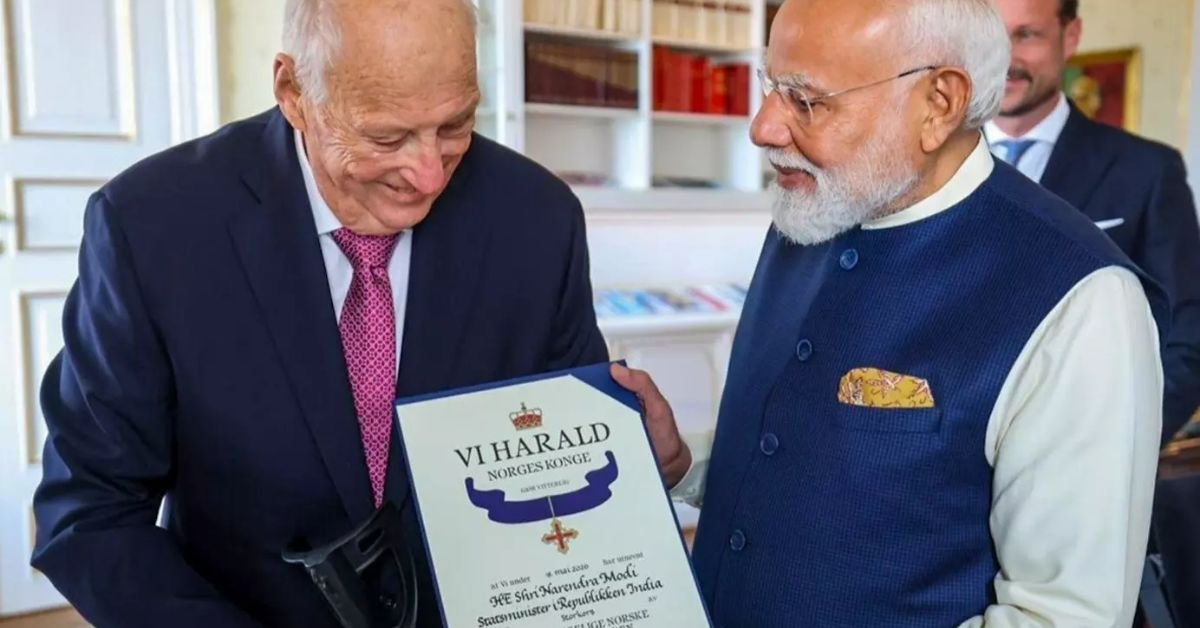
Modi was awarded Norway’s highest civilian honor during the visit, which he used to highlight what he called India’s rapid transformation.
For Norway, it was a significant diplomatic event.
For India, it was an opportunity to show that the country had global reach beyond the usual G7 and G20 capitals.
A joint press briefing was scheduled with PM Modi and Norwegian PM Jonas Gahr Støre.
This is where the two press cultures collided.
Two Different Press Cultures In The Same Room
In Norway, journalists expect a question-and-answer session at events like this.
It is standard.
Joint statements without questions are viewed as an interruption of the democratic process.
In India, joint statements during foreign visits are often read out without reporters asking follow-up questions.
This is treated as a protocol choice, not an attempt to dodge accountability.
Bilateral joint statements are coordinated between two governments, and unscripted questions can complicate carefully negotiated language.
Both views have an internal logic.
Neither side was prepared for what happened next.
The Question
The leaders delivered their statements and turned to leave.
Helle Lyng called out from the press gallery.
Why don’t you take some questions from the freest press in the world?
Modi and Støre kept walking.
The clip lasted 16 seconds.
By the time it reached Indian social media, it had ceased to be a clip.
It had become a national argument.
The MEA Press Briefing
The Indian embassy in Oslo did something unusual.
It invited Helle Lyng to attend an official press briefing later that day.
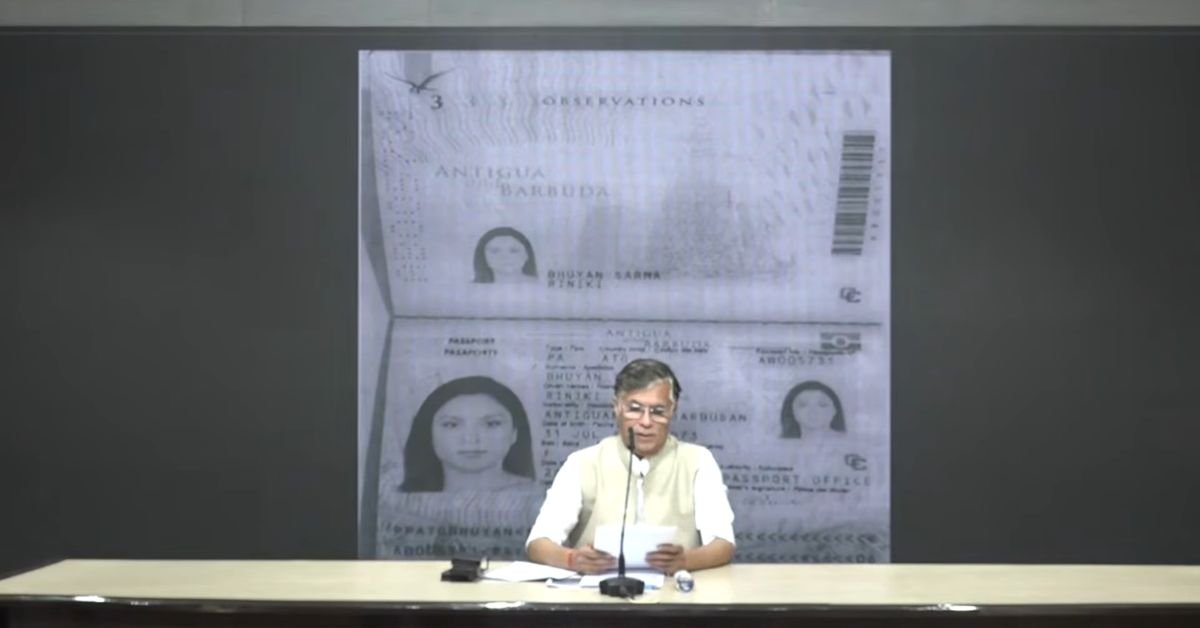
The briefing was led by Sibi George, India’s Secretary (West) at the Ministry of External Affairs, who also serves as the Indian ambassador to Norway.
Lyng attended.
She did not soften her tone.
She raised questions about India’s credibility, its human rights record, and the state of press freedom.
Sibi George responded at length.
What Sibi George Actually Said
His reply lasted nearly 17 minutes and is worth taking seriously because it represented the official Indian response to the line of questioning.
Sibi George made several arguments.
He defended India as the world’s largest democracy, with a population of more than 1.4 billion people.
He argued that a country of that size, with that level of complexity, cannot be judged accurately through what he called reports from ignorant and godforsaken NGOs that have no real understanding of India’s scale.
He pointed to India’s constitution, its judiciary, and its system of regular free and fair elections.
He noted that Indian voters have repeatedly changed governments at the ballot box, which is the working definition of a functioning democracy.
He spoke about India’s civilizational depth, including the country’s contributions in areas like yoga, chess, and global health diplomacy during the Covid pandemic.
He framed India not as a country that needed lectures on values, but as one of the world’s oldest continuous civilizations now finding its place in the modern global order.
He also pushed back on the framing of the question itself.
He argued that judging India’s press freedom through a single ranking compiled by a Paris-based organization, without engaging with the actual texture of Indian media life, was unfair.
India has thousands of newspapers, hundreds of television channels, and active opposition voices across the political spectrum.
Whatever the rankings say, the lived reality of Indian media is louder and more crowded than the numbers suggest.
At one point during the exchange, Lyng tried to interrupt.
George asked her not to.
He reminded her that it was his press conference and that he would finish his answer.
At another point, she walked out of the briefing.
She returned later.
Both Sides Of That Briefing
How a reader interprets that exchange depends largely on which side of the room they were standing.
To Lyng’s supporters, she had used a rare opportunity to raise serious questions about human rights and press freedom directly with a senior diplomat.
To Sibi George’s supporters, she had behaved as if she were the official, lecturing him in his own press briefing on his country’s record.
To neutral observers, the exchange was an honest collision of two very different views of what journalism is for.
In Norway, it is interruptive and direct.
In India, formal press briefings are usually more structured, and interrupting a senior official is read as disrespectful regardless of intent.
Neither side fully understood the other.
The full exchange ran for hours across Indian television channels and was clipped and reshared on every major social media platform.
How Norway Saw The Moment
In Norway, the moment was largely uncontroversial.
Lyng’s intervention matched what most Norwegian reporters would consider normal practice.
Leaders walking off a podium without taking questions is exactly the kind of situation a journalist is expected to interrupt.
The country ranks first on the World Press Freedom Index, and that ranking comes with a working culture of direct, sometimes confrontational, journalism.
Norwegian media professionals largely backed her.
She herself summed up the principle in a short post.
Questioning world leaders is the job.
Most editors in Oslo would agree with that line, even if some would have preferred the question be framed less pointedly.
Norway also has internal debates about media tone, especially when foreign leaders visit.
However, the underlying principle, that journalists should ask, was not in dispute.
How India Saw The Moment
In India, the response was far more divided.
Supporters of the ruling party argued that bilateral joint statements follow a fixed format that does not include a question-and-answer session, and that Lyng had broken protocol by shouting from the gallery.
They saw the moment as a deliberate disruption of a carefully coordinated diplomatic event, not as a routine act of journalism.
Many also questioned the framing.
The phrase “the freest press in the world” was viewed as a swipe at India rather than a neutral description of Norway.
To Indian readers, it carried the tone of a lecture from a small European country to a large Asian one.
Some commentators noted that India’s media landscape, while imperfect, is among the largest and noisiest in the world, with thousands of publications, dozens of languages, and a vigorous opposition press.
Opposition leaders in India, including Rahul Gandhi and Mahua Moitra, used the moment to question Modi’s general avoidance of press conferences and open interviews at home.
On social media, the reaction was rough.
Lyng was accused of being a foreign asset, a spy, a Chinese plant, and several other things.
Her X account, which had under 1,300 followers before the visit, climbed past 20,000 within 24 hours.
Her past social media activity, including a verified X badge that she had paid for just days earlier, was scanned for clues.
She responded directly.
I never thought I would have to write this, but I am not a foreign spy of any sort, sent out by any foreign government.
My work is journalism.
She also said in her account of events that she had paid for the X verification herself to fix a typo and that she was more active on TikTok, Instagram, and Facebook than on X.
That is her explanation.
It is plausible and matches how X verification has worked since the platform changed its rules.
It is also the only account currently available, and readers should weigh it as such.
The Snake Charmer Cartoon
A separate but related controversy emerged in parallel.
A Norwegian newspaper published a cartoon during Modi’s visit depicting him as a snake charmer.
The accompanying article reportedly covered India’s growing economic engagement with the Nordic region.
The cartoon went viral in India, where it was widely criticized as a colonial-era racial stereotype.
This was not Lyng’s work, and Dagsavisen did not publish it.
However, it landed in the same news cycle and became part of the wider Indian conversation about how certain European media outlets covered the visit.
The cartoon controversy revived memories of a similar backlash in 2022, when a Spanish publication used snake-charmer imagery to discuss India’s economic rise.
The combined effect was a sense, in some Indian quarters, that the visit was being filtered through outdated stereotypes rather than treated as the significant diplomatic moment it was.
The Social Media Suspensions
On 20 May 2026, Lyng announced that her Instagram and Facebook accounts had both been suspended by Meta.
She first lost access to her Instagram account.
A formal suspension notice followed about a day later.
She shared a screenshot of the enforcement message on X and framed the suspension within the context of her reporting.
Her own response was short.
She called it a small price to pay for press freedom.
Meta did not publicly explain the reasoning behind the suspension.
The timing, coming directly after a wave of complaints and reports from accounts critical of her reporting, raised wider questions about how mass reporting can be used as a tool against journalists in any country.
It is worth noting that mass reporting campaigns against journalists are not unique to one country or political side.
The tactic has been used against reporters across the political spectrum in many parts of the world.
Whether Meta’s action was justified by an actual policy breach or driven by the sheer volume of reports remains unclear.
A Comparison Of Press Freedom Rankings
| Country | World Press Freedom Index Rank |
|---|---|
| Norway | 1 |
| India | 157 |
Lyng cited these rankings herself in her first social media post about the Modi moment.
The numbers became a key part of the global discussion that followed.
For context, the World Press Freedom Index is published by Reporters Without Borders.
It looks at factors including legal protections for journalists, the safety of reporters in the country, ownership concentration, and the freedom of editorial decisions from political influence.
Norway and India are not just at different points on the ranking.
They are on different sides of a much wider gap.
A note on these rankings, in fairness to both sides.
Indian officials and analysts have long argued that Reporters Without Borders’ methodology does not capture the full picture of Indian media.
The index relies in part on surveys of working journalists and experts, and the Indian government has questioned both the sample size and the framing of those surveys.
Whether you accept that criticism or not, it is worth knowing that the rankings are a measurement, not a final verdict.
For Norwegian journalists, the rankings are still useful shorthand.
For Indian journalists, they remain a source of ongoing debate.
Helle Lyng’s Reporting Style
A few patterns are visible across her published work.
Direct, plain language: Her articles tend to avoid jargon. Even her financial pieces, which address complex topics such as sovereign wealth fund stress scenarios, are written in language any Norwegian reader can follow.
- A Focus On Consequences For Ordinary People: Her writing tracks what a policy or market shift means for households, not just for institutions.
- A Preference For Fieldwork: Choosing North Carolina as her US base, rather than a more obvious city, suggests an editorial instinct to go where the story actually lives rather than where the wire services are based.
- A Clear Point Of View: Her commentary work is opinionated, not neutral. Whether that opinion lines up with a particular reader’s view will vary. What is consistent is that she does not hide her position.
- Comfort With Public Confrontation: This is a newer addition to her public profile, but it now shapes how she will be remembered.
She is a reporter who built her career on the unglamorous side of journalism and then brought that craft to one of the most-viewed press moments of 2026.
What The Story Says About Modern Press Coverage
There are a few things this episode shows about how media works in 2026, regardless of which side of the question a reader stands on.
A 16-second clip can outrun a 17-minute response.
The clip of the question traveled around the world in hours.
Sibi George’s lengthy, substantive reply received far fewer views on the same platforms.
Newsroom size does not decide influence.
Dagsavisen has a circulation of fewer than 14,000.
It is not among the top-tier Norwegian newspapers.
None of that mattered in the moment.
A 28-year-old commentator at a smaller paper turned one question into a global story.
Cross-cultural reporting is genuinely hard.
The Oslo moment was not just a story about press freedom.
It was a story about two press cultures meeting and failing to understand each other in real time.
What is normal in Oslo looks confrontational from New Delhi.
What is normal in New Delhi looks elusive from Oslo.
Both sides reacted within their own frames, and neither fully heard the other.
Social media platforms are now active players in press freedom debates.
The suspension of Lyng’s Instagram and Facebook accounts, whatever the actual reason, made Meta part of the story.
Platform decisions about which journalists can speak and which cannot are now part of how press freedom plays out in practice.
These are observations, not lessons.
Readers can draw their own conclusions about which of them matter most.
Trivia
Here is a small detail that most of the viral coverage missed.
Helle Lyng had her X account verified only a few days before the Modi event.
Online critics treated this as proof of a coordinated campaign.
By her own account, the actual reason was simpler.
She had a typo on her profile and wanted to fix it.
X requires payment to make certain profile edits, so she paid the small fee, fixed the typo, and ended up with a blue tick as a side effect.
That is the explanation she has given, and it matches how X verification has worked since the platform changed its policies.
A journalist correcting a spelling mistake on her own account became, for a few hours on social media, evidence of a global plot.
The detail says something about how rumors travel today, in both directions.
What Comes Next For Her
It is too early to know how Helle Lyng’s career will shape itself after this moment.
A few directions seem likely.
She is now one of the most internationally recognized Norwegian journalists of her generation.
That recognition tends to bring opportunities.
International outlets often pick up correspondents who have a moment like this on their record.
Book deals follow.
Speaking invitations follow.
A move into broadcast is possible, although she has already said she works mainly in print and digital.
She also faces the harder side of that visibility.
She will be read more carefully now, and not always kindly.
Every future column will be scanned for bias.
Every interview she conducts with an Indian leader, if any, will carry the weight of the Oslo moment.
Some of that scrutiny will be fair. Some of it will not be.
She has years of runway.
She is 28.
Her best work, by any normal measure of a journalism career, is still ahead of her.
What she does next will depend on which version of herself she leans into.
The careful economics reporter from Nettavisen.
The on-the-ground US correspondent who chose North Carolina.
The commentator at Dagsavisen has a sharp opinion column.
Alternatively, the public figure who, in a single afternoon, became a global face in an international press freedom debate.
Most likely, she will keep pieces of all four.
Closing Thoughts
Helle Lyng’s story is, in the end, a story about one question and the many different ways people heard it.
To some, it was a textbook example of journalism doing its job.
To others, it was a deliberate disruption of a diplomatic event, framed as a lecture rather than a question.
Both readings exist for a reason.
The video clip is the same in every country where it was watched.
The meaning is not.
The size of the reaction tells us something useful about the world we live in.
A working journalist at a small newspaper, asking a basic question of a foreign leader, can still change the global conversation for a day or two.
Whether that is a good thing or not depends on what readers think the conversation should be about in the first place.
Helle Lyng will keep working.
The two countries involved will continue to work out the contours of their growing partnership.
The clip will keep circulating for as long as the algorithm finds it useful.
What stays with you is the gap between two press cultures that met for a moment in May 2026 and have been talking past each other ever since.
If you found this profile useful, you can explore more long-form features and biographies on the site.
We cover the people, brands, and moments that shape the world we live in, with the same focus on clarity, depth, and honest reporting on both sides of a story.
There is plenty more to read.
Thank you for spending time with this piece.
Frequently Asked Questions
Who Is Helle Lyng?
Helle Lyng Svendsen is a 28-year-old Norwegian journalist and political commentator based in Oslo. She currently works as a commentator for the Norwegian daily newspaper Dagsavisen. She became internationally known on 19 May 2026 after asking Indian Prime Minister Narendra Modi a question about press freedom during his state visit to Norway.
How Old Is Helle Lyng, And What Is Her Full Name?
She is 28 years old (at the time of the viral incident). Her full name is Helle Lyng Svendsen. Her exact date of birth has not been publicly disclosed.
What Is Helle Lyng’s Educational And Professional Background?
She holds a Bachelor’s degree in Economics and a Master’s degree in Political Communication from the University of Amsterdam. She previously worked as an economics reporter and US Correspondent for Nettavisen (based in North Carolina during the 2024 US presidential election). She also spent a year as an exchange student in North Carolina in 2014–2015.
What Is Dagsavisen?
Dagsavisen is an independent, left-leaning daily newspaper based in Oslo. Founded in 1884 (originally as the Labor Party paper Arbeiderbladet), it ended its formal party ties in 1999. It has a circulation of under 14,000 but is respected in Norwegian political and cultural circles.
What Exactly Did Helle Lyng Ask Narendra Modi?
As Prime Minister Modi and Norwegian Prime Minister Jonas Gahr Støre were leaving the dais after their joint statement, she called out: “Why don’t you take some questions from the freest press in the world?” Neither leader responded nor stopped.
Why Did Narendra Modi Not Take Questions During The Joint Appearance?
Indian diplomatic protocol for bilateral joint statements usually does not include a formal Q&A session. This differs from standard Norwegian press practice, where journalists typically expect open questions. The Indian side described it as a routine procedure, while some Norwegian journalists viewed it as an attempt to avoid scrutiny.
What Happened At The Indian MEA Press Briefing?
Later that day, the Indian Embassy invited Lyng to a press briefing led by the MEA Secretary (West) and Ambassador to Norway, Sibi George. She attended and raised questions about India’s human rights record and press freedom. George gave a detailed 17-minute response defending India’s democracy, constitution, judiciary, and civilizational contributions. Lyng briefly walked out during the exchange before returning.
What Is Known About Helle Lyng’s Personal Life?
She keeps her personal life private, as is common among Norwegian journalists. There is no publicly available information about her marital status, partner, religion, or family.
Has Helle Lyng Been Accused Of Being A Spy Or Having Foreign Links?
Following the incident, some social media users accused her of being a foreign spy or having links to China. She strongly denied these claims, writing on X: “I never thought I would have to write this, but I am not a foreign spy of any sort, sent out by any foreign government. My work is journalism.” No credible evidence or official source has supported the allegations.
Were Helle Lyng’s Instagram And Facebook Accounts Suspended?
Yes. On 20 May 2026, Meta suspended both her Instagram and Facebook accounts. The suspensions followed numerous user reports criticizing her question to PM Modi. Meta has not publicly explained the exact reason.
What Has Helle Lyng Written About Donald Trump, Elon Musk, And China?
During her time as a US Correspondent for Nettavisen, she published several pieces critical of Donald Trump and Elon Musk/Tesla. Some of her articles presented a relatively more positive framing of China and President Xi Jinping. These writings have received extra scrutiny since the Modi incident.
Did Helle Lyng Reach Out To Rahul Gandhi?
Yes. After the controversy went viral, she publicly asked Indian opposition leader Rahul Gandhi on X for an interview about the Norway visit. Rahul Gandhi had earlier criticized PM Modi over the Oslo moment and shared the video clip.
Where Do Norway And India Rank On The World Press Freedom Index?
Norway ranks 1st, while India ranks 157th according to the latest Reporters Without Borders index. Helle Lyng referenced these rankings in her first social media post about the incident. The Indian government has questioned the index’s methodology.
Was The Snake Charmer Cartoon Connected To Helle Lyng?
No. A different Norwegian newspaper (not Dagsavisen) published a cartoon depicting PM Modi as a snake charmer during the visit. It was widely criticized in India as a colonial-era racial stereotype. Lyng was not involved.
Where Can I Read Helle Lyng’s Articles?
Her current commentary is published on the Dagsavisen website. Her earlier reporting as a staff reporter and US Correspondent is available on the Nettavisen website. Some of her bylines are also indexed on Muck Rack.
What Languages Does Helle Lyng Speak?
She is fluent in Norwegian and English.
About Author