
Table Of Contents
Myanmar’s Cyber Traps
Hey folks, it is your friend from THOUSIF Inc. here in India, where we chase down the stories that can truly make a difference in people’s lives.
Imagine scrolling through your Facebook feed in bustling Bangalore, spotting a job ad that promises easy money and a fresh start abroad.
Sounds like a dream, right?
However, for too many, it turns into a nightmare of captivity and crime.
Today, I am going to walk you through this dark world like I am telling you a story over coffee, starting from one man’s harrowing escape a while back, weaving in the fresh heartbreak from November 2025, when 25 folks from Karnataka, many likely from Bangalore, were rescued from the same vicious traps in Myanmar.
The Lure Of Easy Money: How It All Begins
Picture this: You are a young guy in Dubai, scraping by on a tiny salary of about 27,000 rupees a month.
Bills are piling up, family’s counting on you, and those loans feel like a noose.
That is where our first survivor was, desperate and scrolling online for a way out.
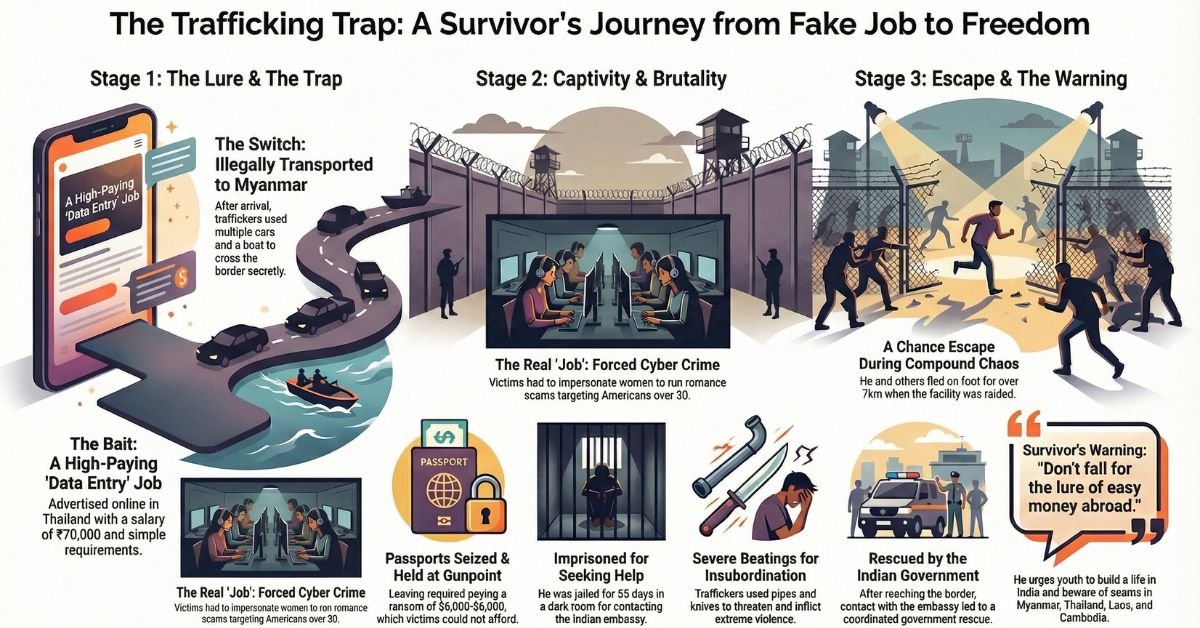
Back then, ads popped up on sites like Indeed, Facebook, and Instagram, dangling a “data entry” job in Thailand.
It sounded perfect: 60,000 to 70,000 rupees a month, just eight hours a day, one day off a week, and zero stress.
Plus, they promised to cover all your flights and visas. Who would not bite?
Fast forward to now, in 2025, and it is the same script playing out for Bangalore’s job hunters.
These 25 Kannadigas, everyday people from Karnataka’s heart, including the tech-savvy crowds in Bangalore, got hooked through Facebook ads offering similar data-entry gigs for around 80,000 rupees monthly.
Agents even booked their tickets from Indian cities straight to Bangkok.
It felt legit, like a golden ticket out of the daily grind.
However, as our original survivor learned the hard way, and these recent victims echoed, that promise is the first thread in a web of deception.
Traffickers are not random; they prey on your hopes, using trusted platforms to make it all seem real.
The Journey Into The Unknown: Crossing Borders And Losing Freedom
Once you are in, the real twist starts.
Our Dubai worker landed in Thailand, met by smiling agents who whisked him away.
However, soon, things got shady, switching cars three or four times to throw off any trail, then a sneaky boat ride across a river.
No passports stamped, no official borders.
At a spot called Maisot, the mask dropped: “Welcome to Myanmar,” they said, with armed guards making sure he knew escape was not an option.
He was now illegally in a foreign land, cut off from help.
Echoing this chilling path, the Bangalore group flew to Bangkok on those agent-booked tickets, only to be picked up and driven across the border into Myanmar.
No questions allowed, ask too much, and guns came out.
It is a deliberate move by these syndicates: shuttle you into areas with weak laws and armed groups calling the shots.
You are disoriented, document-less, and trapped before you even realize the job was a lie.
In both stories, the journey is not about relocation; it is about stripping away your choices, one border at a time.
Behind The Facade: Life In The Scam Compounds
Arriving at the compound, you would think you would hit the jackpot – air-conditioned offices, comfy chairs, shiny computers.
It looks like a legit IT firm, designed to ease your doubts at first.
However, peel back the layer, and it is a prison.
Our survivor was forced into online dating scams, pretending to be women chatting up older American men, building fake romances to squeeze out cash.
They even ran frauds targeting Indians back home with phony job offers and lottery wins.
Scripts in hand, he had to con people or face the consequences.
The 2025 rescues paint the same grim picture: These Kannadigas were shoved into cyber-fraud ops, cheating folks online under constant threats: long hours, fines if you slacked, and treatment like slaves.
One anonymous returnee shared, “If we asked questions, they pointed guns at us. We were forced to cheat people online. If we refused, they harassed us.”
It is not just work; it is a compulsive crime that messes with your head, making you feel guilty and less likely to run.
In these places, the high-tech gloss hides the horror, turning victims into unwilling criminals in a global scam machine.
The Chains That Bind: How They Keep You Trapped
Control comes in layers, each one tighter than the last.
Want to leave?
Our survivor was hit with a bogus debt of 4,500 to 6,000 dollars to “buy” his freedom, an amount he could not scrape together.
They snatched his passport, phone, and any link to the outside.
Try contacting help?
He snuck an email to the Indian embassy, but they caught it through digital spying, dragging him into a room for a brutal beating with pipes and knife threats.
Then, 55 days in a dark “black room” with barely any food or water, the boss taunted that no one could save him.
The Bangalore victims faced similar terror: Guns for resistance, harassment for refusal, total isolation in those compounds.
No family calls, constant watch.
It is a mix of money traps, tech surveillance, and raw violence that breaks your spirit.
These tactics are not random; they are crafted to seem impossible, turning hope into hopelessness.
However, as both tales show, that spark of fight can still flicker.
Sparks Of Hope: Fighting Back And The Bitter Betrayals
Even in the depths, people push back.
Our survivor and his group fired off hundreds of emails to the Indian embassy over 75 days, begging for rescue.
Nothing came quickly, but when chaos erupted at the compound one day, they bolted – running 7-8 kilometers on foot.
Spotting a local army vehicle, they thought salvation had arrived.
Taken to a post, fed a big meal at a hotel, it felt like care.
However, it was a cruel ruse: After five days, the army sold them – all 11 – to another Chinese-run scam site for stacks of cash, betrayal by those meant to protect, revealing how local forces often profit from the misery.
In the 2025 chapter, resistance looked different but just as brave.
Details are sparse, but after a Myanmar junta raid in October shook things up, many fled across to Thailand.
No direct betrayal stories here, but the region’s collusion lingers as a risk.
The Kannadigas’ pleas likely mirrored the emails of old, reaching embassies amid the chaos.
It is a reminder: Victims are not passive; their persistence cracks the system, even if corruption tries to seal it shut.
Breaking Free: The Road To Rescue And Home
Freedom came unexpectedly for our original survivor. Sold to a new compound, his group flat-out refused to scam: “Kill us if you want.”
Surprisingly, the owner cut them loose, dumping them on a main road.
They trekked to the Friendship Bridge border, hitting snags but finally linking with Indian embassy officials in Myanmar.
Joined a larger rescue group, and through India-Myanmar teamwork, he made it home safe.
The 2025 rescue amps up the hope with government muscle.
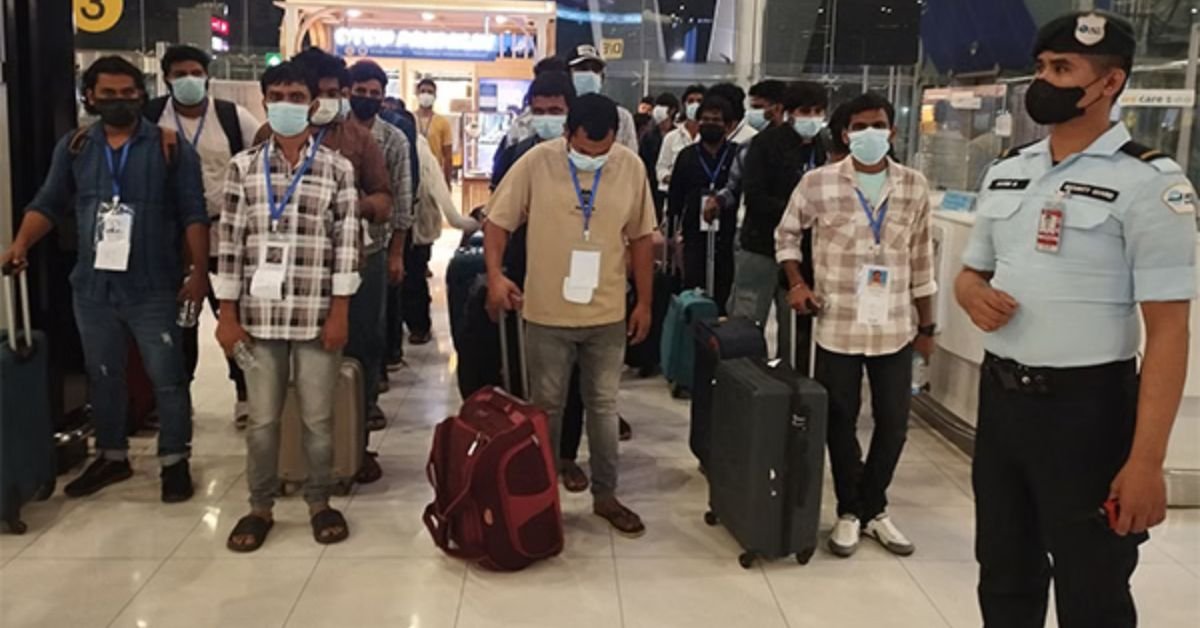
After escaping post-raid, the 125 Indians – including those 25 Kannadigas – were pulled out in two batches from Mae Sot, Thailand, thanks to the Indian Embassy in Bangkok, Consulate in Chiang Mai, and Thai authorities.
They flew to Delhi on Wednesday night, November 20, cleared immigration, and by Thursday, the Kannadigas were at Karnataka Bhavan for food, rest, and travel help.
The state hooked them up with Rajdhani train tickets back to Bengaluru, though some flew on their own dime.
It is a testament to growing international cooperation, turning individual fights into organized wins.
Unpacking The Patterns: What These Stories Teach Us
Pulling back, these tales are not isolated; they are part of a playbook.
Traffickers hijack legit platforms like Facebook for recruitment, spotting keywords like “data entry” and “all expenses paid” as red flags.
The corporate facade and free travel disarm you until it is too late. Crossing borders exploits legal gaps, while local armed groups turn rescuers into sellers.
Forcing crime adds guilt, deterring reports.
In 2025, we see evolutions: Heavier social media focus, bigger groups trapped, but also stronger raids and rescues disrupting the flow.
Arrests in Delhi and Gujarat, like the CBI capturing traffickers luring Indians to these hubs, show cracks in the syndicate.
It is a call for better bilateral ties, joint forces, and training to treat victims as survivors, not suspects.
Heed The Warnings: A Survivor’s Plea To Stay Grounded
Our first survivor wraps his story with raw advice: Young Indians, skip the greed for “easy” overseas jobs.
Build success here through grit, ignoring pressures for glamour abroad.
“Greed leads to ruin,” he says. “Chase extra rupees, and your life might have no guarantee.”
The 2025 returnees echo it: Do not fall for scams, verify every offer.
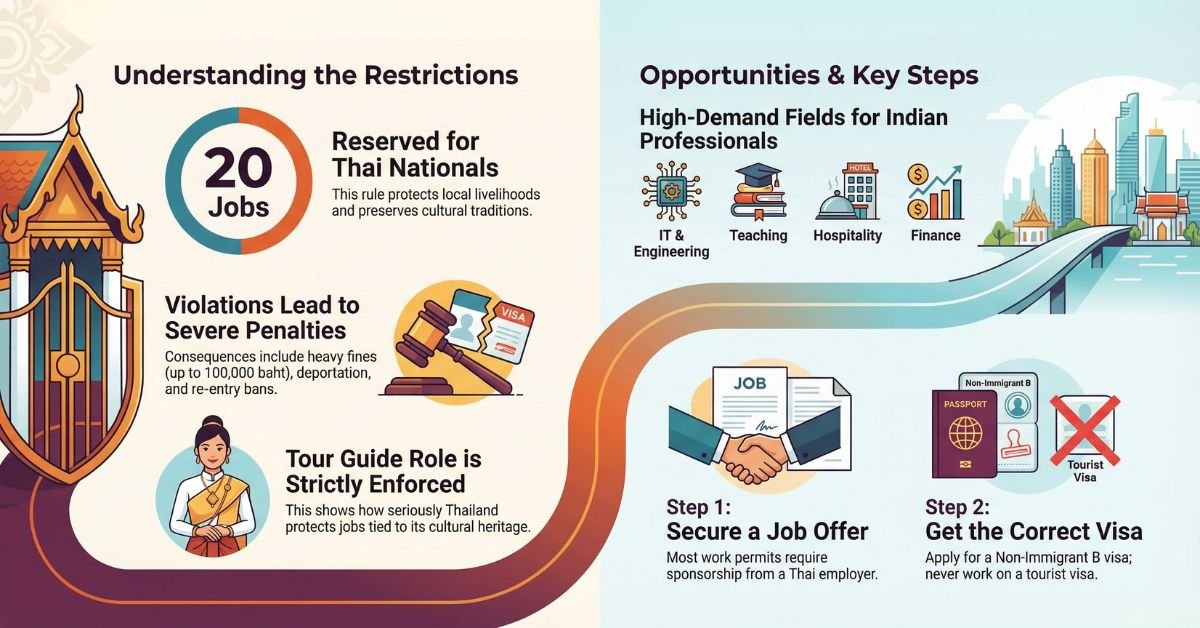
Authorities add: Check employers and agents, and never misuse Thai tourist visas for work; it is a trafficking gateway.
From Bangalore’s busy streets to anywhere in India, these words are gold: Question the perfect promise.
Wrapping Up: Your Safety Net In A Scary World
There you have it, a story of traps, fights, and triumphs that hits close to home, especially with Bangalore’s own caught in the crossfire.
At THOUSIF Inc. – INDIA, we share these to empower you, not scare you. Stay vigilant, verify jobs, and value the paths right here.
If this helped, poke around our site for more on safe careers and scam busts.
Drop a thought below or share with a friend – together, we can outsmart these shadows.
Take care out there!
About Author