
Table Of Contents
Introduction
Hey there, let us talk about one of the most defining features of our nation: secularism.
India is a land of incredible diversity, home to people following countless religions, traditions, and beliefs, all coexisting in one vibrant society.
However, what does it really mean for India to be secular?
It is not about sidelining religion, far from it.
Our secularism is about giving equal respect to every faith, ensuring no one is favored or discriminated against because of what they believe.
Rooted in our Constitution, this principle, often called “sarva dharma sambhava” or equal regard for all religions, was there from the start in 1950 and formally added to the Preamble in 1976.
It is what helps hold our diverse country together.
The Roots Of Secularism In India
India’s approach to secularism is one of a kind.
Unlike some places where the state stays completely separate from religion, ours is about “principled distance.”
The government can step in to promote fairness, reform harmful practices, or protect minorities, but it must treat all religions equally.
Our Constitution backs this up strongly through Articles 25-28, guaranteeing everyone the freedom to practice, profess, and propagate their religion.
The state cannot force anyone into a faith or use taxes to promote just one.
Over the years, the Supreme Court has ruled that secularism is part of the Constitution’s “basic structure,” untouchable, no matter what.
Trivia
Did you know India hosts the world’s largest peaceful religious gathering, the Kumbh Mela? Millions from different faiths come together harmoniously, a beautiful example of our living pluralism!
Religious Diversity In India: The Numbers
India’s strength shines in its religious mosaic.
Based on the 2011 census and recent projections:
- Hindus: Around 79-80%
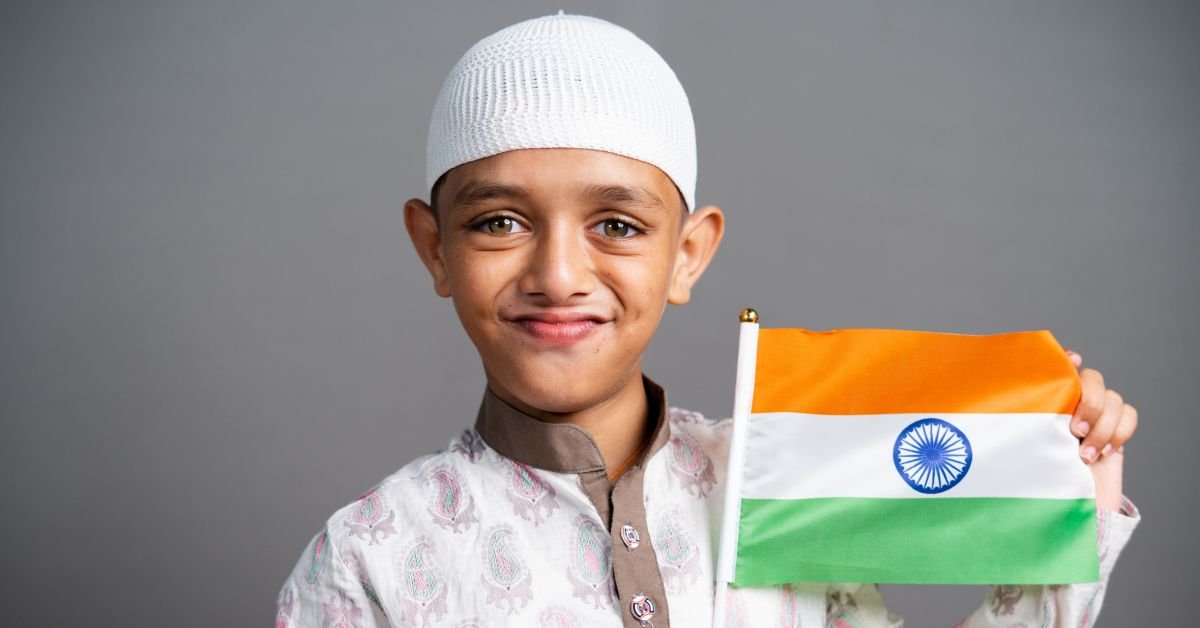
- Muslims: About 14-15%
- Christians: Roughly 2.3%
- Sikhs: 1.7%
- Buddhists: 0.7%
- Jains: 0.4%
- Others (including Parsis, Jews, and no religion): The remaining
Growth rates have slowed across groups thanks to education and development, keeping our balance intact.
India has the third-largest Muslim population globally, alongside thriving communities of every major faith.
Ongoing Debates And Challenges
Secularism in India is always evolving, with lively discussions shaping its future.
Recent years have seen debates over laws like anti-conversion rules in some states, aimed at preventing forced changes but raising concerns about freedom.
The Waqf (Amendment) Act has sparked conversations about transparency in managing religious properties, with supporters highlighting accountability and critics worrying about minority impacts.
Talks around a Uniform Civil Code, a common set of laws for marriage, inheritance, and more, continue.
Uttarakhand became the first state to implement one, focusing on equality, while national discussions weigh uniformity against diversity.
Communal tensions occasionally flare, but institutions like the courts step in to uphold fairness.
The Supreme Court has reaffirmed secularism’s core role, dismissing challenges to its place in the Constitution.
However, everyday life shows unity too, festivals celebrated together, interfaith initiatives, and communities supporting each other.
What Makes Indian Secularism Unique?
To see the difference clearly:
| Aspect | Western | India |
|---|---|---|
| State-Religion Relation | Strict separation | Principled distance (intervenes for equality) |
| Personal Laws | One law for all | Options based on religion are available |
| State Support | No funding for religious activities | Equal support for pilgrimages, schools |
| Focus | Individual rights from the state | Harmony and reforms in communities |
This flexible model suits our diverse society perfectly, promoting peace while allowing reforms.
The Way Forward
India’s secularism remains a strong constitutional commitment, guiding us through challenges.
The real magic happens when we focus on education, dialogue, and shared progress – jobs, healthcare, and opportunities for all, beyond faith.
By nurturing mutual respect and addressing inequalities, we keep this principle alive and thriving.
Fact
India is home to ancient Jewish communities that have lived peacefully for centuries without facing persecution – a rare and proud part of our secular history!
Wrapping Up
So, how secular is India?
Deeply committed at its core, with a unique model that celebrates diversity while striving for equality.
Challenges come and go, but our pluralism is what makes us resilient and extraordinary.
If this sparked your interest, dive into more articles on society, culture, and current topics here at THOUSIF Inc. – INDIA.
We would love your thoughts – share in the comments or explore further.
Stay united, stay inspired!
About Author