
Table Of Contents
Birch By Romeo Lane Nightclub
Goa, the sun-drenched haven of India’s west coast, has long been synonymous with carefree nights under starry skies, thumping basslines, and the salty tang of the Arabian Sea.
However, on the fateful night of December 6-7, 2025, this paradise turned into a nightmare.
A raging inferno at the Birch by Romeo Lane nightclub in Arpora village, North Goa, swallowed 25 lives and scarred dozens more.
What started as a vibrant “Bollywood Banger Night” complete with live DJ sets, electric firecrackers, and over 150 revelers spiraled into one of the deadliest fire incidents in Goa’s history.
As investigations deepen, this tragedy exposes a web of regulatory lapses, illegal constructions, and brazen negligence that turned a trendy “island” venue into a death trap.
Drawing on eyewitness accounts, official investigations, and real-time social media outpourings, this comprehensive blog post dissects the horror, from the spark that ignited chaos to the global search for the fugitive owners.
It is a story of loss, accountability, and a clarion call for reform in India’s pulsating nightlife scene.
The Night Of Flames: A Timeline Of Terror
The clock struck 11:45 PM on Saturday, December 6, when the air at Birch by Romeo Lane pulsed with energy.
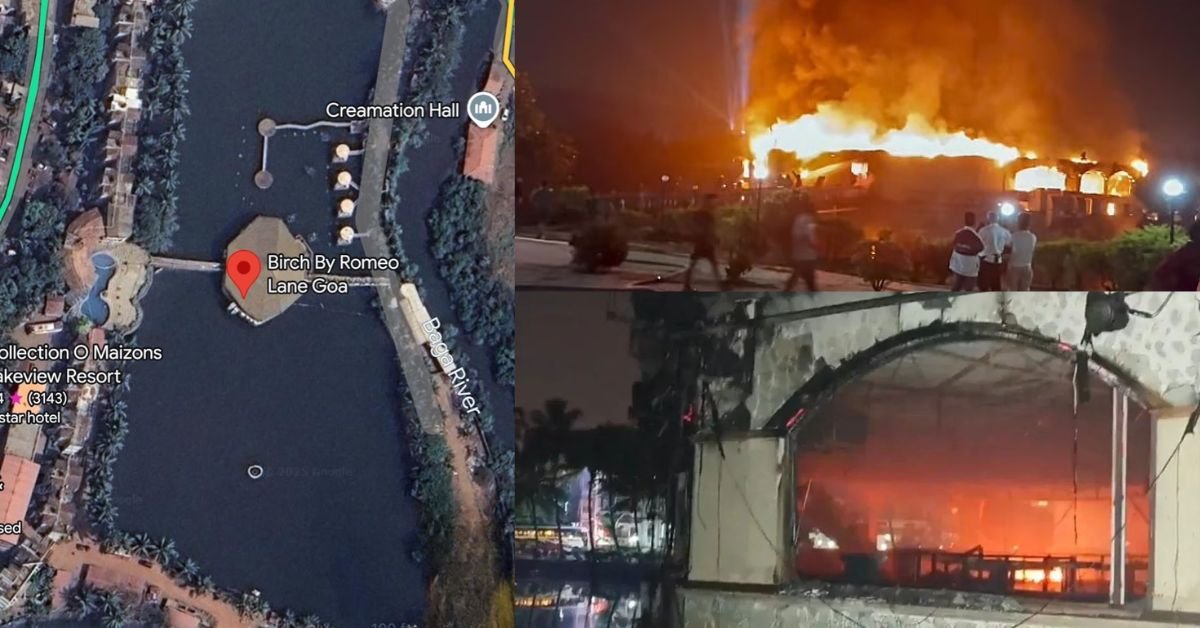
Perched precariously on a salt pan amid the backwaters of the Arpora River, marketed as an exotic “island” escape, the venue buzzed with anticipation.
Around 150 guests, many of whom were tourists escaping the winter chill of northern India, crowded the dance floor for the club’s signature event.
Bollywood anthems blared as performers unleashed indoor pyrotechnics: bursts of electric firecrackers designed to dazzle.
However, dazzle turned to disaster in seconds.
Eyewitness videos, now viral on X (formerly Twitter), capture the pandemonium: sparks from the fireworks danced too close to the venue’s highly flammable palm-leaf thatched roof and wooden accents.
Flames erupted on the first-floor dance area, racing across the ceiling like a predator unleashed.
Smoke billowed thick and black, choking the air as panicked patrons stampeded toward the exits.
Initial reports pinned the blaze on a gas cylinder explosion in the basement kitchen.
However, forensic teams from the Goa Fire Services and police now lean toward the pyrotechnics as the culprit.
“The firecrackers burst, igniting the combustible decorations,” Goa Chief Minister Pramod Sawant confirmed during a press briefing.
The venue’s design, narrow doorways, a single congested access path over water, and no secondary emergency exits funneled the crowd downstairs into the kitchen and basement.
Here, over 100 souls collided in a deadly bottleneck.
Rescue efforts commenced at 12:04 AM when the police control room received the first distress call.
Fire tenders from nearby stations in Calangute and Anjuna rushed in, but the “island” layout proved a curse: vehicles were parked 400 meters away on the mainland, with hoses stretched across the narrow bridge amid snarling traffic.
Ambulances ferried the injured to Goa Medical College and Hospital in Bambolim, 25 km away, while locals and fellow partygoers formed impromptu human chains to pull survivors from the smoke.
By dawn on December 7, the flames were doused after nearly two hours, but the toll was staggering: 25 dead, with six injured in stable condition from smoke inhalation and burns.
Post-mortems revealed a grim truth: only three victims perished from burns; the rest succumbed to suffocation, their lungs filled with toxic fumes in the windowless underbelly.
Faces Behind The Flames: The Victims’ Stories
The 25 souls lost were a cross-section of Goa’s transient magic–dreamers, workers, and wanderers drawn to its lights.
All have been identified as of December 9, with 17 post-mortems completed and five bodies handed over to families.
Here is a poignant snapshot:
| Victim | Details | Background |
|---|---|---|
| Staff Members (20) | Mostly kitchen and support crew, including three women; from Jharkhand, Assam, and other states. | Many were migrants chasing seasonal jobs in Goa’s hospitality boom. Families from remote villages like those in Jharkhand refused to claim bodies without justice, demanding the owners cover transport costs. |
| Tourists (5) | Four from Delhi/Ghaziabad (three from one family: a father, mother, and son on a rare vacation); one from Karnataka. | The Delhi family, per relatives on X, had saved for months for this “dream trip.” Posts from friends mourned: “They came for joy, left in ashes.” |
| Unconfirmed (0 as of Dec 9) | Earlier reports noted seven pending IDs, but all resolved via DNA where needed. | Helpline numbers (0832-2225234) buzzed with desperate queries from panicking kin. |
Heart-wrenching scenes unfolded at the morgue: wailing relatives, candlelit vigils outside Anjuna Police Station, and X threads overflowing with tributes.
One post from a survivor’s account went viral: “I grabbed my friend’s hand, but the smoke took her. We were just dancing.”
These were not statistics; they were sons, daughters, and siblings whose stories now fuel demands for change.
Causes And Catastrophic Failures
Why did a spark become a slaughter?
The probe paints a damning picture of hubris and oversight.
- Ignition Point: Sparks from unauthorized indoor fireworks, not a cylinder blast, as first thought, met highly flammable materials. The thatched palm roof, wooden beams, and temporary bamboo structures fueled a blaze that hit 800°C in minutes.
- Architectural Nightmares: Built illegally on a protected salt pan in 2024, the club ignored demolition notices from the local gram panchayat and Goa Coastal Zone Management Authority. A November 2024 legal notice warned of the unauthorized structure, which stayed only after appeals. No fire NOC, no sprinklers, no smoke detectors – basics absent.
- Escape Impossible: Single-file exits (just 3 feet wide), no basement ventilation, and the watery “island” isolation turned rescue into a farce. Overcrowding (capacity: 100; actual: 150+) created a crush.
- Human Error: Staff untrained in evacuations; pyrotechnics handled sans permits. Eyewitnesses on X described “locked side doors” and “piled furniture blocking paths.”
“This was not an accident; it was criminal negligence,” thundered Congress leader Rahul Gandhi on X, calling for a “thorough, transparent probe.”
Fire Chief Alok Kumar echoed: “Most are trapped on the ground floor due to congestion and small doors.”
Arrests, Probes, And A Fugitive Trail
Goa’s machinery roared to life after the blaze, but not without controversy.
- Immediate Response: CM Sawant rushed to the site at 1:30 AM, declaring a “painful day” and ordering a magisterial inquiry. PM Narendra Modi followed with condolences and an ex gratia payment of Rs 2 lakh per family from the PMNRF, plus Rs 50,000 for the injured. The state upped it to Rs 5 lakh per kin and Rs 50,000 for survivors.
- Legal Hammer: An FIR under Bharatiya Nyaya Sanhita for culpable homicide not amounting to murder targeted owners Saurabh and Gaurav Luthra, plus managers. Five arrests by December 9: Chief GM Rajiv Modak (49), Gate Manager Priyanshu Thakur (32), Bar Manager Rajveer Singhania (32), GM Vivek Singh (28), and operations head Bharat Karan Singh Kohli (nabbed in Delhi). Three officials suspended for irregular licensing.
- The Great Escape: The Luthra brothers – Saurabh, a former IT whiz turned hospitality mogul with Romeo Lane outlets in 22 cities – fled hours after the fire broke out. Sighting in Phuket, Thailand, on December 8; Interpol’s Blue Corner notice issued December 9 for info, with Red Corner looming. A Lookout Circular was filed on December 7, but they boarded an early IndiGo flight – sparking outrage over airport lapses.
- Broader Crackdown: The club sealed; sibling Romeo Lane properties in Vagator razed by a bulldozer on CM’s orders—statewide fire audits for 200+ nightclubs; no new licenses till clearances.
X erupted with fury: Protests at Anjuna station demanded “extradite the Luthras!” One viral thread: “How do owners jet off while workers burn?”
Political And Social Ripples
The fire ignited a firestorm beyond Arpora.
BJP’s Sawant faced flak for “lax enforcement” in a tourism-dependent state (nightlife fuels 30% of GDP).
Opposition Congress and AAP decried it as a “governance failure,” with Rahul Gandhi labeling it “criminal.”
Globally, it dented Goa’s image: UK and UAE advisories urged caution for party hubs.
Locally, bar associations pushed for “zero-tolerance” audits, fearing a decline in tourism during peak season.
Paradise Rebuilt?
As demolition crews eye the charred husk, set for demolition on December 10, Goa stands at a crossroads.
This blaze, deadlier than the 2010 Mangalore pub attack, underscores a harsh truth: unchecked growth in a Rs 5,000-crore nightlife economy breeds peril.
Proposed reforms include mandatory annual drills, AI-monitored overcrowding, and eco-friendly builds sans flammables.
However, for the 25 gone, the migrant cooks who fed the party, the family chasing memories, no policy revives them.
Their legacy?
A mandate: Safety first, or paradise burns.
Goa weeps, but must act.
Share your thoughts below.
Has this changed how you plan to party?
Light a virtual candle in memory of those who have passed away.
About Author