
Table Of Contents
Delhi, the heart of India, is not just a bustling modern city; it is a living tapestry of history that has been built, destroyed, and reborn countless times.
Often called the city of seven (or more) cities, Delhi has worn many names over the millennia, each reflecting the rulers, cultures, and stories of its time.
If you have ever wondered why locals still affectionately call it “Dilli” or how it connects to ancient epics, you are in for a treat.
Let us dive into the list of old names of Delhi and explore the captivating tales behind them.
The Legendary Beginnings: Indraprastha
The oldest and most mythical name associated with Delhi is Indraprastha.
According to the ancient Indian epic Mahabharata, this grand city was the capital built by the Pandava brothers after they cleared the dense Khandava forest along the Yamuna River.
Yudhisthira, the eldest Pandava, established Indraprastha as a magnificent stronghold, complete with palaces and fortifications.
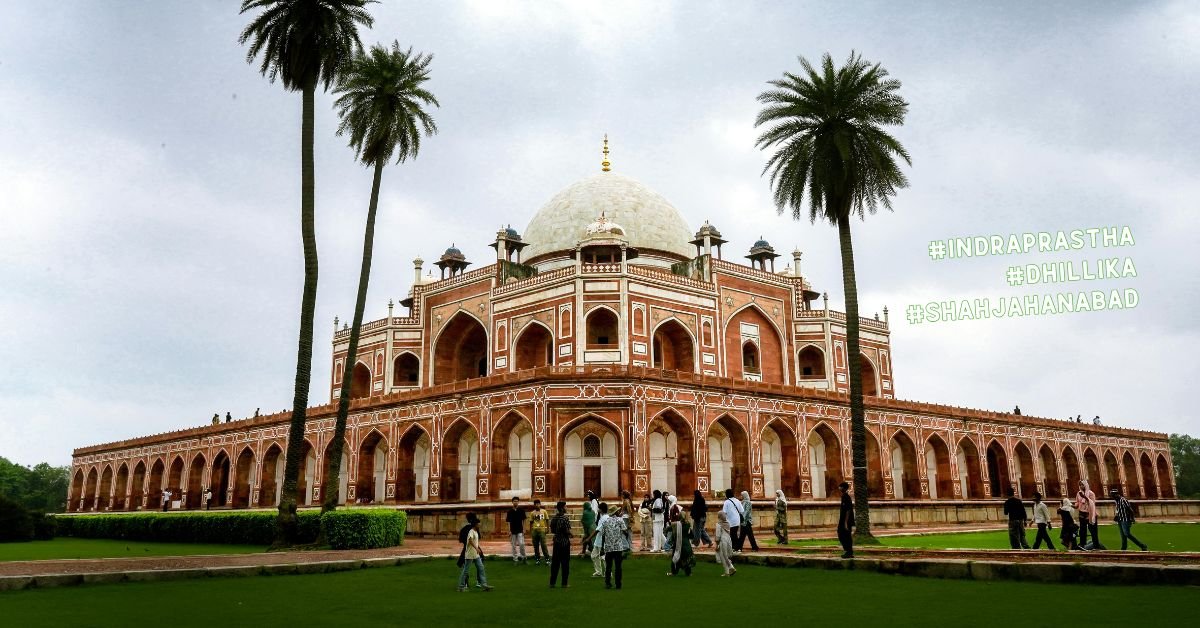
Many historians and archaeologists believe that the site of Purana Qila (the Old Fort) in present-day Delhi stands on or near the ruins of Indraprastha.
While excavations have not uncovered the epic’s described grandeur, painted greyware pottery from the era has been found, hinting at ancient settlements.
This name ties Delhi to India’s mythological roots, making it feel timeless.
The Medieval Shift: Dhillika, Dhilli, Or Dilli
As we move from legend to recorded history, around the 8th-12th centuries CE, the area came under Rajput rulers like the Tomars and Chauhans.
The city was known as Dhillika or Dhilli, later softening to Dilli, a name still used lovingly today.
One popular story credits this to Raja Dhilu (or Dilu), a king said to have ruled around the 1st century BCE.
Legend has it that he founded a city here, and over time, it became “Dhillupura” or simply “Dhilli.”
Another charming tale involves the famous Iron Pillar in the Qutub Minar complex: When King Anangpal Tomar tried to reposition it, it became “loose” (dhila in Hindi), giving rise to the name Dhilli!
During the Delhi Sultanate era (13th-16th centuries), with dynasties like the Mamluks, Khiljis, Tughlaqs, and Lodis building forts and towns, the collective area was commonly called Dilli.
Rulers created separate enclaves like Lal Kot (by the Tomars), Qila Rai Pithora (expanded by Prithviraj Chauhan), Siri, Tughlaqabad, Jahanpanah, and Firozabad, but the overarching name remained Dilli.
The Mughal Grandeur: Shahjahanabad
In the 17th century, Mughal Emperor Shah Jahan shifted his capital from Agra and built a magnificent walled city in 1639-1648, naming it Shahjahanabad.
This became the seventh major city of Delhi, featuring iconic landmarks like the Red Fort (Lal Qila), Jama Masjid, and the bustling Chandni Chowk.
Shahjahanabad was a planned marvel with wide avenues, grand havelis, gardens, and markets.
It remained the Mughal capital until the empire’s decline.
Today, this area is fondly known as Old Delhi or Purani Dilli, where narrow lanes still echo with history, spices, and street food.
The Colonial Era And Beyond: New Delhi
During British rule, the name “Delhi” (an anglicized version of Dehli or Dilli) became standard.
In 1911, the British announced shifting the capital from Calcutta to Delhi, and in 1931, they inaugurated New Delhi, designed by architects Edwin Lutyens and Herbert Baker.
This modern planned city, with wide boulevards, India Gate, and Rashtrapati Bhavan, contrasted sharply with the older parts.
Post-independence in 1947, New Delhi became the official capital of free India, but the entire region is simply called Delhi, a blend of all its historical layers.
A Quick Overview: Historical Names of Delhi
To make it easier, here is a simple table summarizing the key old names of Delhi and their eras:
| Name | Era | Association | Landmarks |
|---|---|---|---|
| Indraprastha | Mythological (c. 1400 BCE) | Pandavas in the Mahabharata | Purana Qila site |
| Dhillika/Dhilli/Dilli | 8th-16th centuries CE | Tomar/Chauhan rulers, Delhi Sultanate | Lal Kot, Qila Rai Pithora, Tughlaqabad |
| Shahjahanabad | 17th-19th centuries CE | Mughal Emperor Shah Jahan | Red Fort, Jama Masjid, Chandni Chowk |
| New Delhi | 20th century onward | British colonial capital | India Gate, Parliament House |
Delhi’s story does not stop at seven cities; some count up to 15 if you include smaller settlements!
An Interesting Trivia To Ponder
Did you know that Delhi is said to have been destroyed and rebuilt seven times? This resilience is why it is often compared to a phoenix.
One fun legend ties the name “Dhilli” to the Iron Pillar: When it wobbled after being moved, people joked it was “dhila” (loose), and the name stuck!
Delhi’s many names remind us that this city is more than a place; it is a chronicle of India’s soul, blending myth, valor, empire, and modernity.
Next time you stroll through its streets, from the chaos of Old Delhi to the grandeur of New Delhi, you will feel the weight of centuries.
If you enjoyed this journey through Delhi’s past, check out more articles on THOUSIF Inc. – INDIA for stories on Indian history, culture, and hidden gems.
What is your favorite part of Delhi’s history? Share in the comments, we would love to hear!
About Author