Table Of Contents
In a world of shifting alliances, the bilateral relations between India and Libya exemplify enduring friendship, pragmatic cooperation, and a shared commitment to mutual growth.
Despite geographical distance and periods of instability, these ties have remained rooted in respect and complementary interests.
We are inspired by such partnerships that foster stability and opportunity across continents.
Let us explore the multifaceted dimensions of India-Libya relations.
Historical Bonds
Diplomatic relations were formally established with India’s embassy opening in Tripoli in 1969.
A landmark moment was Prime Minister Indira Gandhi‘s visit in 1984, which symbolized the depth of engagement during that era.
Both nations were active in the Non-Aligned Movement, championing independence and sovereignty.
Former Libyan leader Muammar Gaddafi held Jawaharlal Nehru in high esteem, uniquely honoring him as the only non-Arab, non-African leader during anniversary celebrations of the Libyan revolution.
India extended humanitarian support post-2011, including medical aid and the Jaipur Foot program.
People-to-people links are strong: several Libyan figures pursued education or diplomacy in India.
Fascinating Trivia: Former Libyan leaders like Ali Zidan and Mohammad Yousef Al-Magarief had significant connections to India through studies and postings, underscoring personal bridges in diplomacy.
Economic Pillars
Energy cooperation has long been central, with Libya’s hydrocarbon resources aligning with India’s needs.
Indian firms like ONGC Videsh and Oil India have engaged in exploration, while others have contributed to infrastructure, hospitals, power plants, and more.
Recent trade data shows India’s exports to Libya at approximately $505 million, primarily pharmaceuticals and engineering goods.
To highlight key sectors:
| Sector | India | Libya | Opportunities |
|---|---|---|---|
| Energy & Hydrocarbons | Exploration and technical expertise | Crude oil supplies | Energy security and revived projects |
| Infrastructure | Past and potential reconstruction projects | Development needs | Post-stability rebuilding |
| Pharmaceuticals | Generics and medicines | Healthcare demands | Affordable solutions for public health |
| Education & Training | ITEC scholarships and programs | Capacity building | Human resource development |
| Trade & Investment | Engineering goods, IT | Market access | Joint councils and enhanced commerce |
Around 3,000 Indian nationals reside in Libya, contributing skilled labor.
Renewed Diplomatic Engagement
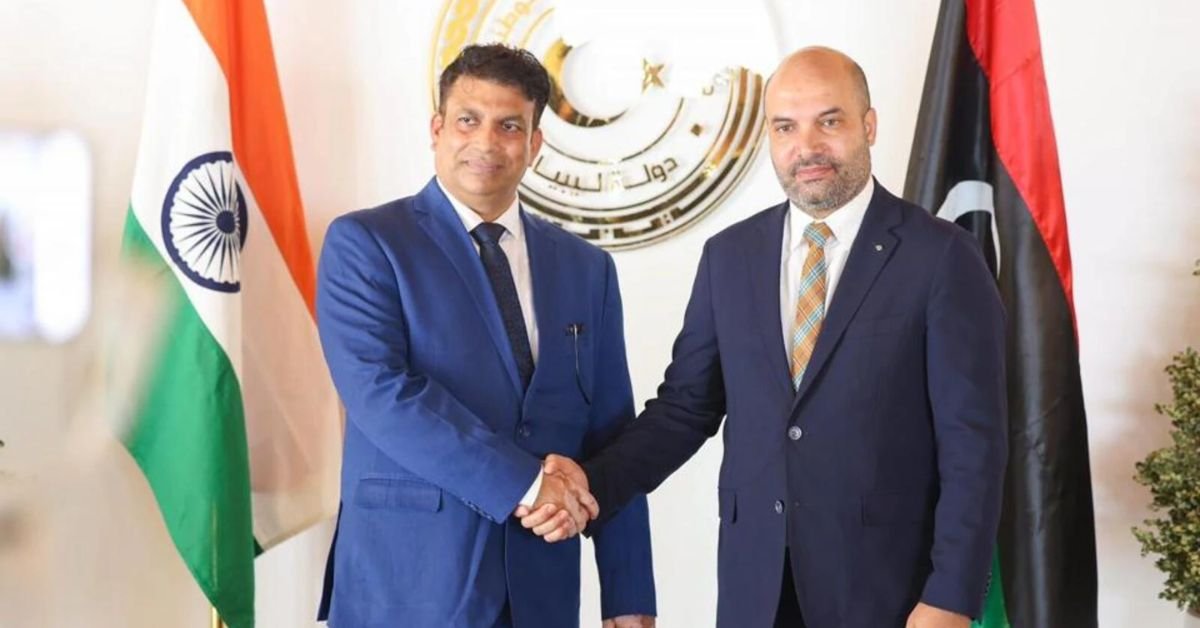
Recent developments signal revitalization.
India reopened its embassy in Tripoli in 2024 after a temporary closure due to security concerns, resuming full operations, including consular services.
In late 2025, Dr. Hifzur Rahman was appointed as India’s Ambassador to Libya, bringing extensive experience to advance bilateral dialogue.
Discussions are advancing on reactivating the Indo-Libyan Joint Commission (last held in 2007) and establishing a joint Chamber of Commerce and Business Council.
Cultural and educational exchanges, including scholarships, continue to enrich interpersonal connections.
Future Horizons
As Libya navigates toward greater stability, India-Libya relations hold promise in energy diversification, infrastructure revival, and broader economic collaboration.
This partnership reflects principled diplomacy and mutual benefit.
At THOUSIF Inc. – INDIA, we celebrate such relations that contribute to global progress.
We encourage you to share your thoughts below.
What aspect of these ties intrigues you most?
Explore more on international partnerships through our other articles.
About Author