
Table Of Contents
Hey there,
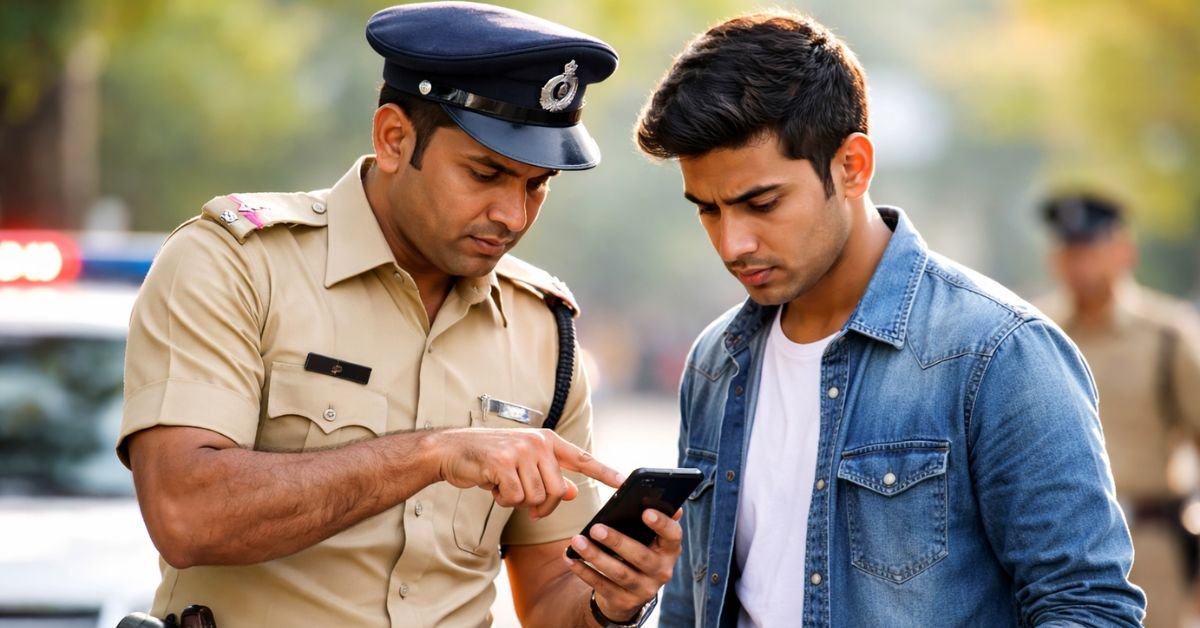
Picture this: You are walking down a busy street in Bengaluru or Mumbai, or maybe waiting at a checkpoint, and a police officer asks to see your phone. “Just unlock it for a quick check,” they say.
Your heart skips a beat.
Can they really do that?
Do you have to hand it over?
If you have ever had that nagging doubt, you are not alone.
With over a billion mobile users in India, our phones are practically an extension of ourselves, photos, chats, bank details, everything.
So it is natural to wonder where the line is drawn when it comes to police powers.
Let us break it down in plain, simple English. No legalese overload, I promise.
Your Phone Is Private, And The Law Agrees
In 2017, a nine-judge bench of the Supreme Court made history by declaring that the right to privacy is a fundamental right under Article 21 of the Constitution.
That landmark judgment (often called the Puttaswamy case) changed everything.
It means your personal data, including what is on your phone, deserves strong protection.
Because of this, randomly checking someone’s phone just because they “look suspicious” is not allowed.
Your phone is not like a public bag that anyone can peek into; it is deeply personal.
When Can Police Actually Touch Your Phone?
Here is the straightforward answer: No, police generally cannot check or search the contents of your phone without a warrant or your voluntary consent.
They cannot force you to unlock it, share your password, or even use your fingerprint/face ID against your will.
Doing so could violate your protection against self-incrimination (Article 20(3) of the Constitution).
However, there are a few limited situations where police have some powers:
- Seizure of the Phone: If police have reasonable suspicion that your phone contains evidence of a crime, they can seize it under Section 102 of the CrPC. They do not always need a warrant for seizure in urgent cases (Section 165 CrPC). However, seizing the phone is different from searching inside it.
- Searching the Contents: To actually go through your messages, photos, call logs, or apps, they usually need a proper search warrant from a magistrate. Without it, any search is illegal unless you freely agree (and consent must be genuinely voluntary, with no pressure).
- Call Records and Location Data: Police can obtain your call details, SMS records, or tower location from your telecom provider under Sections 91 or 92 of the CrPC. They do not need your phone for that.
Common Scenarios: What Should You Do?
| Situation | Can Police Check? | What You Can Do |
|---|---|---|
| Random checkpoint or routine stop | No | Politely refuse. Ask if they have a warrant. You can say, “I’m sorry, I’d prefer not to unlock my phone without proper procedure.” |
| Suspected of a crime | They can seize it | Cooperate with seizure if required, but you’re not obliged to unlock it. |
| They ask for password or PIN | No, they can’t force you | Stay calm and refuse politely. Forcing you would be illegal. |
| You voluntarily agree | Yes (but think carefully) | Only do this if you’re absolutely sure—it’s hard to take back consent later. |
Interesting Fact To Blow Your Mind
Did you know that the average smartphone carries more personal information than most people kept in their homes a few decades ago? Photos, health data, financial transactions, private conversations, everything. That is precisely why courts treat phone searches more seriously than searches of wallets or bags.
Practical Tips If You Are Ever Stopped
- Stay calm and respectful; things escalate faster when tempers rise.
- Ask politely: “Officer, do you have a warrant or court order to check my phone?”
- If they insist without proper authority, you can refuse to unlock it.
- Note down the officer’s name, badge number, and police station details.
- If you feel your rights were violated, you can file a complaint or approach a lawyer later.
Remember, most police officers are doing their job, and genuine cases require evidence.
However, you have rights too, and knowing them keeps everyone accountable.
Wrapping Up
So, to answer the big question: No, police cannot legally check your phone without a warrant or your free consent in India.
The Constitution and various laws protect your digital privacy, and courts continue to strengthen these safeguards.
Stay aware, stay safe, and keep enjoying the convenience of your smartphone without unnecessary worry.
If you found this helpful, check out more practical legal guides and everyday insights on the THOUSIF Inc. – INDIA blog.
We are here to make the law simple and valuable for everyone.
About Author