
Table Of Contents
Saalumarada Thimmakka

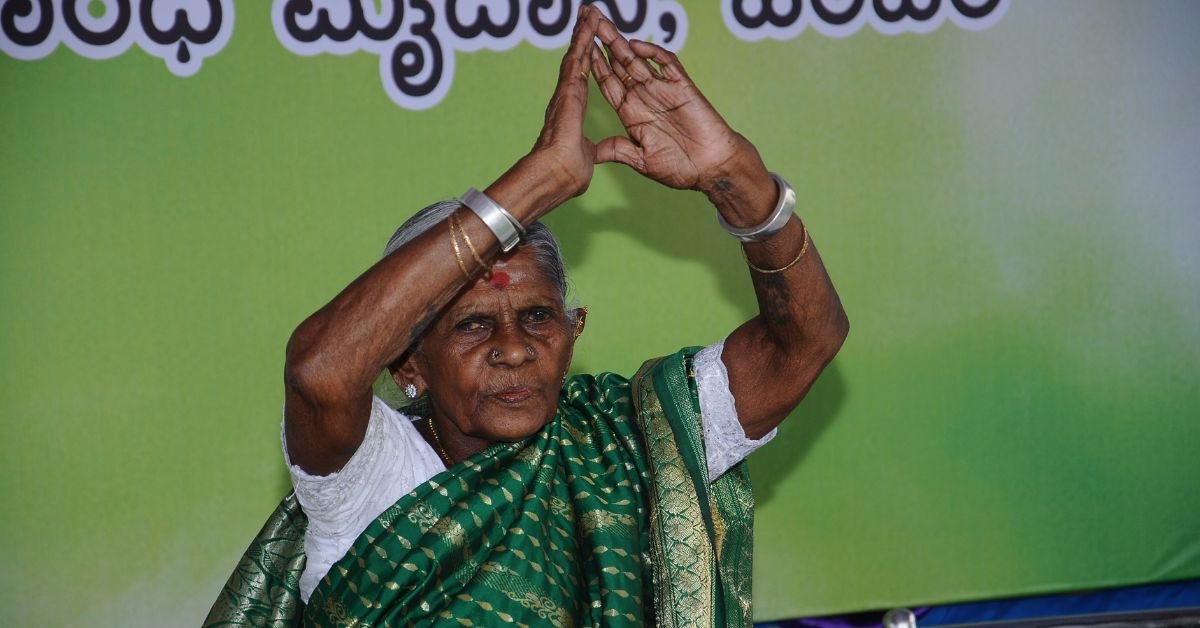
In the heart of rural Karnataka, where the sun beats down on arid lands and communities struggle with the harsh realities of life, one woman’s story stands as a beacon of hope and resilience.
Saalumarada Thimmakka, affectionately known as the “Tree Mother” or “Vriksha Maate” in Kannada, transformed personal sorrow into a global symbol of environmental stewardship.
Born in a time when women’s roles were often confined to the home, Thimmakka broke barriers without ever stepping into a classroom.
Her life, marked by planting and nurturing thousands of trees, reminds us that one person’s actions can literally change the landscape for generations.
Thimmakka’s journey began in obscurity but blossomed into international recognition.
She planted 385 banyan trees along a dusty 4.5-kilometer stretch of road between Hulikal and Kudur in Ramanagara district, turning it into a lush green canopy that provides shade, oxygen, and habitat for wildlife.
Over her lifetime, she cared for over 8,000 trees, treating them as her own children in the absence of biological ones.
Her efforts not only combated deforestation but also inspired environmental movements across India and beyond.
As we delve into her biography, we will explore the roots of her passion, the challenges she faced, and the accolades that followed.
Sadly, on November 14, 2025, Thimmakka passed away at the age of 114 in Bengaluru due to age-related ailments, including bronchial asthma and multiorgan failure.
Her death has sparked an outpouring of tributes from leaders, environmentalists, and ordinary citizens alike, underscoring her profound impact.
This blog post honors her memory, drawing from recent updates and historical accounts to paint a vivid picture of a life dedicated to nature.
Early Life: Roots In Rural Karnataka

Saalumarada Thimmakka was born on June 30, 1911, in the small village of Gubbi Taluk in Tumakuru district, Karnataka.
The early 20th century in rural India was a time of widespread poverty, limited access to education, and rigid social norms.
Thimmakka, like many girls of her era, never received formal schooling. Instead, she was thrust into the world of labor at a young age, working as a daily-wage laborer in a local quarry.
This grueling work involved breaking stones under the scorching sun, a far cry from the green legacy she would later build.
Growing up in a modest family, Thimmakka learned the value of hard work and perseverance from her surroundings.
The landscape of her childhood was dotted with sparse vegetation, where droughts were common, and water was a precious commodity.
These experiences likely sowed the seeds of her environmental consciousness.
In interviews, she often reflected on how the barren lands around her village mirrored the emptiness she felt in her personal life later on.
Despite the hardships, Thimmakka’s early years instilled in her a deep connection to the earth.
She would help her family with farming tasks, tending to small patches of land, and observing how trees provided shade and sustenance.
Little did she know that this innate affinity for nature would become her life’s calling.
Her birth name was Thimmakka, but she earned the prefix “Saalumarada,” meaning “row of trees” in Kannada, much later due to her iconic plantations.
The socio-economic context of pre-independence India added layers to her story.
Women in rural areas faced immense societal pressure to marry young and bear children.
Thimmakka was married off early to Sri Bekkala Chikkaiah, a fellow laborer from Hulikal village.
This union, while rooted in tradition, would become the foundation for her extraordinary environmental journey.
To understand Thimmakka’s motivations, it is essential to consider the cultural significance of trees in Indian society.
Banyan trees, in particular, hold a sacred place in Hindu mythology, symbolizing longevity, shelter, and spiritual enlightenment.
They are often associated with deities and are considered immortal.
Thimmakka’s choice to plant banyans was not random; it was a nod to these deep-rooted beliefs, blending personal healing with cultural reverence.
Her early life also highlights the gender dynamics of the time.
Without education or resources, women like Thimmakka were expected to conform to domestic roles.
However, she defied these expectations, turning her life into a testament to empowerment through action.
As we move forward, we will see how her marriage and childlessness propelled her into the world of tree planting.
Marriage And Personal Challenges
“We had no children, so we decided to plant trees and nurture them as our own”
Saalumarada Thimmakka
Thimmakka’s marriage to Chikkaiah was arranged in the traditional manner, typical of rural Karnataka in the early 20th century.
Chikkaiah, a hardworking laborer, shared her humble background.
The couple settled in Hulikal village, where they eked out a living through manual labor.
However, their life took a heartbreaking turn when they realized they could not conceive children.
In Indian society, especially in rural areas, childlessness was often stigmatized.
Thimmakka faced taunts and isolation from her community, which deepened her emotional pain.
She later recounted in interviews how this void left her feeling incomplete.
“We had no children, so we decided to plant trees and nurture them as our own,” she once said.
This decision, born out of grief, marked the beginning of her transformation from a grieving wife to an environmental pioneer.
The 1950s were a period of famine and drought in parts of Karnataka, making survival even tougher.
However, amidst these adversities, Thimmakka and Chikkaiah found solace in nature.
They began by grafting saplings from local banyan trees, starting small with just 10 in the first year.
They chose the road between Hulikal and Kudur because it was barren and offered no shade to travelers.
Digging pits, fetching water from distant wells, often carrying it for kilometers on their heads, and protecting the young plants from animals became their daily ritual.
Chikkaiah’s support was crucial.
As a team, they increased their efforts each year: 15 saplings the next, then 20, and so on.
They used thorny branches as natural fences to safeguard the plants from grazing cattle.
Monsoon seasons were their planting time, when the soil was soft and rain aided growth.
This labor of love not only filled the emotional gap but also improved the local environment, providing shade and reducing soil erosion.
Tragedy struck again in 1991 when Chikkaiah passed away suddenly.
Thimmakka was left alone to continue their work, but she persevered with unwavering determination.
She adopted a foster son, Umesh, who later helped manage her foundation.
Her story resonates with themes of resilience, showing how personal loss can fuel positive change.
In broader terms, Thimmakka’s marriage highlights the role of partnerships in social change.
While she became the face of the movement, Chikkaiah’s contributions were integral.
Today, their legacy inspires couples and individuals to channel personal challenges into community benefits, whether through environmental or social initiatives.
Tree-Planting Journey: From Saplings To A Green Legacy

Thimmakka’s tree-planting efforts spanned decades, evolving from a personal coping mechanism into a large-scale environmental campaign.
Starting in the 1950s, she and Chikkaiah focused on banyan trees (Ficus benghalensis), known for their vast canopies and deep roots that prevent soil erosion and support biodiversity.
The 4.5-kilometer stretch they chose was strategic; it connected two villages and was used by travelers, farmers, and livestock.
By the time they finished, 385 trees lined the road, creating a natural tunnel of green that cools the area and attracts birds and insects.
Each tree was nurtured with care: watered daily during dry spells, pruned, and protected.
Thimmakka often walked miles to fetch water, even during famines when resources were scarce.
After Chikkaiah’s death, Thimmakka expanded her work. She planted thousands more trees across Karnataka, participating in afforestation drives and educating communities on conservation.
In total, estimates suggest over 8,000 trees owe their existence to her efforts.
She also built a water tank for her village’s annual fair, demonstrating her commitment to community welfare.
In 2019, when road-widening threatened her banyan trees, Thimmakka appealed to the Karnataka government, leading to alternative plans that preserved the avenue.

Even in her later years, she planned new plantations.
As recently as 2023, at age 112, she announced intentions to plant 100 more banyan saplings to replace lost ones, with saplings ready in her nursery.
Her methods were simple yet effective: using local resources, community involvement, and persistent care.
This approach has been studied in environmental science as a model for grassroots reforestation.
The ecological impact is immense; the trees absorb carbon, improve air quality, and enhance local biodiversity.
Economically, they provide fruits, leaves for fodder, and shade for agriculture.
Thimmakka’s journey also intersects with global environmental issues.
In an era of climate change, her work aligns with initiatives like the UN’s Decade on Ecosystem Restoration.
Her story has been featured in documentaries, such as “Thimmakka Mathu 284 Makkalu,” screened at the International Film Festival of India in 2000.
To illustrate her achievements, here is a timeline of key milestones:
| Year | Milestone |
|---|---|
| 1911 | Born in Gubbi, Tumakuru district |
| 1950s | Begins planting banyan trees with husband |
| 1991 | Husband Chikkaiah passes away; continues work alone |
| 1995 | Receives National Citizens’ Award |
| 2019 | Awarded Padma Shri; saves trees from road-widening |
| 2023 | Plans a new plantation drive at age 112 |
| 2025 | Passed away at 114 |
This table captures the progression of her life from humble beginnings to iconic status.
Saalumarada Thimmakka Achievements And Awards

Thimmakka’s contributions did not go unnoticed.
Recognition came late, in her 80s, but it was profound.
Her first major honor was the National Citizens’ Award in 1995, acknowledging her environmental service.
This was followed by the Indira Priyadarshini Vrikshamitra Award in 1997 for tree conservation.
In 2006, she received the Godfrey Phillips Bravery Award for her courage in environmental protection.
The Nadoja Award from Hampi Kannada University in 2010 equated her to a doctorate holder, a fitting tribute for a self-taught icon.
In 2016, the BBC included her in their list of 100 most influential women worldwide.
The pinnacle was the Padma Shri in 2019, India’s fourth-highest civilian award, presented by President Ram Nath Kovind.
In 2020, Central University of Karnataka bestowed an honorary doctorate.
A U.S.-based organization, Thimmakka’s Resources for Environmental Education, was named in her honor.
Here is a table of her major awards:
| Award | Year | Issuing |
|---|---|---|
| National Citizen’s Award | 1995 | Government of India |
| Indira Priyadarshini Vrikshamitra Award | 1997 | Ministry of Environment and Forests |
| Godfrey Phillips Bravery Award | 2006 | Godfrey Phillips India |
| Nadoja Award | 2010 | Hampi Kannada University |
| BBC 100 Women | 2016 | BBC |
| Padma Shri | 2019 | Government of India |
| Honorary Doctorate | 2020 | Central University of Karnataka |
These accolades, totaling around 12 major ones, reflect her global impact.
Legacy And Influence: Inspiring Future Generations

Thimmakka’s legacy extends far beyond the trees she planted.
She founded the Saalumarada Thimmakka International Foundation to continue her work, focusing on afforestation and education.
Her story is included in school textbooks, teaching children about sustainability.
Her influence has shaped policies, like tree preservation in Karnataka. Tree parks and arboretums bear her name, and her efforts have inspired similar initiatives worldwide.
On X (formerly Twitter), tributes poured in after her passing, with users calling her an “eternal inspiration” and “mother of trees.”
Chief Minister Siddaramaiah noted her love for nature makes her “immortal,” while others pledged to plant trees in her memory.
In a world facing deforestation and climate crises, Thimmakka’s model of individual action is more relevant than ever.
She showed that education or wealth is not necessary for change; passion and persistence are.
Recent Passing: A Nation Mourns
On November 14, 2025, Thimmakka breathed her last at Apollo Hospital in Bengaluru.
Her funeral was held at the Jnanabharathi campus, attended by dignitaries.
The government is considering a museum in Belur to honor her last wish.
Tributes from Sadhguru, who called her a “personification of unwavering commitment,” and others highlight her enduring spirit.
Trivia
Did you know? Even at 112, Thimmakka was planning to plant 100 more banyan trees, with saplings ready in her nursery, showcasing her unyielding dedication to nature until the end.
Conclusion
Saalumarada Thimmakka’s life was a beautiful blend of simplicity, strength, and service to the planet.
From turning personal pain into a forest of hope to inspiring millions, her story encourages us all to contribute to a greener world.
Though she is no longer with us, her trees stand tall, whispering tales of her legacy.
We invite you to explore more inspiring biographies and environmental stories on our website.
Perhaps start by planting a tree in her memory.
Let us keep her spirit alive!
About Author