Table Of Contents
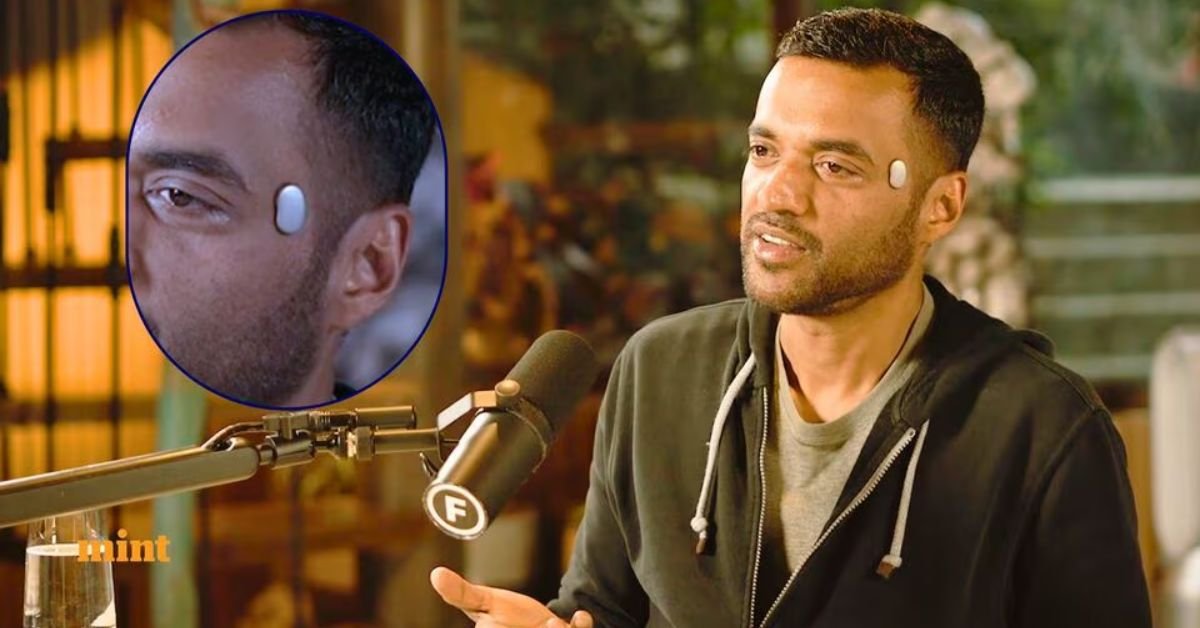
Hey there, if you have been scrolling through social media lately, you have probably spotted something unusual on Deepinder Goyal’s forehead – that small, sleek gadget that’s sparked endless curiosity and even a few funny memes (external SSD, anyone?).
As someone who loves keeping up with innovative Indian entrepreneurs, I could not resist digging deeper.
So, what exactly is this thing called Temple, and why is the Zomato founder so excited about it?
Let us break it down in simple terms, because this story is pretty fascinating – it is not just another fitness tracker; it is something that could change how we think about health and aging.
Who Is Deepinder Goyal, Anyway?
Most of us know Deepinder Goyal as the brain behind Zomato, the food delivery giant that’s become a household name in India and beyond.
He started Zomato back in 2008 as a simple restaurant menu site, and today, under its parent company Eternal, it includes Blinkit, Hyperpure, and more.
Deepinder is known for his no-nonsense approach, sharp business sense, and, recently, his bold moves into personal health and longevity research.
However, Temple is not a Zomato product. It is a separate venture from Deepinder, born out of his personal passion for understanding human aging.
He has poured his own resources into this, showing just how serious he is about pushing boundaries beyond food tech.
What Exactly Is Temple?
In the simplest words, Temple is a lightweight, everyday wearable device – think a small, discreet sensor you stick near your Temple (that is how it got its clever name!).
It continuously monitors blood flow to your brain in real-time, something no other consumer device does quite like this yet.
Unlike traditional medical scans that happen in a clinic for just a few minutes, Temple works all day long while you go about your normal life – working, exercising, or even sleeping.
It is experimental right now, meaning it is still in the development phase, but Deepinder has been testing prototypes himself for over a year.
The goal? To gather accurate data on brain blood flow, which scientists already recognize as a key marker for cognitive health, longevity, and overall brain function.
Science Behind It: Gravity Ageing Hypothesis
This is where things get really exciting.
Deepinder has shared his “Gravity Ageing Hypothesis” – a thought-provoking idea that gravity itself might play a role in how we age.
The theory suggests that standing upright (something unique to humans) could slightly reduce blood flow to critical parts of the brain over time, like the hypothalamus and brainstem, which regulate aging processes.
Even small drops in circulation to these areas might speed up aging.
Temple is designed to test this hypothesis by providing continuous, real-world data.
Deepinder emphasizes that even if the gravity part does not fully pan out, tracking brain blood flow is still incredibly valuable – it is a proven biomarker for better cognition and healthier aging.
He is funding this through his research initiatives, and the device aims to be “world-class” in accuracy and comfort.
No gimmicks here; Deepinder has been open about it being a small, focused project compared to his bigger companies.
Why Is Everyone Talking About Temple Now?
The buzz really picked up when Deepinder appeared on popular podcasts and events wearing the device.
People noticed the tiny gold or silver patch near his eye and started speculating wildly.
He finally teased an official reveal with “Coming Soon” posts, complete with an X handle for updates (@temple, if you are curious to follow along).
It is not just tech enthusiasts getting excited – longevity experts, health researchers, and everyday folks interested in staying sharp as they age are watching closely.
In a world full of smartwatches tracking steps and heart rate, Temple feels like the next level: focusing on the brain, our most vital organ.
An Interesting Trivia To Wow Your Friends
Here is a cool fact: Deepinder did not just name it Temple for fun – the placement near the temple region of your head inspired the name, and someone online even suggested it before he confirmed! Plus, he’s committed millions of his personal funds to longevity research, showing this is not a side hobby but a genuine mission.
What Could Temple Mean For The Future?
Imagine a world where we all have affordable tools to monitor brain health daily, just like we check our blood pressure or sleep quality now.
Temple could help researchers uncover new ways to slow aging, improve mental clarity, or even prevent neurological issues.
It is early days, but Deepinder’s track record with Zomato proves he knows how to turn bold ideas into reality.
Of course, it is experimental, so we are waiting for more details on availability, pricing, and exact features.
However, one thing’s clear: Indian innovators like Deepinder are leading the charge in global health tech.
There you have it – the full scoop on Temple, straight from the latest developments.
It is inspiring to see entrepreneurs tackling big questions like “Why do we age?” and building tools to find answers.
If you enjoyed this deep dive, stick around for more articles on innovative tech, business stories, and health insights right here at THOUSIF Inc. – INDIA.
We would love to have you explore our other posts.
Who knows what exciting topic we will cover next!
Thanks for reading, and stay curious!
About Author