
Table Of Contents
The Man Behind Modi’s Digital Empire
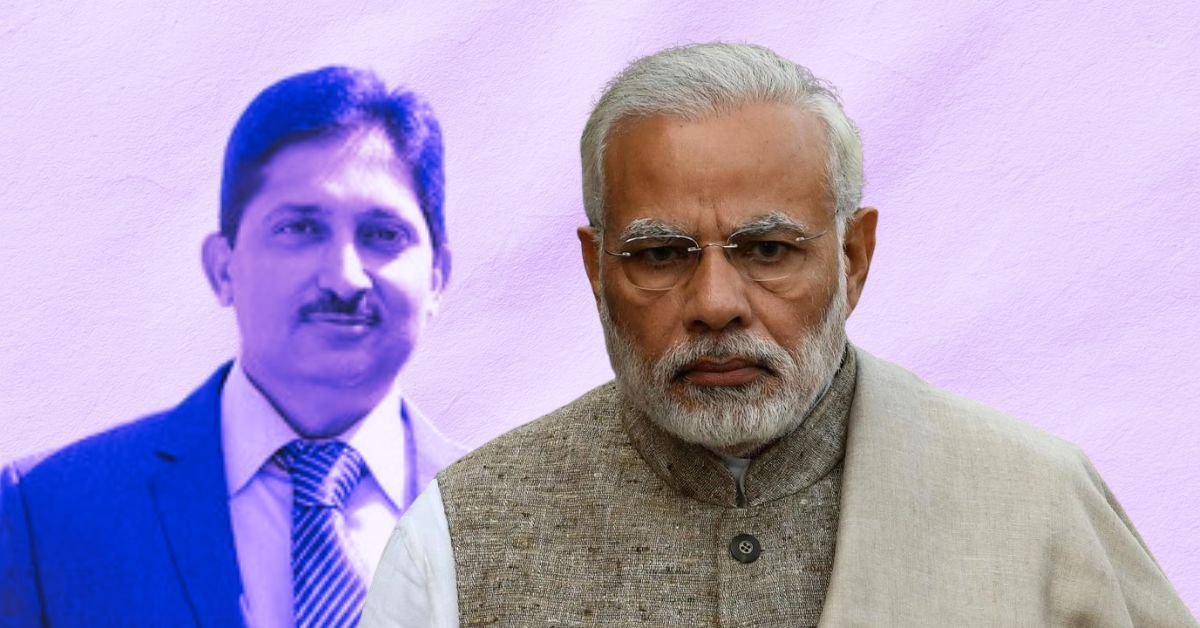
Hiren Joshi is not a household name in India, yet he has been one of the most influential figures in shaping how Prime Minister Narendra Modi communicates with the nation.
For over sixteen years, this former engineering professor has served as Modi’s digital architect, communications strategist, and what many call his “eyes and ears” in the ever-evolving world of social media and public perception.
His journey from resolving a simple technical glitch at a government event in Gujarat to becoming one of the three most powerful people in the Modi administration is nothing short of extraordinary.
The story of Hiren Joshi is intertwined with the digital transformation of Indian politics.
While most people recognize Modi’s massive social media presence and his ability to connect with millions through tweets, speeches, and online campaigns, very few know about the man orchestrating this digital symphony behind the scenes.
Joshi’s influence extends far beyond just managing social media accounts; he has been credited with monitoring media coverage, coordinating with journalists, shaping online narratives, and even coining terms that have become part of India’s political vocabulary.
From Engineering Classrooms To Political Corridors
Hiren Joshi’s background is rooted in academia and technology.
He holds a degree in electronics engineering from Pune and earned his PhD from the Indian Institute of Information Technology and Management in Gwalior.
Before entering the political arena, Joshi spent over eighteen years as a teacher, working as an assistant professor at the Manikya Lal Verma Textile and Engineering College in Bhilwara, Rajasthan.
His research interests included biometric authentication, database management systems, and information security, skills that would later prove invaluable in the world of digital politics.
During his academic career, Joshi also taught at Gujarat University, where he served in various capacities, including assistant professor, associate professor at Dr Babasaheb Ambedkar Open University, and eventually as a professor in the Department of Computer Science.
He authored a book on web technology and had over forty-one publications to his credit.
His expertise in information security and network systems positioned him perfectly for the role he would eventually assume in Modi’s inner circle.
The Fateful Meeting That Changed Everything
The year 2008 marked a turning point in both Joshi’s life and in the way Indian politics would be conducted.
At that time, Narendra Modi was serving as the Chief Minister of Gujarat and was already beginning to understand the power of technology in governance and communication.
The Gujarat government had organized an event for engineers, and Modi was present as the chief guest.
Everything was going smoothly until a technical glitch threatened to derail the entire program.
This is where Hiren Joshi entered the picture.
As an assistant professor with deep knowledge of technology and problem-solving skills honed through years of teaching, Joshi stepped in and resolved the technical issue within minutes.
Modi, who was known for his attention to detail and appreciation for efficiency, was immediately impressed.
What happened next would reshape both their careers.
Modi hand-picked Joshi to handle his digital presence and communication strategy.
This chance encounter was more than just good fortune for Joshi.
It was the beginning of a partnership that would last for nearly two decades and fundamentally change how political communication happens in India.
From that day forward, Joshi became an integral part of Modi’s team, first in Gujarat and later when Modi moved to Delhi as Prime Minister in 2014.
Building Modi’s Digital Presence In Gujarat
Once Joshi joined Modi’s team in Gujarat, he immediately set to work transforming how the Chief Minister communicated with people.
This was still the early days of social media in India, and most politicians were either completely absent from these platforms or using them ineffectively.
Joshi recognized the untapped potential of platforms like Twitter, Facebook, and emerging digital channels.
He developed systems to ensure Modi’s tweets were translated into multiple languages, making them accessible to people across different regions of India.
This multilingual approach was revolutionary at the time and helped Modi build a pan-Indian appeal even before he became Prime Minister.
Joshi also worked on using technology to connect Modi directly with citizens, bypassing traditional media channels that the Chief Minister often viewed with suspicion.
The success of these digital initiatives in Gujarat became a template for what would follow on a much larger scale.
Modi’s social media following grew exponentially, and he became one of the first Indian politicians to harness the power of direct digital truly communication with voters.
Joshi’s role in this transformation cannot be overstated; he was the technical brain and strategic mind, making it all possible.
The Move To Delhi And Elevation To PMO
When Narendra Modi swept to power in the 2014 general elections with a historic mandate, Hiren Joshi moved with him from Gandhinagar to New Delhi.
The transition from state politics to national governance brought new challenges and responsibilities, but Joshi was ready.
Initially working in a support role, his responsibilities and influence grew rapidly as the Modi government increasingly relied on digital communication and media management.
By 2019, following Modi’s re-election for a second term, Joshi’s importance had become undeniable.
On June 14, 2019, he was officially appointed as Officer on Special Duty for Communications and Information Technology in the Prime Minister’s Office, with a rank equivalent to Joint Secretary.
The appointment order from the PMO stated clearly that Joshi would serve “on a co-terminus basis or until further orders”.
This designation placed Joshi in a mighty position. As Joint Secretary-level OSD (Communications and IT), he was not just another bureaucrat.
He had direct access to the Prime Minister, reported to him daily, and wielded influence that extended far beyond his official rank.
Political observers noted that ministers, editors, media owners, and even senior BJP leaders preferred not to cross paths with Joshi or find themselves on what some called his “blocked list”.
The Daily Ritual: Briefing The Prime Minister
One of Hiren Joshi’s most essential responsibilities became the daily morning briefing with Prime Minister Modi.
Every morning, Joshi would meet with the PM to provide a distilled report of India’s social media chatter, news coverage, and public sentiment.
This was not just a summary of trending topics; it was a carefully analyzed presentation using sophisticated analytical tools and data mapping.
These briefings gave Modi a finger on the pulse of the nation before his day even began.
Joshi would bring updates from across the country, capturing the voices of party workers, ordinary citizens, critics, and supporters alike.
He would analyze what was working in the government’s communication strategy and what needed adjustment.
Based on these inputs, he would help map out the Prime Minister’s day, suggesting when to tweet, what to emphasize, and how to respond to emerging issues.
This daily ritual made Joshi indispensable.
He became the filter through which Modi viewed the digital landscape of India.
When the Prime Minister went on campaign trails during elections or embarked on international tours, Joshi was almost always by his side, ensuring real-time monitoring and response capabilities.
This constant presence and access to power made him one of the most influential people in the government, despite having no public profile.
The Scope Of Influence: Media Monitoring and Coordination
Joshi’s responsibilities extended far beyond just managing Modi’s social media accounts.
According to multiple reports and political observers, he developed an extensive system for monitoring and coordinating media coverage.
This included keeping track of what television channels were broadcasting, what journalists were writing, and how different media outlets were covering government initiatives.
Some reports suggest that Joshi created watch lists and categorized journalists based on their coverage of the Modi government.
These categories reportedly ranged from supportive to neutral to critical. While these claims have been controversial and lack official confirmation, they reflect the perception of Joshi’s extensive reach in media circles.
Journalists across India reportedly received guidance, suggestions, and sometimes direct communication from Joshi or his team about coverage priorities.
His influence allegedly extended to decisions about which topics should be covered on television debates, which guests should be invited, and what narratives should be emphasized.
While critics have called this an attempt to control media narratives and stifle press freedom, supporters argue that every government engages in strategic communication and media coordination.
Regardless of one’s perspective, the sheer scope of Joshi’s alleged monitoring and coordination activities made him a figure of both fascination and fear in Indian media circles.
Architecting Online Campaigns And Digital Strategy
Beyond media monitoring, Hiren Joshi played a central role in architecting major online campaigns that shaped India’s digital discourse.
He was credited with orchestrating digital campaigns targeting Pakistan, Bangladesh, the Maldives, Nepal, Turkey, and China whenever diplomatic tensions arose.
These campaigns would involve coordinated messaging across social media platforms, hashtag trends, and mobilization of supporters to amplify government positions.
Joshi’s digital strategy also involved close coordination with the BJP’s social media machinery.
While the party had its own IT cell and social media teams, Joshi’s position in the PMO gave him a unique vantage point to align government messaging with party communication.
This integration of government and party digital strategies was unprecedented in Indian politics and contributed significantly to the BJP’s dominance in online spaces.
Technology companies and social media platforms operating in India also reportedly dealt with Joshi on various matters.
From content moderation issues to policy discussions, Joshi’s office served as a key point of contact between the government and Big Tech companies.
This gave him substantial influence over how these platforms operated in India and what content policies they enforced.
Creating “Vishwaguru” And Shaping Political Vocabulary
One of Hiren Joshi’s most notable contributions to Indian political discourse was reportedly coining and popularising the term “Vishwaguru”.
This Sanskrit word, meaning “teacher of the world” or “world leader,” became closely associated with Prime Minister Modi’s vision for India’s global role.
The term captured the aspiration of positioning India not just as an emerging power but as a nation with ancient wisdom and modern capabilities that could guide the world.
The “Vishwaguru” concept was woven into numerous government campaigns, speeches, and digital content.
It appeared in contexts ranging from India’s vaccine diplomacy during COVID-19 to its leadership in international forums like the G20.
However, the term also became controversial when India faced international criticism or diplomatic setbacks, with critics mocking the “Vishwaguru” image.
Interestingly, this term would later play a role in the tensions that emerged between Joshi and Modi in 2024-25.
Beyond “Vishwaguru,” Joshi’s team was involved in developing messaging frameworks, slogans, and hashtags that dominated Indian political conversations.
From campaign taglines during elections to responses during crises, the digital vocabulary of the Modi era bore Joshi’s fingerprints.
His ability to craft messages that resonated with supporters while also generating controversy and attention demonstrated his understanding of the digital ecosystem.
Power Behind The Throne: Influence Without Portfolio
What made Hiren Joshi truly unique in Indian politics was the amount of power he wielded despite having no formal ministerial position or elected mandate.
As an OSD in the PMO, he was technically a government official, but his influence far exceeded his official designation.
Political analysts and journalists often described him as being more potent than many cabinet ministers.
This power manifested in various ways.
Media professionals reportedly sought his approval or input on coverage decisions.
Political leaders wanted to maintain good relationships with him because of his proximity to the Prime Minister.
Technology companies dealt with him on regulatory and policy matters.
Even within the BJP’s own organizational structure, Joshi’s position in the PMO gave him an edge in internal discussions about communication strategy.
The lack of public accountability that came with this behind-the-scenes power raised concerns among opposition politicians and civil society observers.
Unlike ministers who face parliamentary questions and public scrutiny, Joshi operated mainly out of public view.
There were no press conferences, no official statements, and minimal public information about his exact role and activities.
This invisibility, combined with substantial power, made him what some called Modi’s “invisible man”.
The 2024 Elections And Emerging Tensions
The year 2024 marked a significant turning point in Hiren Joshi’s relationship with Prime Minister Modi.
The Lok Sabha elections held that year produced results that shocked many observers, while Modi returned to power for a third term, the BJP lost its absolute majority in Parliament.
The party was forced to form a coalition government with allies, a significant comedown from the overwhelming majorities of 2014 and 2019.
Multiple sources suggest that Modi was disappointed with the electoral outcome and began questioning the effectiveness of his communication strategy.
The Prime Minister’s carefully cultivated image had taken hits during the campaign, with opposition narratives about his “dictatorial attitude” gaining some traction.
Critics had also begun mocking the “Vishwaguru” concept, particularly when India faced international criticism or diplomatic challenges.
According to political insiders, Modi reportedly blamed Joshi for failing to counter these negative narratives effectively.
The crisis manager could not manage this particular crisis, and Modi’s carefully guarded personal image, which he deeply cared about, had been damaged.
The term “Vishwaguru” that Joshi had popularised was now being used mockingly by critics, adding to the Prime Minister’s frustration.
These developments strained the long-standing relationship between the two men.
The Mysterious Exit From PMO
In late 2024, whispers began circulating in Delhi’s political circles that Hiren Joshi’s influence in the PMO was being curtailed.
By October 2024, some journalists noticed that the regular WhatsApp messages and directions from Joshi had stopped.
By late November, it became clear that something significant had changed; Joshi seemed to have disappeared from the communication groups and channels he had long controlled.
What made this development remarkable was the complete silence surrounding it.
Unlike typical government personnel changes that come with official notifications, press releases, or at least acknowledgement, Joshi’s departure happened quietly.
The PMO issued no statement, no farewell message, not even a simple notification.
It was as if one of the most powerful figures in the Modi government had simply vanished.
Political consultants and insiders began sharing information about what had transpired.
According to these sources, November 13, 2024, was supposed to be Joshi’s last working day.
He had reportedly begun transferring his responsibilities to other people.
The plan was allegedly to send him back to Gujarat, possibly with a face-saving position like a Rajya Sabha seat, since removing such an influential figure abruptly would create its own problems.
Allegations And Controversies Surface
As news of Joshi’s apparent exit spread, various allegations and questions emerged.
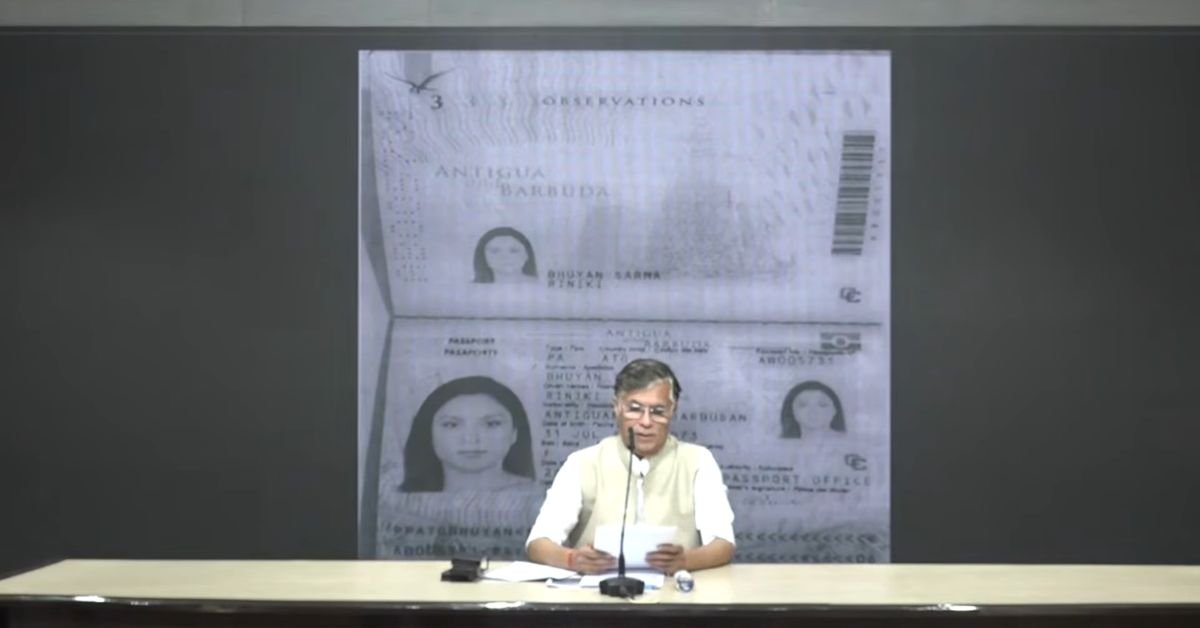
Congress party spokesperson Pawan Khera raised several pointed questions about Joshi’s activities and business interests.
Khera demanded transparency about Joshi’s alleged business partners, foreign connections in the United States, and rumoured stakes in illegal betting applications.
These allegations, while unverified, added to the mystery surrounding Joshi’s departure.
Khera also highlighted that a close associate of Joshi in the Law Commission had been hastily removed from his position shortly after his appointment, with his government accommodation cleared overnight.
This associate, identified in some reports as Hitesh Jain, was reportedly asked to vacate his official residence immediately, adding to speculation about what had transpired behind closed doors.
Another development that coincided with Joshi’s rumoured exit was the resignation of Navneet Sehgal from his position as CEO of Prasar Bharati, India’s public broadcaster.
Sehgal, Joshi, and Jain were often described as part of the same operational network within the government’s communication apparatus.
The simultaneous departure of multiple figures from this network suggested a broader reorganization or cleanup within the government’s media and communication machinery.
The Unexpected Comeback
Just when everyone thought Hiren Joshi’s chapter in the PMO had closed, a surprising development occurred in mid-December 2024.
After weeks of absence and speculation, Joshi suddenly reappeared in the same communication circles from which he had vanished.
The WhatsApp groups and journalist networks that had gone silent were active again, with Joshi back in his familiar role.
This comeback was as mysterious as his departure.
There was still no official statement from the PMO or the BJP explaining what had happened.
No clarification was provided about the allegations that had been raised.
No details were shared about whether Joshi had been reinstated to his previous position or given a new role.
The complete silence from official channels while Joshi resumed his activities raised more questions than it answered.
Political analysts were divided on what this development meant.
Some saw it as evidence that Modi ultimately decided Joshi was too valuable to lose, despite the tensions and disappointments.
Others suggested it might be a temporary arrangement while a more permanent solution was worked out.
Still others speculated about behind-the-scenes negotiations and compromises that might have facilitated Joshi’s return.
Understanding Joshi’s Enduring Value
The fact that Hiren Joshi appears to have returned to the PMO, despite the reported tensions and disappointments, speaks to his unique value in the Modi administration.
After sixteen years of working together, Joshi has institutional knowledge and understanding of Modi’s communication preferences that would be extremely difficult to replace.
He knows how the Prime Minister thinks, what messages resonate with him, and how to translate broad directives into specific communication strategies.
Joshi’s technical expertise and understanding of digital platforms also remain valuable assets.
The social media landscape is constantly evolving, with new platforms, changing algorithms, and emerging trends requiring constant adaptation. Joshi has demonstrated an ability to stay ahead of these changes and leverage them for political advantage.
Finding someone with both his technical skills and his deep understanding of Modi’s political brand would be challenging.
Moreover, Joshi’s extensive network of contacts across media organizations, technology companies, and political circles gives him reach that extends far beyond what any newcomer could quickly establish.
These relationships, built over years, enable rapid coordination and response when needed.
While some view these networks as problematic from a democratic accountability perspective, from a purely functional standpoint, they make Joshi extremely effective at his job.
The Broader Impact On Indian Politics And Media
Hiren Joshi’s career and influence reflect broader transformations in how politics is conducted in India and globally.
The rise of social media and digital communication has fundamentally changed the relationship between politicians and citizens, between governments and media, and between narrative and reality.
Joshi represents the new breed of political operators who understand that controlling digital narratives is often more important than traditional campaign methods.
His role also highlights questions about transparency and accountability in modern governance.
When unelected officials wield substantial influence over media coverage and public communication, it raises concerns about democratic oversight.
The lack of clear information about Joshi’s exact responsibilities, his decision-making authority, and his activities creates a black box in government operations.
For Indian media, Joshi’s influence has been a source of both opportunity and concern.
Some journalists and media organizations have benefited from close relationships with the PMO’s communication apparatus, gaining access and scoops.
Others have felt pressured or constrained by monitoring and coordination efforts.
The result has been an ongoing debate about press freedom, self-censorship, and the appropriate relationship between media and government.
Lessons From The Joshi Phenomenon
The story of Hiren Joshi offers several important lessons about contemporary Indian politics.
First, it demonstrates how chance encounters and being in the right place at the right time can change careers and lives.
Joshi’s split-second resolution of a technical glitch led to a sixteen-year association with one of India’s most powerful leaders.
Second, it shows the increasing importance of technical and digital expertise in political success.
Modi’s dominance in social media and digital communication has been a significant factor in his electoral victories and sustained popularity.
Having someone like Joshi who understands both technology and political messaging has been a strategic advantage.
Third, the Joshi story highlights the growing power of behind-the-scenes operators in modern politics.
While elected leaders occupy the public stage, appointed officials and advisors often wield tremendous influence in shaping decisions and communications.
Understanding who these figures are and what role they play is essential for anyone trying to understand how contemporary governments actually function.
The Future Of Political Communication In India
As India moves forward, the model that Hiren Joshi helped establish for political communication will likely continue to evolve.
New technologies like artificial intelligence, deepfakes, and advanced data analytics are already beginning to reshape digital political campaigning.
Whoever manages communications for future prime ministers will need to adapt to these emerging tools and challenges.
The questions raised by Joshi’s role and influence will also persist.
- How much power should communication advisors have?
- What level of transparency and accountability should be expected from those who shape government narratives?
- How can media maintain independence while also having necessary working relationships with government communication offices?
These are not easy questions, and India’s democracy will need to grapple with them in the years ahead.
The recent controversies and Joshi’s temporary exit may lead to some reforms in how the PMO’s communication operations are structured.
There might be greater formalization of roles, more transparency about responsibilities, or different accountability mechanisms.
Alternatively, the system might continue primarily as before, with influential communication advisors working behind the scenes with minimal public oversight.
The Personal Cost Of Power Without Profile
One aspect of Hiren Joshi’s story that often gets overlooked is the personal cost of wielding such power while maintaining such a low profile.
Unlike politicians who enjoy public recognition and appreciation, Joshi has operated in the shadows.
His contributions to Modi’s success are known to insiders but not celebrated publicly.
This invisibility also means vulnerability.
When things go wrong, there is no public constituency to defend you, no voter base to mobilize support.
Joshi’s reported exit and the allegations that surfaced showed how quickly someone can go from being indispensable to being expendable when they lose the confidence of their principal.
The lack of official acknowledgement of either his contributions or his departure reflected this harsh reality.
At the same time, this low profile provides certain advantages.
Operating away from media glare allows for flexibility and freedom of action that would be impossible for public figures.
Joshi could experiment with different strategies, make mistakes, and adjust approaches without public criticism or scrutiny.
This freedom has arguably contributed to his effectiveness over the years.
Comparing With Communication Advisors Globally
Hiren Joshi’s role in Indian politics has parallels with communication advisors and strategists in other democracies.
In the United States, figures like Steve Bannon in the Trump administration or David Axelrod in the Obama White House wielded substantial influence on political messaging and strategy.
In the United Kingdom, advisors like Dominic Cummings became almost as famous as the prime ministers they served.
However, Joshi’s longevity and the scope of his influence appear unique. Sixteen years of continuous service to the same leader, from state to national level, is remarkable.
The breadth of his alleged responsibilities, spanning social media, traditional media coordination, digital campaigns, and technology policy, is also unusually comprehensive.
What distinguishes Joshi from many of his global counterparts is his extreme privacy.
While Bannon and Cummings became public figures with their own media profiles, Joshi has successfully maintained anonymity despite his power.
Until the recent controversies, most ordinary Indians had never heard his name.
This ability to remain in the background while exercising foreground influence is perhaps his most distinctive characteristic.
The Academic Turned Power Broker
The transformation of Hiren Joshi from an academic focused on teaching and research to a political power broker is a fascinating journey.
His academic background in computer science, information security, and web technology provided the technical foundation.
His years in teaching gave him communication skills and the ability to distil complex information into understandable messages.
However, the political skills he developed, understanding power dynamics, building networks, managing sensitive relationships, and navigating bureaucratic systems, were learned on the job.
From that first encounter in 2008 to becoming a Joint Secretary-level OSD in the PMO, Joshi had to master an entirely different skill set from what his academic training provided.
This journey also reflects a broader trend of technical experts moving into political advisory roles.
As technology becomes increasingly central to governance and political communication, people with deep technical knowledge gain new importance in political circles.
Joshi’s success has likely inspired other academics and technology professionals to consider political advisory roles as career options.
What This Means For Ordinary Citizens
For ordinary Indian citizens, the Hiren Joshi story matters because it reveals how political communication really works in the digital age.
The tweets, messages, and campaigns that people see on their phones and screens are not spontaneous expressions; they are carefully crafted, strategically timed, and extensively coordinated.
Understanding this can help citizens be more critical consumers of political messaging.
The story also raises important questions about transparency in governance.
When powerful officials operate with minimal public accountability, it becomes harder for citizens to understand who is making decisions and why.
Democratic governance requires that people know not just what decisions are made, but who influences those decisions and based on what information.
At the same time, citizens need to recognize that all governments engage in strategic communication.
The question is not whether governments should communicate strategically, but how transparently they do so and whether checks and balances exist to prevent abuse.
Joshi’s role exists in a grey area where legitimate government communication activities can potentially shade into media manipulation or press freedom concerns.
The Unanswered Questions
Despite all the reporting and speculation about Hiren Joshi, many fundamental questions remain unanswered.
- What exactly are his current responsibilities in the PMO?
- Has he returned to his previous position, or does he have a modified role?
- What was the real reason for his reported exit, and what changed to facilitate his comeback?
The allegations about business interests, foreign connections, and betting app involvement also remain unverified.
Without official investigations or credible evidence, these remain in the realm of political allegations rather than facts.
However, the lack of official response to these questions adds to the atmosphere of mystery and speculation.
More broadly, there are questions about how long the current arrangement can continue.
Modi is now in his third term, and at some point, there will be a transition to new leadership.
- What happens to figures like Joshi when that transition occurs?
- Will the systems and approaches he established continue under new leadership, or will they be dismantled?
These questions will have implications for Indian political communication for years to come.
A Reflection On Power, Loyalty, And Politics
The relationship between Narendra Modi and Hiren Joshi offers a case study in the dynamics of political loyalty and power.
For sixteen years, Joshi served Modi with apparent dedication, helping build and maintain the Prime Minister’s political brand.
However, when electoral results disappointed and narratives faltered, that long relationship came under strain.
This reflects the transactional nature of political relationships, where loyalty and effectiveness are constantly being evaluated.
No matter how long someone has served, continued relevance depends on continued results.
At the same time, the difficulty of replacing someone with Joshi’s institutional knowledge and skills meant that even strained relationships might be worth preserving.
The story also shows the precarious nature of power derived entirely from proximity to a leader rather than an independent institutional position.
Joshi’s influence existed because of his relationship with Modi, not because of his official designation.
When that relationship weakened, his power evaporated almost instantly. When it was apparently restored, so was his influence.
This complete dependence on one individual’s confidence is both the source and the limitation of such power.
Wrapping Up
Hiren Joshi remains one of the most fascinating and influential figures in contemporary Indian politics, despite being unknown to most people.
His journey from engineering professor to Modi’s digital architect illustrates how technical expertise combined with political acumen can create extraordinary influence in modern governance.
The systems he helped build for political communication and media coordination have reshaped how Indian politics functions in the digital age.
Whether one views Joshi as a brilliant strategist or a problematic figure wielding too much unaccountable power likely depends on one’s political perspective.
What is undeniable is his impact on Indian political communication and his role in building the Modi brand.
The recent turbulence in his position shows that even the most powerful advisors remain vulnerable, yet his apparent return demonstrates his continued value.
As India continues evolving as a digital democracy, the questions raised by Joshi’s role will become increasingly important.
Finding the right balance between effective government communication and transparent, accountable governance remains an ongoing challenge.
Understanding figures like Hiren Joshi, who they are, what they do, and how they operate, is essential for anyone seeking to understand contemporary Indian politics.
We hope this deep dive into Hiren Joshi’s story has given you valuable insights into the hidden machinery of political communication in India.
For more fascinating articles on politics, governance, and the personalities shaping modern India, keep exploring THOUSIF Inc. – INDIA.
We bring you the stories behind the headlines, helping you understand the fundamental dynamics of power and influence in our democracy.
Interesting Trivia
Did you know that Hiren Joshi was reportedly responsible for translating Prime Minister Modi’s tweets into multiple languages, including Japanese? When Modi visited Japan in 2014, his tweets in Japanese surprised many and created positive impressions about India’s engagement with Japanese culture. This multilingual approach to social media, pioneered by Joshi during Modi’s tenure as Gujarat Chief Minister, has now become standard practice for political leaders worldwide who want to connect with diverse audiences in their native languages.
About Author