
Table Of Contents
Hey friends,
If you have been scrolling through your feed lately and keep seeing “Hussain Ustara” pop up everywhere, you are not imagining it.
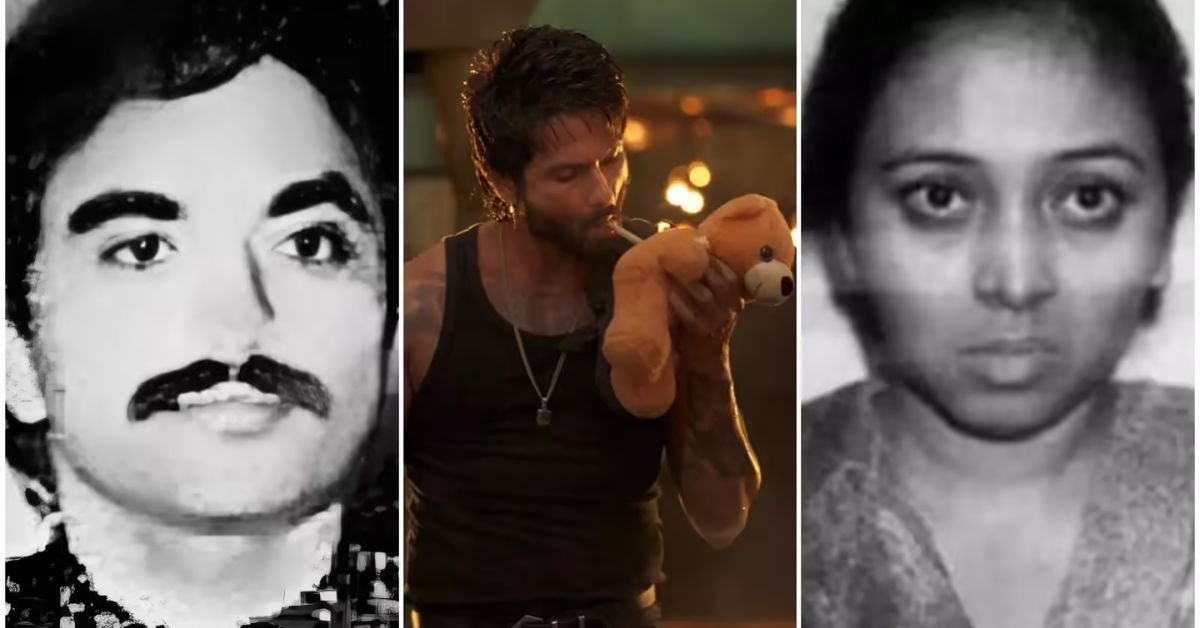
With Shahid Kapoor‘s O Romeo hitting theatres just ten days ago (February 13, 2026), everyone is suddenly curious about the real-life Mumbai gangster who dared to challenge Dawood Ibrahim.
I get it, stories like this feel straight out of a movie, yet they actually happened on the gritty streets of Mumbai.
At THOUSIF Inc. – INDIA, we love sharing these real tales in the simplest way possible.
No fancy jargon, just honest storytelling that anyone can sit down with over chai and actually enjoy.
So pull up a chair, and let me walk you through the life of Hussain Ustara, the blade-wielding independent don who refused to bow down, entered a dangerous alliance with Sapna Didi, and left behind a legacy that Bollywood is still talking about today.
Humble (And Tough) Beginnings In Mumbai
Hussain Sheikh (that was his real name) grew up in some of the toughest corners of Mumbai, places like Paidhoni and Nagpada.
Back in the 1970s and early 80s, these neighbourhoods were packed with narrow lanes, big dreams, and even bigger struggles.
Poverty was everywhere, and for many young boys, the streets offered both danger and a strange kind of opportunity.
Hussain did not come from a powerful crime family.
He started small, just street fights, helping with local “protection” rackets, and learning how to survive when things got rough.
By his early teens, he was already known for being quick on his feet, fearless, and someone you did not want to mess with.
Little did anyone know that one single night would turn this teenager into a legend with a razor-sharp nickname.
How A Simple Razor Gave Him The Name “Ustara”
Picture this: Hussain is about 15 or 16 years old.
A fight breaks out over some stolen money with a local gang leader.
Instead of backing down or grabbing a bigger weapon, young Hussain pulls out a regular barber’s razor, the kind called an ustara in Hindi.
In one swift move, he slashes the man so cleanly and deeply that when the victim reaches the hospital, the doctors are stunned.
They later said the cut looked almost surgical, like something done in an operating theatre, not a back-alley brawl.
Word spread like wildfire across Mumbai’s underworld.
From that day on, Hussain Sheikh became Hussain Ustara.
The name stuck because it carried real fear.
People knew: if you crossed him, that razor could appear in a flash.
It was not just about the violence; it was about the reputation.
In those days, your name was your power, and Hussain had just earned one that everyone remembered.
Rising As Mumbai’s Independent Hitman
Through the 1980s and into the early 1990s, Mumbai’s underworld was exploding with gang wars, extortion, and power struggles.
Most young guys rushed to join the big syndicates for safety and big money.
Not Hussain Ustara. He chose to stay independent.
He built a small but super-loyal crew and quickly became one of the city’s most feared contract killers.
People called him a sharpshooter who stayed calm even as bullets flew.
He handled “supari” jobs (hit contracts) with precision, looted weapon consignments, and even quietly worked as a police informer at times, leaking details about rival gangs when it suited his own revenge plans.
What made him different? He followed his own code.
He never wanted to be anyone’s puppet, and that independence made him both respected and dangerous.
The Fiery Rivalry With Dawood Ibrahim
By the late 1980s, Dawood Ibrahim was the undisputed king of Mumbai’s underworld, his D-Company stretched everywhere.
Most people knew better than to challenge him.
But Hussain Ustara? He refused to fall in line.
Their rivalry was not just personal; it was about territory, control, and pride.
Hussain would not hand over his operations or swear loyalty to Dawood.
Clashes happened over land, money, and old scores.
In a world where almost everyone eventually joined the biggest gang, Hussain’s defiance made him a symbol of rebellion.
Not many men could openly stand against Dawood and survive as long as he did.
The Powerful (And Heartbreaking) Alliance With Sapna Didi
One of the most fascinating parts of Hussain’s story is his bond with Ashraf Khan, better known as Sapna Didi.
Ashraf’s husband, Mehmood Khan, had been killed (many say by Dawood’s men) in a shootout.
Heartbroken and burning with revenge, she approached Hussain around 1986.
She wanted him to teach her how to shoot, ride a motorbike, and survive in the male-dominated underworld.
Hussain agreed.
He trained her personally and even gave her the name “Sapna Didi” that everyone would remember.
Together, they formed a deadly team.
They plotted to finish Dawood.
There are stories of plans to strike during an India-Pakistan cricket match in Sharjah, where Dawood loved to sit in the VIP box.
For a while, they were unstoppable.
However, things got complicated.
Hussain had developed real feelings for Sapna Didi. When he crossed a line, she pushed him away.
Harsh words were exchanged, and their powerful alliance broke.
Sapna continued her mission alone but was brutally killed in 1994, dragged out and stabbed 22 times in her Nagpada home by Dawood’s men.
Hussain never forgot.
A Tragic End And Lasting Legacy
Four years later, on September 11, 1998, Hussain Ustara met his fate in the very same Nagpada area.
Eight shooters from Chhota Shakeel’s gang (part of D-Company) ambushed him.
He was gunned down at his first-floor home.
Some older police officers still remember him as both a dreaded gangster and a useful informer who helped them against bigger threats.
His story did not end with his death.
It lived on in books by S. Hussain Zaidi (especially Mafia Queens of Mumbai) and now in cinemas.
The Bollywood Connection: O Romeo
Right now, in February 2026, Shahid Kapoor is bringing Hussain Ustara’s spirit to life in Vishal Bhardwaj’s O Romeo.
Shahid plays the razor-wielding gangster, while Triptii Dimri stars as the fierce woman inspired by Sapna Didi.
The film mixes action, revenge, and even a tender (but doomed) love story, just as the real tale does.
Even Hussain’s daughter tried to stop the movie legally, asking for changes and compensation, but the film went ahead and is already creating huge buzz.
It shows how these real stories still fascinate us decades later.
Here is a quick timeline to make it easy to follow:
| Year | What Happened |
|---|---|
| ~1970s | Born Hussain Sheikh in Paidhoni, Mumbai |
| ~1985-86 | Gets “Ustara” nickname after razor fight |
| Late 80s | Becomes the top independent hitman |
| 1986 | Meets Ashraf Khan, trains her as Sapna Didi |
| Early 90s | Plots with Sapna Didi against Dawood |
| 1994 | Sapna Didi was killed by Dawood’s men |
| 1998 | Hussain Ustara was shot dead in Nagpada |
| 2026 | O Romeo releases, starring Shahid Kapoor |
Trivia
Here is a fun (and chilling) fact most people do not know: After that first big razor cut, the doctors actually asked the police, “Who performed this surgery?” They refused to believe a teenager with a basic barber’s tool had made such a precise, deep incision in one swing. That single moment made the entire underworld sit up and take notice!
Wrapping It Up
Hussain Ustara’s life was short, violent, and full of choices that most of us could never imagine.
He was a product of his tough streets, fearless, independent, and loyal to his own rules until the very end.
Whether you see him as a villain, a rebel, or just a fascinating chapter in Mumbai’s history, his story reminds us how thin the line can be between survival and legend.
Thanks for reading this deep dive with me!
If you enjoyed it, do check out the other real-life stories and crime breakdowns we share here at THOUSIF Inc. – INDIA.
We keep things simple, honest, and always worth your time.
Drop a comment: What part of Hussain Ustara’s life surprised you the most? Or which underworld story should we cover next?
Until next time, stay curious and stay safe, friends!
About Author