
Table Of Contents
In the turquoise waters of the Bay of Bengal sits a speck of land so small it barely registers on most maps.
However, St. Martin’s Island, known locally as Narikel Jinjira or “Coconut Island”, has become one of South Asia’s hottest geopolitical flashpoints.
Former Prime Minister Sheikh Hasina, ousted in August 2024 and now living in exile in India, has repeatedly claimed the United States wanted this tiny coral island so badly that her refusal to hand it over contributed to her downfall.
In May 2025, she doubled down, accusing interim leader Muhammad Yunus of “selling Bangladesh to the US.”
By October 2025, fresh rumors surfaced linking US President Donald Trump to plans for a luxury “Riviera-style resort” on the island, with some calling it a thinly veiled cover for a military foothold.
Bangladesh’s government and the US State Department have dismissed every allegation.
Tourism to the island has been heavily restricted since early 2026 to “protect the fragile ecosystem.”
So what is really going on? Is this just political conspiracy talk, or is a 3-square-kilometre coral atoll genuinely a prize in the US-China great-power game?
Let us dive deep.
What Exactly Is St. Martin’s Island?
St. Martin’s is Bangladesh’s only coral island, located 9 km south of the Teknaf peninsula in Cox’s Bazar district and just 8 km from Myanmar’s coastline.
Measuring roughly 3–9 km² (sources vary slightly depending on tidal measurement) with a population of around 3,700, it is a picture-perfect tropical paradise of white beaches, coconut groves, and living coral reefs.
For decades, it was a low-key tourist destination, with boat rides from the mainland, fresh seafood, and zero cars (the island banned motor vehicles long ago).
However, its real value is not Instagram sunsets.
Its location places it at the crossroads of critical maritime routes in the northeastern Bay of Bengal, right on the doorstep of the Strait of Malacca, the narrow chokepoint through which roughly 80% of China’s oil and energy imports flow.
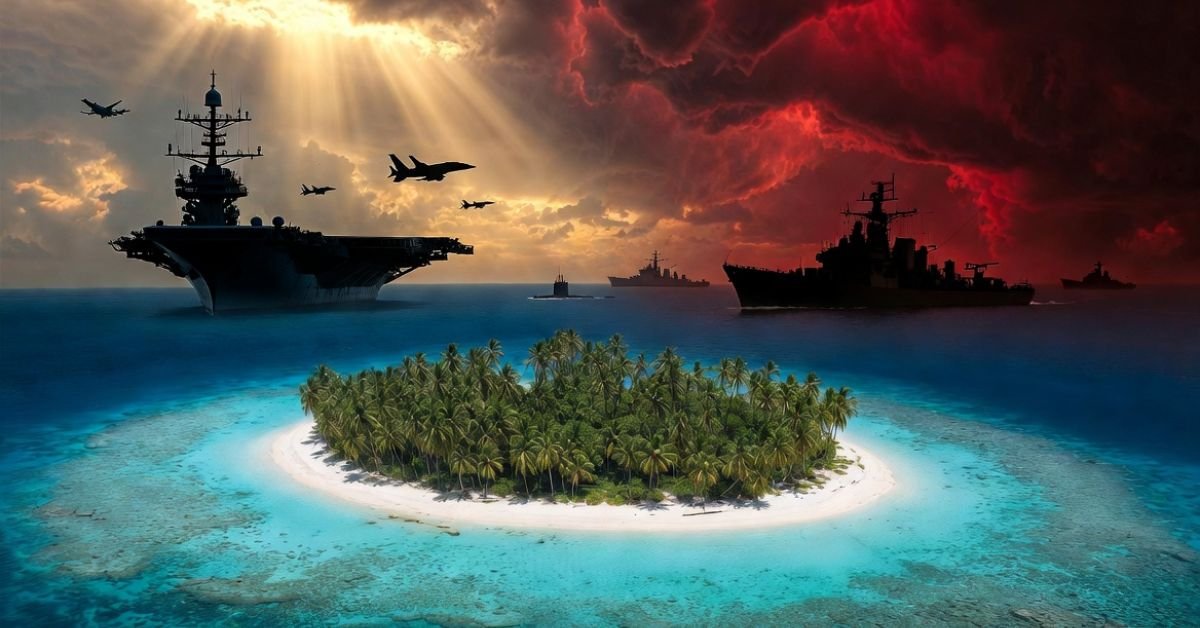
That single fact turns a sleepy coral island into a potential military listening post, surveillance hub, or forward operating base.
The Strategic Chessboard: Why Superpowers Are Watching
The Bay of Bengal has quietly become the new frontier in the Indo-Pacific power struggle.
China has been expanding its footprint aggressively:
- Beijing helped Bangladesh build its first submarine base (BNS Sheikh Hasina) near Cox’s Bazar.
- Chinese intelligence facilities reportedly operate on Myanmar’s Coco Islands, just north of St. Martin’s.
- Under the Belt and Road Initiative, China is pouring infrastructure funds into littoral states to secure sea lanes.
The United States, through its Indo-Pacific Strategy, is determined to prevent exactly this kind of encirclement by China.
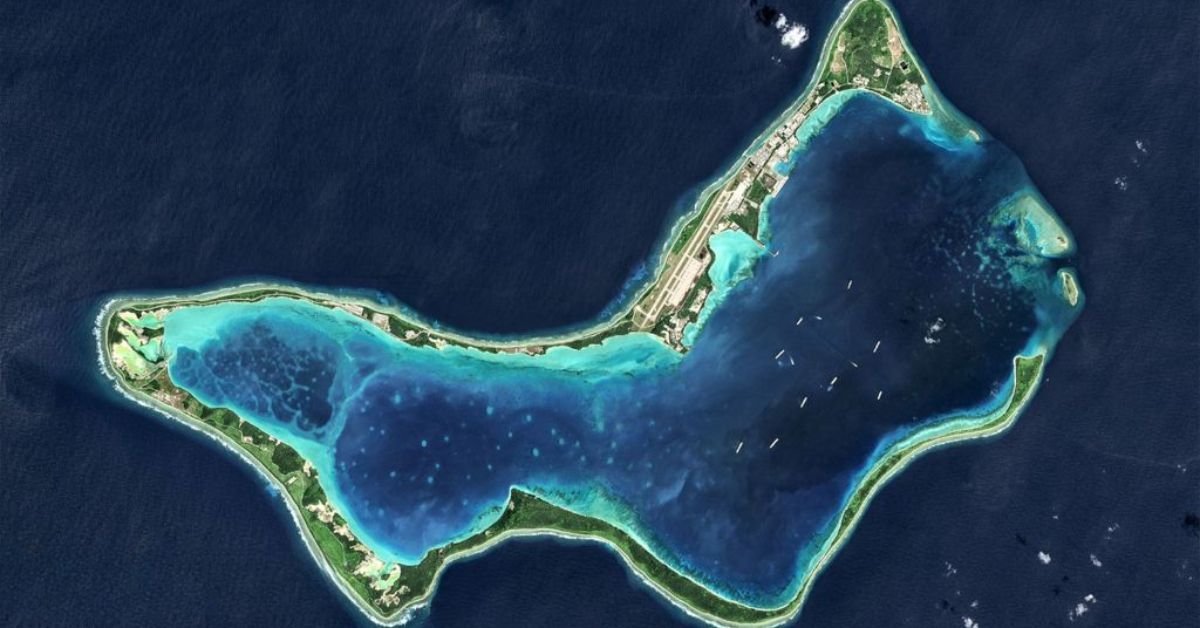
A facility on St. Martin’s would give Washington eyes and ears on Chinese submarine movements, merchant shipping, and naval activity far closer than the distant US base at Diego Garcia.
It would also sit near India’s Andaman and Nicobar Islands, adding another layer of complexity for New Delhi.
In short: whoever controls (or even influences) St. Martin’s gains a strategic advantage in monitoring one of the world’s busiest energy corridors.
Sheikh Hasina’s Bombshell Allegations: From 2023 To 2026
The drama exploded into public view in June 2023 when Hasina, addressing parliament, dropped this line:
“If even now I were to say that I would lease out Saint Martin’s Island or our country to someone, I would have no difficulty remaining in power.”
After her dramatic ouster in August 2024 amid student-led protests, she sent a message through associates claiming:
“I could have remained in power if I had surrendered the sovereignty of Saint Martin Island and allowed America to hold sway over the Bay of Bengal.”
She repeated the charge in 2025, directly accusing the Yunus-led interim government of preparing to “sell” the island.
In October 2025, Indian and Bangladeshi media reported claims that Yunus had discussed a US-backed “resort project” (sometimes described as a 99-year lease or special economic zone for foreigners) during meetings with Trump and his advisors in New York.
Some outlets even suggested this was Plan B after a full naval base proved politically toxic.
Hasina’s supporters and certain analysts frame the entire 2024 uprising as US-orchestrated regime change over the island.
Others point out that Bangladesh’s politics have long been rife with “selling the island” accusations; parties have been flinging the charge at each other since the 1980s.
2025–2026 Updates: Resorts, Restrictions, And Rumour Control
The narrative took a new twist in late 2025 when reports emerged of the Trump administration’s interest in turning St. Martin’s into an American-style resort development with exclusive foreigner zones.
Critics immediately cried, “cover story for a base.”
Then, in January 2026, the Bangladeshi government imposed strict new tourism rules, including a near-total closure for several months, citing environmental protection and coral reef damage.
Social media exploded with claims that the restrictions were actually clearing the way for US construction crews.
Officials flatly denied it, calling the stories “misinformation” and “political propaganda.”
As of March 2026, no evidence of any handover, lease, or construction has surfaced.
Fact-checkers (including AFP) continue to label viral claims of secret military talks as false.
The US Position: Repeated, Emphatic Denials
The US State Department has been consistent since 2023:
“We respect Bangladesh’s sovereignty, and we have never engaged in any conversations about taking over St. Martin’s Island.”
White House spokespeople in 2024 explicitly rejected any role in Hasina’s ouster, calling the accusations “simply false.”
Even in 2025–2026, American diplomats in Dhaka continue to insist the only US interest in Bangladesh is partnership, trade, and democratic stability, not real estate on a coral island.
Why This Matters Far Beyond Bangladesh
For Bangladesh, the saga is a sovereignty nightmare.
The island generates tourism revenue and supports local fishermen, but any perception of foreign military interest risks turning it into a target or a political football.
For India, a US presence might balance Chinese influence, but it also complicates Delhi’s own maritime strategy in the Andamans.
For China, any American foothold in the Bay of Bengal is unacceptable.
And for the average Bangladeshi citizen? The island remains a national treasure under Bangladeshi control, for now.
However, the endless rumours erode trust in both domestic politics and foreign partners.
The Bottom Line (March 2026)
St. Martin’s Island is living proof that in today’s world, even a 3 km² coral atoll can become a geopolitical prize.
The US interest is real in the strategic sense, location, location, location, but the leap from “strategic interest” to “secret military takeover” remains unproven and officially denied.
Hasina’s accusations keep the story alive, tourism restrictions fuel suspicion, and great-power rivalry provides the oxygen.
Until concrete evidence emerges of any deal (or until the rumours finally fade), St. Martin’s will remain what it has been for years: a beautiful, fragile island caught in the crosscurrents of 21st-century superpower competition.
Bangladesh’s sovereignty is not for sale, at least not yet.
However, in the Bay of Bengal, the waves of geopolitics never stop moving.
What do you think? Is this pure conspiracy, a legitimate strategic concern, or something in between?
Drop your thoughts in the comments, and if you are planning a trip to St. Martin’s, check the latest travel advisories first.
The island is still open to visitors, just not as freely as before.
About Author