
Table Of Contents
Hey there, readers!
I am writing this from the heart as part of the team at THOUSIF Inc. – INDIA, where we love digging into stories that show how clever moves behind the scenes can change the course of history.
Today, let us chat about a gripping episode from 1994, when India found itself in a tough spot on the global stage over Kashmir.
It is a story of quick thinking, quiet alliances, and a dash of drama that kept our country out of hot water.
Grab a cup of tea and let us get into it.
The Tense Backdrop: Kashmir In The Spotlight
Picture this: It is the early 1990s, and India is navigating a rough patch.
The economy is just starting to recover from a major crisis, and in Kashmir, tensions are high amid ongoing unrest.
Pakistan sees an opening and pushes hard to make this an international issue.
They rally support within the Organization Of Islamic Cooperation (OIC), a group of mostly Muslim-majority countries that discusses shared concerns such as politics and human rights.
In March 1994, Pakistan got the OIC to pass a resolution criticizing India for what they called excessive force and human rights issues in Kashmir.
The plan? Take this to the United Nations Human Rights Commission (UNHRC, now called the Human Rights Council), a UN body that investigates global human rights violations.
If it passed there, it could snowball into a UN Security Council resolution, leading to sanctions or India’s isolation.
Sanctions are like economic penalties that hurt trade and aid; think of them as a country’s timeout from global business.
India could not let that happen.
With the Cold War over and our old ally, the Soviet Union, gone, we needed new friends fast.
Enter Prime Minister P.V. Narasimha Rao, a guy known for his sharp mind and low-key style.
He was not one for big speeches, but boy, could he strategize.
The Secret Mission To Tehran
Here is where it gets exciting.
Rao knew Iran, a key OIC member, could be a game-changer.
The OIC operates by consensus, meaning that if even one member objects, the whole thing falls apart.
So, he pulls off a bold move: He sends his External Affairs Minister, Dinesh Singh, on a hush-hush trip to Tehran.
Dinesh was not in great shape; he was actually in the hospital at AIIMS in Delhi, dealing with health issues that made walking tough.
However, Rao convinced him that this was crucial.
Dinesh boards a special military plane, lands in Tehran amid snowy mountains, and meets Iran’s Foreign Minister Ali Akbar Velayati right at the airport.
Velayati, surprised by the urgency, asks, “What’s up?” Dinesh smiles and says they need to talk.
That day, Dinesh meets top Iranian leaders: Velayati, President Hashemi Rafsanjani, and the Majlis (Iran’s parliament) Speaker Nateq-Nouri.
He hands over a personal letter from Rao, laying out India’s side of the story on Kashmir, emphasizing it is an internal matter, highlighting our democratic processes, and appealing to shared interests.
No one knows the exact words, but it was enough to sway them.
Rafsanjani assures Dinesh that Iran will not allow any harm to come to India.
The trip is super secretive.
Only Rao and the head of India’s intelligence agency, RAW, know the full details.
Dinesh’s family thinks he is still in treatment, and no media gets a whiff.
He flies back the same day, straight to the hospital.
Talk about dedication!
Showdown In Geneva: Vajpayee Takes The Stage
Meanwhile, over in Geneva, Switzerland, the UNHRC meeting is underway.
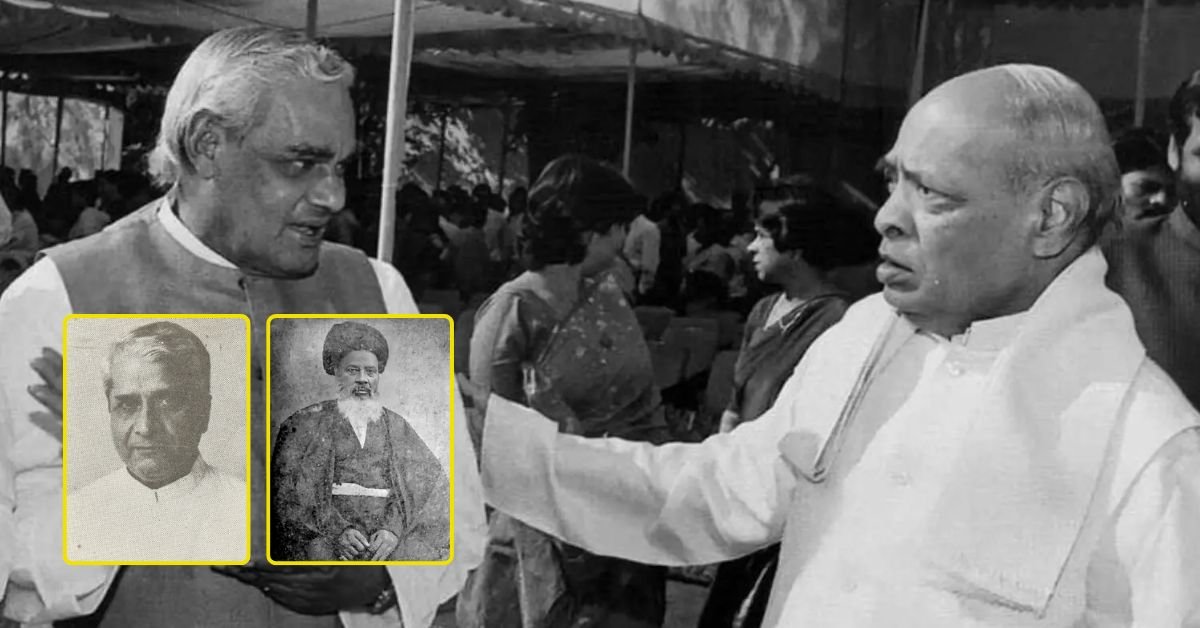
India’s team is a powerhouse: Led by Atal Bihari Vajpayee (then opposition leader, later PM), with Salman Khurshid (a young minister) and Farooq Abdullah (former Jammu and Kashmir chief minister).
They are nervous, Pakistan has the OIC backing, and the resolution could pass.
As the meeting starts, the OIC presents the resolution.
However, boom, Iran’s representative stands up and objects.
No full consensus? Resolution tossed.
Pakistan is stunned, like their plan just vanished.
Vajpayee and team are relieved, though they did not know about Dinesh’s mission until later.
Back in Delhi, Rao and the RAW chief high-five over the news.
This was not just luck.
It showed Rao’s knack for bipartisan moves, helping build national unity under Vajpayee.
And Iran’s help?
It stemmed from growing ties, like shared views on regional stability and trade.
Why Iran Stepped Up: A Deeper Bond
India and Iran go way back.
Think ancient trade routes, shared poetry (Persian influences in Urdu), and cultural exchanges.
In modern times, Iran has been a reliable oil supplier until US sanctions kicked in around 2018, forcing India to cut imports.
However, we have kept the door open.
Fast-forward to today: Our ties are strategic.
Iran occasionally comments on Kashmir, urging peaceful talks, but it is often tied to their beef with the US.
When India gets cozy with America, Iran reminds us of old friendships. Still, they have never crossed lines that hurt us badly.
One big example? The Chabahar Port.
This Iranian port is India’s gateway to Afghanistan and Central Asia, bypassing Pakistan.
In 2016, we signed a deal to develop it, investing millions.
It is part of the International North-South Transport Corridor (INSTC), a route for faster trade from India to Europe via Iran and Russia.
Despite US sanctions threatening penalties, India pushed ahead with a 10-year operations deal in 2024.
Why? It boosts our economy, aids Afghan aid (we have sent wheat shipments through it), and counters China’s Gwadar Port in Pakistan.
But challenges remain.
US tariffs in 2025 on countries trading with Iran hit hard, stalling some work.
India navigates this by emphasizing Chabahar’s role in humanitarian aid, not military stuff.
It is a tightrope, but it shows our commitment.
Broader Implications: Lessons From 1994
This 1994 win taught India a lot.
It highlighted diplomacy’s power over confrontation.
Rao’s quiet style, often called “the fox,” outshone louder approaches.
It also strengthened India-Iran relations, leading to joint ventures such as gas pipelines (though some fizzled out due to politics).
Today, with tensions in the Middle East, like recent Iran-Israel clashes, India stays neutral.
We voted against a UN resolution on Iran’s human rights in 2026, showing balance.
However, our oil needs (Iran was once our third-biggest supplier) and Chabahar keep ties warm.
Keywords such as “India-Iran strategic partnership,” “Kashmir diplomacy,” and “Chabahar connectivity” come up in discussions, underscoring mutual benefits.
To break it down, here is a quick table on key India-Iran milestones:
| Year | Event | Impact |
|---|---|---|
| 1994 | Iran blocks OIC resolution on Kashmir | Prevents UN sanctions, boosts trust |
| 2003 | New Delhi Declaration | Formalizes Chabahar development plans |
| 2016 | Trilateral deal with Afghanistan | Starts Chabahar operations for trade |
| 2024 | 10-year port agreement | Commits $370 million for expansion |
| 2026 | India opposes UN vote on Iran | Shows ongoing diplomatic support |
This table makes it easy to see how one event is built on another.
Trivia
Did you know? Iran’s revolutionary leader, Ruhollah Khomeini (who passed in 1989) had Indian roots! His grandfather, Syed Ahmad Musavi, was born in Kintoor village near Lucknow, Uttar Pradesh, in the early 1800s. He migrated to Iran, but the family kept “Hindi” in their name as a nod to those origins. It’s a cool reminder of how people and histories connect across borders.
Wrapping It Up
So, there you have it, a story of grit, alliances, and smart plays that kept India strong in 1994.
From Rao’s masterstroke to today’s Chabahar hustle, India-Iran ties prove that good neighbors (even distant ones) make all the difference.
It is not always smooth, with global pressures like sanctions, but the foundation is solid.
Thanks for reading, friends!
If this sparked your interest in global stories or India’s clever diplomacy, check out more articles on our site at THOUSIF Inc. – INDIA.
We have got tons of history, strategy, and everyday insights.
Drop a comment below.
What is your take on these hidden gems of the past? Stay curious!
About Author