
Table Of Contents
In today’s world of instant streaming and algorithm-driven recommendations, it is easy to overlook the quiet magic of old-fashioned television.
However, long before global platforms brought cinema to our fingertips, a modest 1973 Hindi film traveled across continents and language barriers to become a beloved national treasure in Algeria.
This cultural phenomenon continues to resonate more than five decades later.
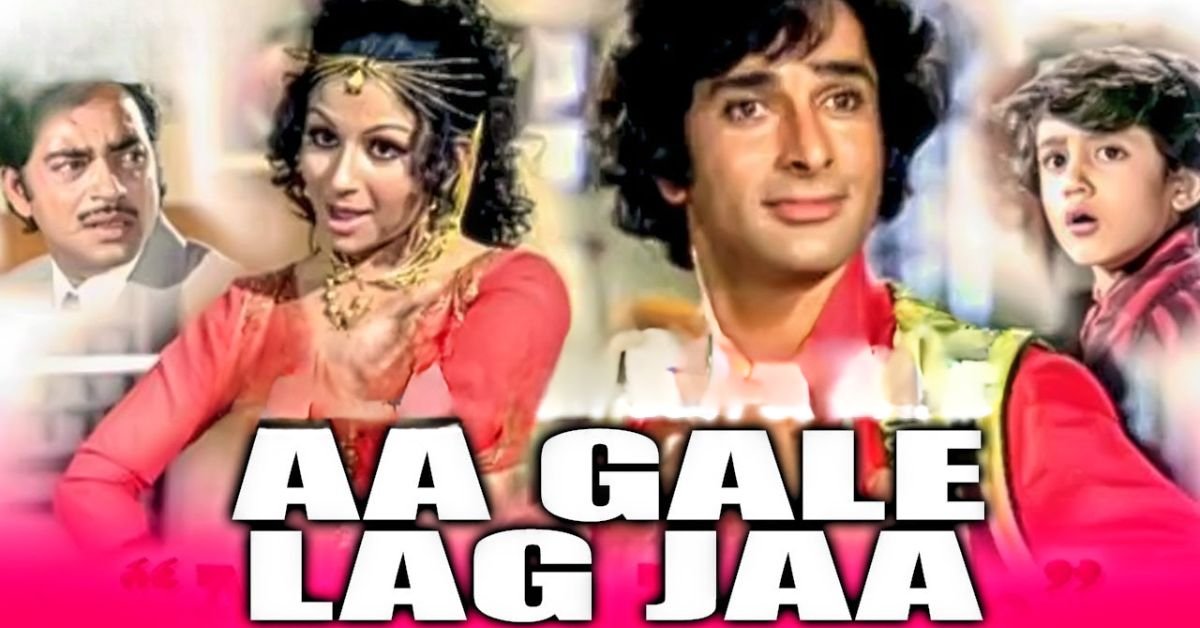
This is the remarkable story of Aa Gale Lag Jaa, affectionately known across Algeria simply as Janitou.
The Film India Nearly Overlooked
Directed by the acclaimed filmmaker Manmohan Desai, Aa Gale Lag Jaa starred Shashi Kapoor, Sharmila Tagore, and Shatrughan Sinha, with unforgettable music composed by the legendary R.D. Burman.
The film also featured a standout performance by child actor Master Tito as the young disabled boy Rahul.
In India, it was released to modest success, a heartfelt drama filled with romance, family conflict, separation, and redemption, but never a blockbuster hit.
What no one could have predicted was the extraordinary second life this film would find thousands of kilometers away in North Africa.
How Aa Gale Lag Jaa Conquered Algerian Television
During the 1970s and especially the challenging 1980s, a period marked by economic hardship, political tension, and the years leading up to the Algerian Civil War, Algerian state television frequently aired international films.
In search of emotional escape and connection, audiences discovered Aa Gale Lag Jaa.
Broadcast repeatedly without subtitles or any cultural context about Bollywood, the movie struck a deep, universal chord.
Whenever it aired, streets in Algiers and other cities would empty as families gathered around their television sets.
Viewers treated the screenings like a national event, comparable to watching a World Cup final.
The story’s themes of love, loss, resilience, and hope transcended language entirely.
The Birth Of “Janitou”, A Misheard Chorus That Became Legend
The film’s enduring fame centers on one unforgettable song: “Tera Mujhse Hai Pehle Ka Naata Koi”, sung by Kishore Kumar and Sushma Shrestha.
The catchy chorus, “Jaane tu ya jaane na”, was joyfully misheard by Algerian audiences as “Janitou” (sometimes pronounced “Khanitou”).
This single mispronunciation did not just rename the song; it renamed the entire movie.
To this day, Algerians refer to Aa Gale Lag Jaa as Janitou.
The word became part of everyday language, with some even affectionately calling Indians “Janitou.”
Over time, the song was lovingly adapted with traditional Algerian instruments like the duff, transforming a Bollywood classic into a cherished local cultural memory.
Shashi Kapoor emerged as an unexpected national heartthrob, while Master Tito’s poignant performance moved audiences to tears, proving once again that powerful storytelling needs no translation.
A Legacy Passed Down Through Generations
What makes the Janitou phenomenon truly extraordinary is its multi-generational staying power.
Algerians who grew up watching the film’s repeated broadcasts still speak of it with deep nostalgia.
Younger generations, many of whom never saw the original TV airings, know the story intimately through family retellings and shared cultural memory.
It is common to hear people of all ages say, “When Janitou was on TV, nothing else mattered.”
The film became far more than entertainment; it served as an emotional anchor during difficult times.
The Documentary That Captured The Magic
This unique cultural connection inspired Algerian filmmaker Amine Hattou to create the acclaimed 2020 documentary Janitou (also known as The Search for Janitou).
Using the film as a powerful lens, the documentary explores themes of love, emotional identity, repression, and societal transformation across generations in Algeria.
It stands as a beautiful tribute to how one foreign film became a mirror of Algerian society.
Why This Story Still Matters Today
In 2026, amid a flood of algorithmically tailored content, the Janitou story reminds us of cinema’s purest power: the ability to touch hearts without marketing campaigns, social media buzz, or even subtitles.
The Indian Embassy in Algiers has long recognized Aa Gale Lag Jaa as a special cultural bridge between India and Algeria.
It proves that the language of emotions is truly universal and knows no borders.
Even now, the film continues to be discussed, remembered, and loved.
It remains a shining example of how art can travel far beyond its original home and find a permanent place in the hearts of people halfway across the world.
Have you seen Aa Gale Lag Jaa (or Janitou)? Do you have a favorite Bollywood film that unexpectedly became a hit in another country?
Share your thoughts in the comments below!
If you have not watched it yet, treat yourself to this timeless classic.
You might discover why an entire nation still calls it Janitou.
About Author