
Table Of Contents
Introduction: A Landmark Case That Redefined Justice And Equality In India
Imagine dedicating over four decades to a marriage, raising a family, and then, in your sixties, being left without a roof or financial support, all because of a few spoken words.
This is not just a dramatic tale; it is the real-life story of Shah Bano Begum, whose fight for basic maintenance became one of India’s most influential legal battles: Mohammed Ahmad Khan vs Shah Bano Begum.
The Supreme Court decided this case in 1985.
It did not just address one woman’s plight; it questioned the intersection of religion, personal laws, and women’s rights in a secular democracy.
As a content writer at THOUSIF Inc. – INDIA, we have always been drawn to stories highlighting human resilience amid societal challenges.
This case, often simply called the Shah Bano case, sparked nationwide protests, led to new legislation, and continues to influence debates on issues like the Uniform Civil Code (UCC) and gender equality.
With recent developments, including a 2024 Supreme Court reaffirmation and the upcoming film “Haq” inspired by it, the story feels more relevant than ever in 2025.
This comprehensive blog post will explore every facet, from the historical roots and personal profiles to the detailed legal proceedings, controversies, and modern echoes.
We will draw on the full breadth of information, including updated facts as of October 2025.
We will keep the language clear and accessible, explaining terms along the way, so whether you are a law enthusiast, a history buff, or someone interested in social justice, you will walk away with a deeper understanding.
Let us dive in and unpack this pivotal chapter in Indian jurisprudence.
The Deep-Rooted Historical Context: Personal Laws, Colonial Legacy, And Post-Independence Struggles
To fully grasp the Shah Bano case, we must trace its origins back to India’s colonial era and the evolution of personal laws.
During British rule, the colonizers adopted a policy of non-interference in religious matters to maintain control, allowing communities to govern family issues like marriage, divorce, and inheritance through their own customs.
For Muslims, this crystallized in the Muslim Personal Law (Shariat) Application Act of 1937, which applied Islamic principles from the Quran and Hadith to personal affairs.
Islamic law, or Sharia, emphasizes justice and equity, but interpretations vary.
Divorce for men could be as simple as talaq, pronouncing divorce.
At the same time, women had limited options like khula, often requiring them to forfeit their mahr (a financial obligation from the husband, akin to a dowry in reverse).
Post-divorce, support was typically restricted to the iddat period, a three-month waiting time to confirm pregnancy and allow for reconciliation. Beyond that, women might rely on family or community, leaving many vulnerable in a patriarchal society.
Independence in 1947 brought the Indian Constitution, which enshrined equality under Article 14 and religious freedom under Article 25.
However, Article 44, a directive principle, urged the state to strive for a Uniform Civil Code (UCC) to unify family laws across religions.
Leaders like Dr. B.R. Ambedkar championed UCC as a tool for gender equality, arguing that disparate personal laws perpetuated discrimination.
Hindu laws were reformed in the 1950s through acts like the Hindu Marriage Act (1955), which outlawed polygamy and enhanced women’s inheritance rights.
However, Muslim personal law remained unchanged, shielded by concerns over minority rights and political vote banks.
The 1960s and 1970s saw rising feminist voices.
The 1974 “Towards Equality” report by the Committee on the Status of Women exposed how personal laws disadvantaged women, with Muslim women often faring worse due to practices like instant triple talaq (talaq-e-biddat).
Precedent-setting cases emerged: In 1964, Itwari vs Asghari upheld a Muslim man’s polygamous marriage but allowed maintenance for a mistreated wife.
The 1979 Bai Tahira vs Ali Hussain case clarified that mahr was not a substitute for ongoing support if a woman faced destitution.
Enter Section 125 of the Code of Criminal Procedure (CrPC), introduced in 1973 as a secular safeguard.
This provision mandates maintenance for wives (including divorced ones), children, or parents unable to support themselves, aiming to prevent poverty rather than punish wrongdoing.
It is enforced quickly at the magistrate level, without needing a full civil trial.
The Shah Bano case tested whether this secular law could override religious personal laws, highlighting tensions between tradition and modernity in a diverse India grappling with secularism.
As we approach the 1980s, India was amid social churn, economic liberalization loomed, women’s movements gained momentum, and debates on UCC intensified.
The case arrived when courts increasingly intervened to protect vulnerable groups, setting the stage for a landmark confrontation.
Detailed Profiles: The Lives Of Shah Bano Begum, Mohammed Ahmed Khan, And Key Influencers
Real people whose lives became emblematic of larger issues are at the heart of this case.
Shah Bano Begum, born Aftab Bibi around 1916 in Indore, Madhya Pradesh, grew up in a modest Muslim household.
Married at 16 to Mohammed Ahmed Khan in 1932, she embodied the era’s expectations for women: homemaking and child-rearing.
Over the years, she bore three sons, Siddiq, Mohammed Layak, and Mohammed Shafiq, as well as two daughters, dedicating her life to the family without formal education or employment.
The marriage hit rough waters in 1946 when Khan, a prosperous lawyer, took a second wife under Muslim polygamy rules, which permit up to four wives if treated equitably.
Co-habitation bred resentment, and by 1975, at age 62, Shah Bano was evicted from the home.
Left without income, she struggled with basic needs, relying on sporadic charity.
Her decision to seek legal recourse in 1978 was bold.
She defied community norms that viewed courts as a last resort for women.
Despite later pressures, her initial stand made her a symbol of quiet defiance.
Shah Bano lived reclusively after the case, passing away in 1992 at 76.
Mohammed Ahmed Khan, born circa 1905, was a well-established advocate in Indore, known for his legal acumen and standing in the Muslim community.
Educated and affluent, he represented traditional views, arguing that his religious obligations ended with paying the deferred mahr of ₹5,400 and iddat support of ₹3,000.
He was not portrayed as villainous but as a defender of Sharia principles, believing secular interference undermined faith. Khan handled parts of his defence and died in 1992.
Supporting figures enriched the narrative.
Danial Latifi, Shah Bano’s lawyer, was a progressive Muslim advocate who championed women’s rights in multiple cases.
Opposing him were representatives from the All India Muslim Personal Law Board (AIMPLB), established in 1973 to safeguard Muslim personal law.
The Supreme Court bench, led by Chief Justice Y.V. Chandrachud, a jurist famed for the 1973 Kesavananda Bharati case that defined the Constitution’s basic structure, included Justices Ranganath Misra, D.A. Desai, O. Chinnappa Reddy, and E.S. Venkataramiah, all of whom brought constitutional expertise.
Politically, Prime Minister Rajiv Gandhi’s involvement post-judgment added layers, as did activists from women’s groups like the Bharatiya Muslim Mahila Andolan, who saw the case as a catalyst for reform.
The Exhaustive Timeline: Every Milestone In The Case’s Journey
To appreciate the case’s complexity, here is a detailed chronology, capturing the slow build and far-reaching aftermath:
- 1916: Shah Bano was born in Indore.
- 1932: Marries Khan at age 16.
- 1932-1946: Family grows with five children; initial stability.
- 1946: Khan’s second marriage introduces polygamy tensions.
- 1950s-1970s: Strains escalate; Khan provides ₹200 monthly allowance.
- 1975: Shah Bano evicted at 62, facing destitution.
- April 6, 1978: Files a petition in the Indore Magistrate Court under Section 125 CrPC for ₹500 monthly.
- November 6, 1978: Khan pronounces triple talaq, pays back allowances and iddat amount.
- August 6, 1979: Magistrate awards meagre ₹25/month; appeal follows.
- July 3, 1980: The Madhya Pradesh High Court increased the award to ₹179.20/month, upholding Section 125’s applicability.
- 1981: Khan appeals to the Supreme Court; the initial two-judge bench (Justices Ranganath Misra and D.A. Desai) refers to the constitutional bench due to its broader implications.
- 1982-1984: Prolonged hearings; AIMPLB intervenes.
- February 1985: Final arguments before a five-judge bench.
- April 23, 1985: Supreme Court rules in Shah Bano’s favour.
- May-November 1985: Nationwide protests; Shah Bano rejects judgment in affidavit amid community pressure.
- February 1986: The Rajiv Gandhi government introduces the Muslim Women (Protection of Rights on Divorce) Bill.
- May 19, 1986: Bill becomes an Act despite opposition.
- 1986-2000: Act faces challenges; courts interpret provisions expansively.
- October 1, 2001: Danial Latifi vs Union of India upholds the Act but broadens “fair provision” to potentially cover lifetime support.
- 1997: Noor Saba Khatoon case extends children’s maintenance beyond Iddat.
- August 22, 2017: Supreme Court bans triple talaq in Shayara Bano case, citing arbitrariness.
- July 30, 2019: Triple talaq criminalized via a new Act.
- July 10, 2024: In Mohammed Abdul Samad vs. State, the Supreme Court reaffirms Muslim women’s right to choose Section 125 over the 1986 Act.
- January 27, 2025: Uttarakhand implements UCC, the first post-independence state.
- April 2025: Gujarat announces plans to follow as the second state.
- October 2025: Uttarakhand amends UCC rules for live-in relationships and cross-border marriages (Nepal, Bhutan, Tibet).
- Ongoing 2025: National UCC discussions continue, with Law Commission seeking inputs.
This timeline illustrates how the case evolved from a personal dispute to a catalyst for ongoing reforms.
Key Terms Explained: A Glossary for Clarity
Navigating legal jargon can be tricky, so here is an expanded breakdown with examples:
- Triple Talaq (Talaq-e-Biddat): Instant, irrevocable divorce by uttering “talaq” thrice. Criticized for lacking due process; banned in India in 2017, already prohibited in over 20 Muslim nations like Egypt (1929).
- Iddat: Three-month post-divorce waiting period (Quran 2:228) for pregnancy confirmation; husband covers expenses, but what if the woman remains needy?
- Mahr (Mehr): Obligatory gift from husband to wife; can be prompt or deferred. In Shah Bano’s case, it was deferred and paid post-divorce.
- Section 125 CrPC: Secular maintenance law (now Section 144 in Bharatiya Nagarik Suraksha Sanhita, 2023); focuses on welfare, enforceable swiftly.
- Muslim Personal Law: Derived from Islamic sources; not fully codified in India, relying on customs and judicial precedents.
- Uniform Civil Code (UCC): This is a constitutional directive (Article 44) for unified family laws, which Goa has had since Portuguese rule.
- AIMPLB: Non-statutory body advocating for Sharia; opposes UCC as eroding cultural identity.
These terms form the case’s backbone, making abstract concepts tangible.
The Supreme Court Judgment: In-Depth Analysis, Key Quotes, And Interpretations
The April 23, 1985, verdict was a 30-page masterpiece of judicial reasoning.
The unanimous five-judge bench dismissed Khan’s appeal, affirming Section 125’s applicability to Muslims.
Chief Justice Chandrachud’s opinion emphasized no inherent conflict with Sharia, interpreting Quranic verses progressively.
Pivotal quotes:
- On Maintenance: “There is no greater authority on Muslim law than the Holy Quran, for divorced women, maintenance (should be provided) on a reasonable scale” (citing Ayat 241, 2:241).
- On Secular Override: “Section 125 is a provision enacted in the interest of social justice and to prevent vagrancy.”
- On UCC: “It is a matter of regret that Article 44 of the Constitution has remained a dead letter. A common civil code will help the cause of national integration.”
The court viewed mahr as a marital obligation, not poverty relief, and extended “mata” (provision) beyond iddat if necessary.
This progressive stance drew praise for empowering women but criticism for perceived judicial activism.
The Explosive Controversy: Public Reactions, Protests, And Shah Bano’s Personal Turmoil
The judgment unleashed a storm.
Conservative Muslim leaders, via AIMPLB, decried it as an assault on Sharia, organizing massive rallies, lakhs marched in Mumbai and Delhi, chanting against “anti-Islamic” interference.
Clerics like Maulana Ali Mian invoked strict iddat limits from Quran interpretations.
Women’s activists hailed it as a feminist triumph, while Hindu nationalists demanded UCC end “special privileges.”
The media split: English dailies like The Times of India supported the court, while Urdu papers lambasted overreach.
Shah Bano’s November 1985 affidavit rejecting the verdict, claiming it offended her faith, added heartbreak.
Speculation abounds: community coercion, family pressure over inheritance, or genuine conviction?
She reportedly converted to a stricter sect, underscoring social forces’ power.
Political Ramifications: Rajiv Gandhi’s Reversal And Its Lasting Effects
Rajiv Gandhi’s Congress government, buoyed by 1984’s massive win, feared losing Muslim votes.
Bowing to conservatives, they enacted the Muslim Women (Protection of Rights on Divorce) Act in 1986.
Minister Arif Mohammad Khan resigned, decrying appeasement.
To placate Hindus, Rajiv unlocked the Babri Masjid, exacerbating communal divides.
Critics blame this for Congress’s 1989 defeat and the BJP’s rise.
In the long term, it highlighted the pitfalls of vote-bank politics.
The 1986 Act: A Clause-By-Clause Examination And Critiques
The Act aimed to “protect” divorced Muslim women while aligning with Sharia:
- Section 3: Entitles maintenance during iddat plus a “reasonable and fair provision” (e.g., lump sum) within that period.
- Section 4: Shifts responsibility to relatives or Waqf Boards post-iddat.
- Section 5: Allows opting out for joint CrPC use.
Passed 373-13 amid boycotts, it faced backlash for discriminating against Muslim women.
Waqfs’ underfunding limited practicality; many preferred Section 125’s enforceability.
Judicial Aftermath: Challenges, Interpretations, And Evolving Precedents
The Act did not quell litigation. In 2001’s Danial Latifi case, the SC upheld it constitutionally but expansively interpreted “fair provision” as potentially lifelong support, paid upfront, effectively restoring Shah Bano’s essence.
Other Rulings: Noor Saba Khatoon (1997) extended child support; various cases clarified women’s choices between laws.
Enforcement remains spotty, mainly rural, but awareness grew, boosting maintenance claims.
Profound Long-Term Impact: On Women’s Rights, Politics, and Society
The case catalyzed reforms: It paved the way for the 2017 triple talaq ban, deeming it unconstitutional under Articles 14 (equality) and 15 (non-discrimination).
The 2019 Act criminalized it, mandating subsistence and custody.
Politically, it fueled UCC pushes; socially, it empowered Muslim women, with groups advocating internal reforms.
Economically, it reduced post-divorce poverty, per studies.
Internationally, it is studied in multiculturalism vs. feminism contexts, compared to progressive Sharia reforms in Tunisia (1956) or Morocco.
Recent Developments: 2024 Ruling, 2025 UCC Advances, And Ongoing Debates
In July 2024’s Mohammed Abdul Samad case, Justices B.V. Nagarathna and Augustine George Masih ruled Section 125 as a “secular remedy” available to all women, overriding the 1986 Act if chosen.
Quote: “Maintenance is not charity but a fundamental right.”
As of October 2025, Uttarakhand will lead the implementation of UCC from January 27, 2025, which will uniformly cover marriage, divorce, and inheritance.
Amendments in October eased rules for live-in couples (reducing bureaucracy) and marriages with Nepal/Bhutan/Tibet partners (no Aadhaar needed).
Gujarat prepares to follow, with national discussions via Law Commission inputs.
BJP’s 2024 manifesto promised UCC, though coalition dynamics in the 18th Lok Sabha temper progress.
These echo Shah Bano’s call for unity and equality.
The Shah Bano Case In Popular Culture: The Upcoming Film ‘Haq’
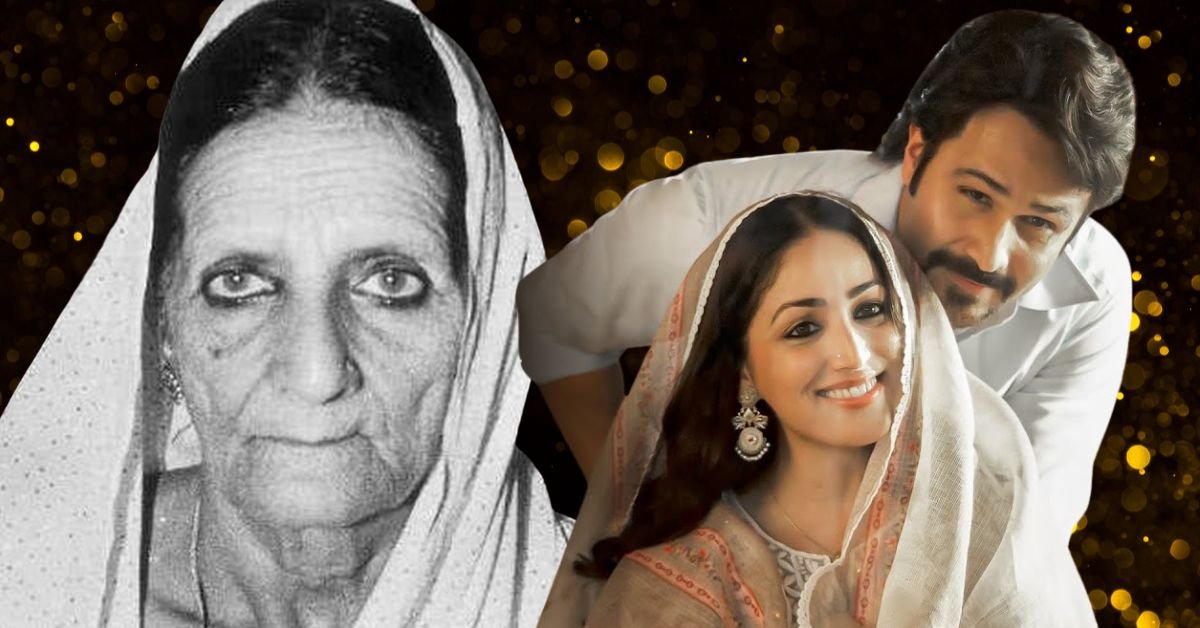
The case’s drama has inspired Bollywood’s “Haq,” directed by Suparn Verma and produced by Junglee Pictures.
Set for release on November 7, 2025, it stars Yami Gautam as Shazia Bano (fictionalized Shah Bano), portraying her fight for rights post-triple talaq.
Emraan Hashmi plays dual roles, as her husband Abbas and possibly a lawyer, adding intrigue.
Supporting Cast: Sheeba Chaddha, Danish Hussain, Aseem Hattangady, Vartika Singh.
Written by Reshu Nath, the film explores themes of justice, faith, and courage.
The teaser (September 22, 2025) and trailer highlight intense courtroom scenes.
Emraan Hashmi has urged the Muslim community to watch, saying he approached the script mindful of his religion.
Yami Gautam, drawn to honest stories, sees it as showcasing resilience.
However, controversy brews: On October 10, 2025, Shah Bano’s daughter sent a legal notice to the makers and CBFC, alleging misrepresentation.
Despite this, “Haq” promises to educate on the case’s legacy, joining films like “Pink” in blending entertainment with social commentary.
Expanded Trivia: Intriguing Facts To Spark Curiosity
Did you know? Rajiv Gandhi’s 1986 Act reversal is often cited as a factor in Congress’s 1989 electoral loss, shifting political landscapes. Another: Shah Bano, post-verdict, faced such backlash that she disowned the judgment and converted to a stricter Islamic sect, a poignant reminder of individual vs. communal pressures.
One More: The case influenced over 20 Muslim countries’ reforms, yet India took until 2017 to ban triple talaq, highlighting gradual change.
Conclusion: Reflecting On A Case That Continues To Shape India
The Mohammed Ahmed Khan vs Shah Bano Begum case is a testament to how one woman’s quest for dignity can challenge entrenched norms and inspire systemic change.
From the 1985 judgment’s bold stance on secular laws to the 2024 reaffirmation and 2025 UCC strides in states like Uttarakhand and Gujarat, its legacy endures in fights for gender justice and national unity.
We have covered the full spectrum here, the historical depths, personal stories, legal intricacies, controversies, and contemporary relevance, including the buzz around “Haq.”
At THOUSIF Inc. – INDIA, we are passionate about bringing such insightful narratives to life in an accessible way.
If this article interests you, explore our other articles on landmark Indian cases, women’s empowerment, and legal reforms.
What is your perspective on UCC or the film’s potential impact?
Share in the comments; we would love to hear it!
Thanks for joining this deep dive; stay engaged and informed.
About Author