
Table Of Contents
What Is Happening To India’s Economy?
On paper, India’s economy is doing well. It grew 7.8% between April and June 2026, faster than most big countries. However, daily life feels more expensive. One US dollar now costs about 96.5 rupees. Share prices fell in September. Petrol, vegetables, and loans are all getting costlier.
So what is going on? India is not crashing. It is being squeezed from outside.
Quick Answer: India’s financial problem in 2026 is a squeeze, not a crash. Oil near $100 a barrel is weakening the rupee and pushing up prices. Foreign investors are pulling money out. Moreover, on October 7, the RBI raised interest rates for the first time since 2023, which means higher EMIs.
Below, we explain each problem in simple words, what may happen next, and what you can do.
Problem 1: Oil Has Become Very Expensive
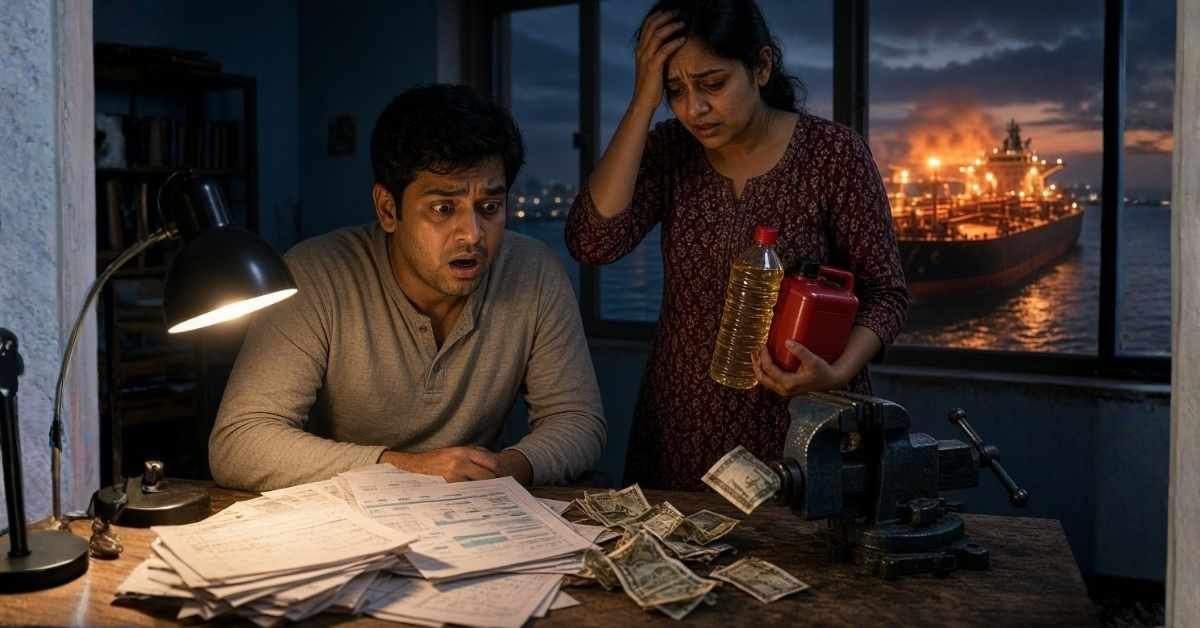
In late February 2026, a war began between the US, Israel, and Iran. It disrupted oil ships near the Strait of Hormuz, a key sea route. Oil prices jumped.
This week, one barrel of Brent crude oil costs around $98–101. Before the war, it cost about $72.
India buys most of its oil from other countries. So when oil gets costly:
- India spends more dollars, and the rupee gets weaker.
- Transport costs go up, so almost everything gets more expensive.
- Companies earn less, so share prices fall.
There is some good news. More oil is leaving the Gulf again, and on some days exports have matched pre-war levels. However, Iran has stepped up attacks on tankers, and shipping and insurance costs are still high. That is why oil stays near $100. Experts expect it to average $90–95 this year. Before the war, they expected about $60.
Problem 2: The Rupee Keeps Getting Weaker
A weaker rupee means one dollar now buys more rupees. Two years ago, a dollar cost about 85 rupees. In May 2026, it hit a record 96.96. After the RBI’s decision on October 7, it slipped to about 96.57.
Who loses? Anyone buying imported things: petrol, phones, gold, cooking oil, and families paying for studies abroad.
Who gains? Exporters, IT companies, and families receiving money from relatives abroad. Each dollar now brings home more rupees.
Should you panic? No. India still holds about $748 billion in foreign currency and gold, down from a record $786 billion in early September. The RBI uses this money to slow the rupee’s fall. On October 7, RBI Governor Sanjay Malhotra even said the rupee may be undervalued. So expect a slow slide, not a sudden crash.
Problem 3: Foreign Investors Are Taking Money Out
Foreign investors have pulled about ₹2.45 lakh crore out of Indian shares in 2026. That is more than they took out in all of last year.
Why? America raised its interest rates in September. US government bonds now pay around 5%, with almost no risk. So many global investors moved their money back to the US.
The good news is that Indians are buying. In September, foreigners sold about ₹45,500 crore of shares. Indian mutual funds and other local investors, fed by monthly SIPs, bought even more. That is why the market fell but did not crash.
Problem 4: Prices Are Going Up
Inflation means prices are rising over time. Two things are pushing it up. First, costly oil makes it more expensive to transport everything. Second, the monsoon was very weak this year. Less rain can mean fewer crops and costlier vegetables, pulses and grains. Food price rises are also spreading, with items like sugar and onions getting dearer.
Prices also look like they are jumping because they were very low last year. In October 2025, inflation was just 0.25%.
On October 7, the RBI raised its inflation forecast for this year to 5.2%. It expects prices to rise by nearly 5.8% on average over the next nine months. That is above its 4% target, but still below its 6% upper limit.
RBI Rate Hike In October 2026: Loans Now Cost More
On October 7, 2026, the RBI raised its main interest rate, called the repo rate, from 5.25% to 5.50%. All six members of its rate-setting committee voted for it. It is the first increase since February 2023.
The repo rate is the rate at which banks borrow from the RBI. When it goes up, banks charge you more on loans and pay you more on deposits.
Why raise it now?
- Prices are rising, and the rise is spreading. Retail inflation reached 4.8% in August.
- Higher rates can attract money into India and support the rupee.
- Interest rates are rising worldwide, and the US dollar is getting stronger.
The RBI also changed its stance to “calibrated tightening”. In plain words: rate cuts are off the table for now, and more small hikes are possible if prices keep rising. Some market experts expect two more hikes. Others think this may be the only one.
There is good news too. The RBI raised its growth forecast for this year to 7.1%, up from 6.7% in August. The economy is strong enough to handle a small rate rise.
What Could Happen Next? Three Possibilities
The most likely outcome is a few tough months, not a crisis. Oil decides almost everything: if oil gets cheaper, life gets easier fast. The chances below are our estimates based on current data, not guarantees.
| What Happens | Chance | Oil (per barrel) | 1 US dollar = | Rate By Dec | Grows |
|---|---|---|---|---|---|
| Most likely: slow squeeze | ~60% | $90–100 | ₹96–98 | 5.50–5.75% | 6.8–7.1% |
| Worse: the war spreads | ~25% | Above $110 | ₹98–100 | 6% or more | About 6.5% |
| Better: peace deal | ~15% | $80–90 | ₹94–95 | Stays at 5.50% | Above 7% |
In the most likely case, prices stay high until early 2027 and then start to ease. In the worst case, India could face high prices and slow growth at the same time. A recession, where the economy actually shrinks, looks very unlikely.
What Does This Mean For You?
If you have a loan: If your loan has a floating rate, your EMI will likely rise within 1–3 months. On a ₹30 lakh home loan for 20 years, a 0.25% rise adds about ₹450–500 a month. If you have spare cash, paying off part of the loan early saves more now.
Suppose you save money: Good news. FD rates usually go up after a rate hike. Do not put all your money in one FD today. Spread it out, because rates may rise again in December.
If you run a business:
- Exporters: the weak rupee helps you. Try to price your deals in dollars.
- Importers: your costs are rising. Add a buffer to your prices and plan payments early.
- Business loans: lock in your credit limits before rates go higher.
At home: Expect petrol, cooking oil, vegetables, and imported gadgets to cost more through Diwali. Gold may also stay expensive.
This article is for general information only, not financial advice. Talk to a registered adviser before investing.
The Other Side: What If This Article Is Wrong?
Every forecast can miss. Here are the strongest arguments against what you just read.
“The worst is already over.” Oil supply from the Middle East has almost recovered, and oil prices slipped in early October. If the US and Iran reach a deal, oil could fall fast. The rupee and prices would then improve quickly, and the RBI might not need to raise rates at all.
“This may be the only rate hike.” Not every expert expects more. Some economists call the October hike a precaution, not the start of a long cycle. ICRA’s chief economist says further hikes depend on inflation’s behaviour. If oil cools, the RBI could stop at 5.50%.
“A weak rupee is partly good news.” India’s exports to the US rose about 22% in August. A cheaper rupee makes Indian goods easier to sell abroad, which supports jobs.
“It could be worse than this article says.” The price of oil for immediate delivery went above $120 in early October. If the war spreads, the “worse” case could become the main case. India’s foreign currency savings also shrink when the RBI defends the rupee. In the last week of September, they fell by $18.3 billion, the biggest weekly drop on record.
“Prices may not rise that much.” The RBI itself sees only limited signs that costly oil and food are pushing companies to raise prices across the board. India also has large government food stocks, and good winter crops could soften the damage from the weak monsoon.
Our view after weighing both sides: a few tough months remain the most likely path. However, oil is hard to predict, so keep an eye on it.
Frequently Asked Questions
What Financial Problem Is Coming To India?
Expensive oil, a weaker rupee, rising prices, and higher loan rates. Together, they will make the next few months costlier for most families, but India is not heading for a crash.
Is India Heading For A Recession In 2026?
Unlikely. GDP grew 7.8% in the April–June quarter, and the RBI now projects 7.1% for 2026-27. Growth may slow, but a recession would need a far bigger shock.
Why Is The Rupee Falling In 2026?
Expensive oil imports, foreign investors selling Indian shares, and higher US interest rates are all pushing up demand for dollars.
Did The RBI Hike The Repo Rate In October 2026?
Yes. On October 7, it raised the repo rate from 5.25% to 5.50%, its first hike since February 2023. More small hikes are possible if prices keep rising.
Will My EMI Increase?
Yes, if your loan is on a floating rate linked to the repo rate. Banks usually pass on the hike within a few months.
Is This A Good Time To Invest In Fixed Deposits?
FD rates are likely to rise. Spreading your deposits over the next few months helps you lock in the higher rates as they come.
Will Petrol Prices Go Up?
Oil companies and taxes set pump prices, so they move slowly. With crude near $100, upward pressure remains.
About Author