
Table Of Contents
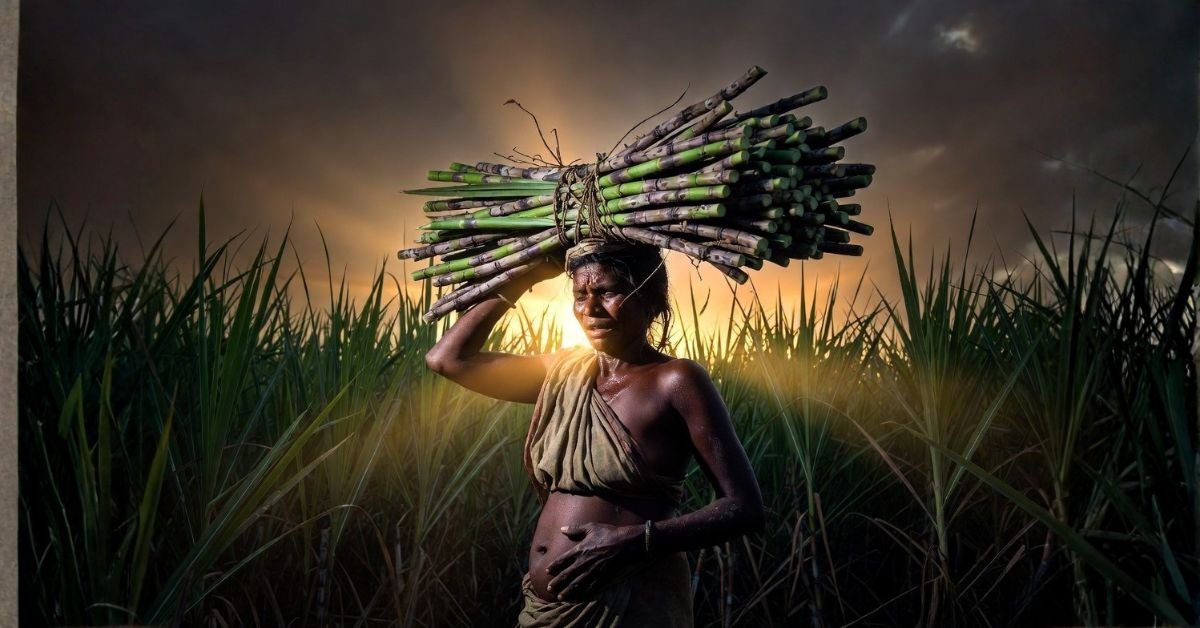
“We bring sweetness into other people’s homes. However, our own lives are bitter.”
– A woman sugarcane cutter, Beed, Maharashtra
There is something deeply wrong with a world where a woman has to remove a part of her own body to hold on to her job.
That is not a metaphor.
That is the lived reality of thousands of women in Beed, Maharashtra, one of India’s districts most prone to drought and economically vulnerable.
Every year, before the sugarcane harvesting season begins, hundreds of women quietly walk into private clinics and come out without their uteruses.
Not because they want to.
Not because a doctor told them it was medically necessary.
However, because missing even a single day of work in the sugarcane fields means a fine they cannot afford to pay, they cannot afford to miss work.
This is one of the most disturbing stories coming out of rural India in recent years.
However, most of us have never heard of it.
At THOUSIF Inc. – INDIA, we believe that stories like this need to be told clearly, honestly, and without looking away.
So let us walk through everything: who these women are, what they go through, why this keeps happening, and what, if anything, is being done about it.
Where It All Begins: The Land Of Drought And Sugarcane
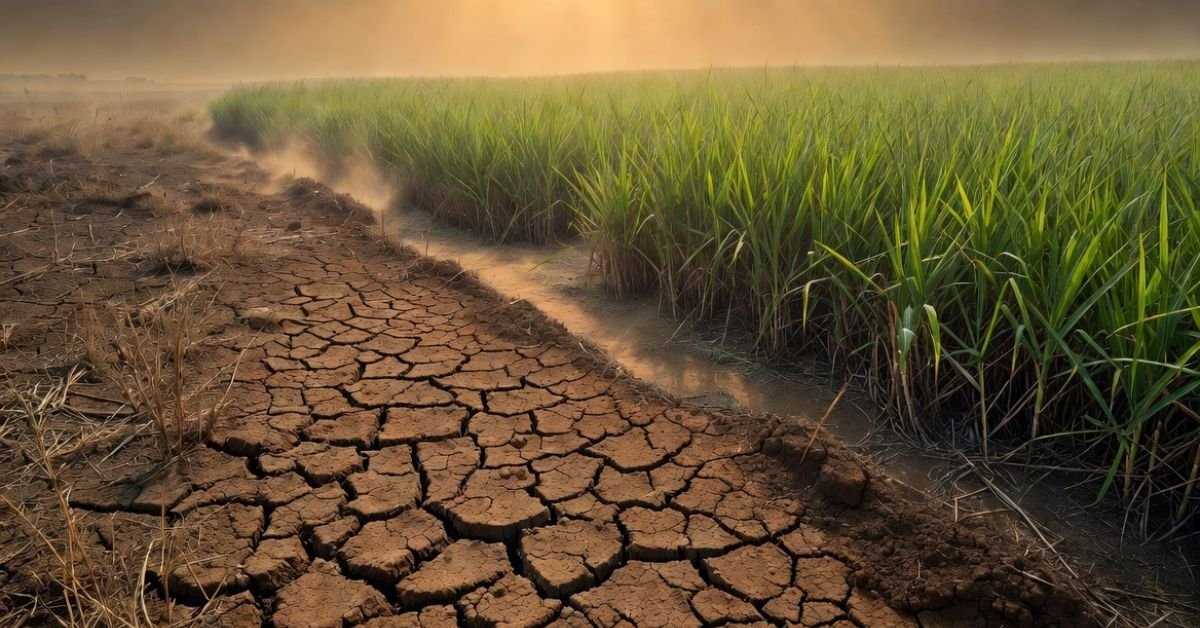
Beed is a district in the Marathwada region of Maharashtra.
If you look it up on a map, you will find it nestled in a part of central Maharashtra that receives very little rainfall, sometimes as little as 500 to 600 mm a year.
Droughts are not occasional here.
Between 2010 and 2019 alone, the region suffered from droughts in four separate years.
Farming, the primary livelihood for most families, becomes nearly impossible for long stretches.
Here is the cruel irony: sugarcane, one of the world’s most water-intensive crops, dominates the region’s agricultural economy.
The sugarcane fields are not in Beed itself but in the western districts of Maharashtra, Satara, Sangli, Kolhapur, and Solapur, where the major sugar mills are located.
Moreover, Beed is the largest supplier of migrant labor to these fields.
Every year, between October and November, an estimated 10 to 15 lakh (1 to 1.5 million) sugarcane cutters migrate from Marathwada to the western sugarcane belt.
According to government and civil society estimates, 40 to 50 percent of all these migrant workers come from Beed district alone.
This migration is not new.
It is generational.
Grandparents did it.
Parents did it.
Children grow up doing it.
Moreover, the system that governs it, from wages to accommodation to health, has changed remarkably little over the decades.
How The System Works: The Mukadam, The Koyta, And The Advance Trap
To understand the crisis, you first need to understand how this labor system is structured.
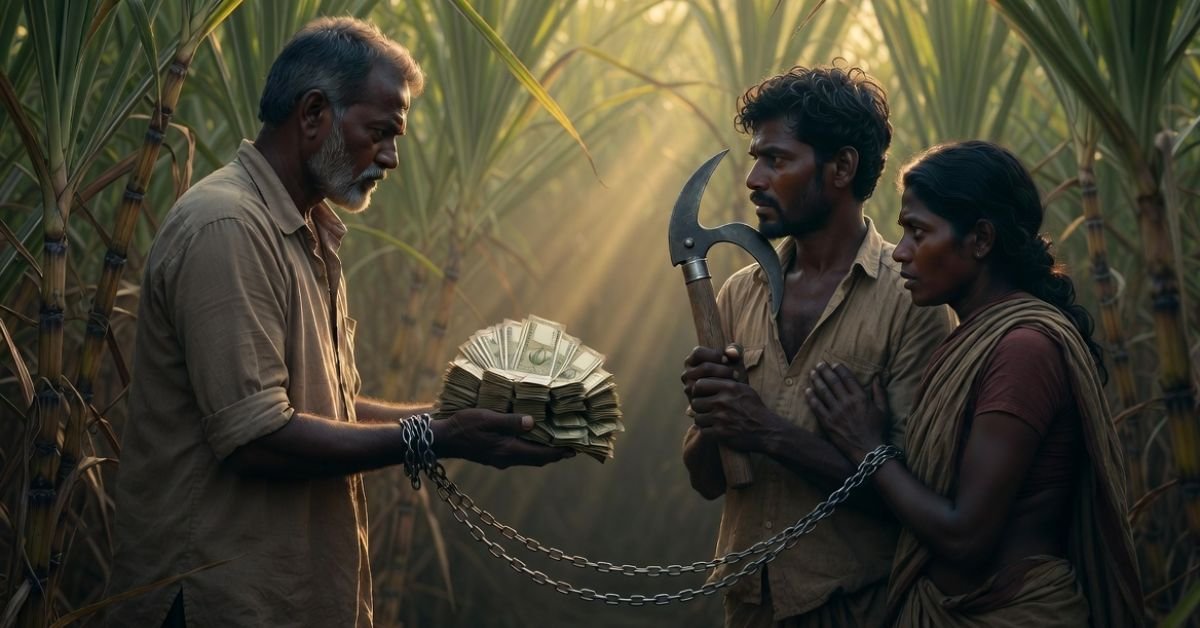
The chain works like this: Sugar mills hire labor contractors called mukadams.
The mukadams travel to villages in Beed and the surrounding districts to recruit workers.
However, they do not recruit individuals.
They recruit couples, husband-and-wife pairs, called koyta (the word is also the name for the sickle used to cut cane).
The unit is called a jodi.
The man’s job is to cut the sugarcane and throw it into a pile.
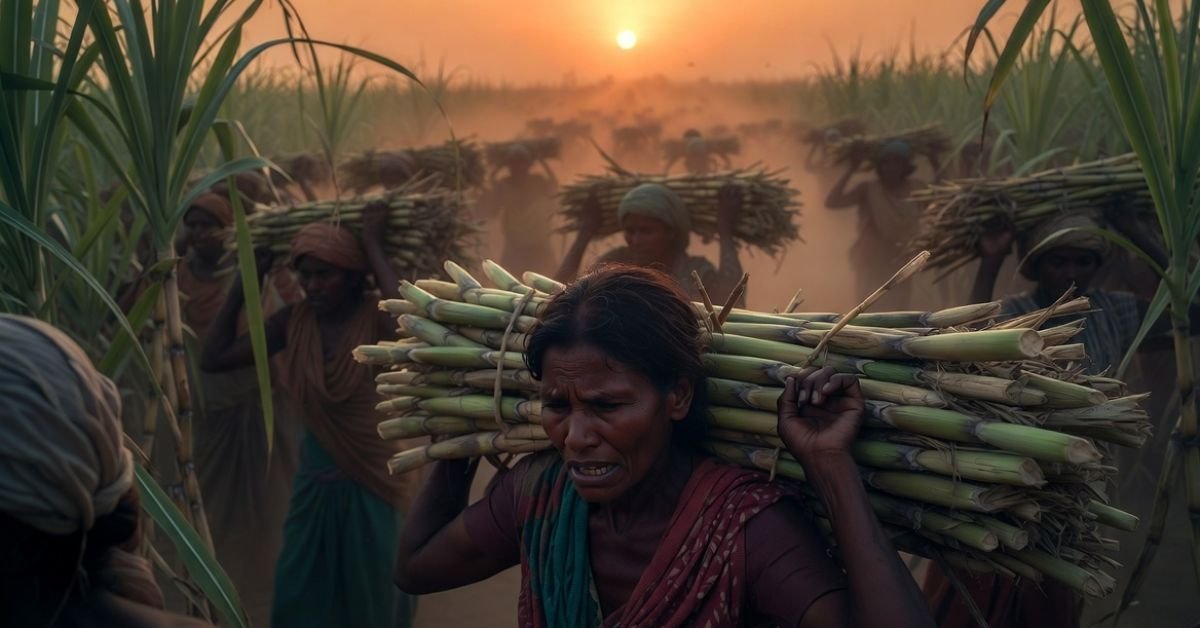
The woman’s job is to gather those stalks, tie them into large bundles called maulis, lift those bundles onto her head, walk to the vehicle, a tractor or bullock cart, and load them.
Each bundle weighs between 30 and 40 kilograms.
Women do this repeatedly, all day, every day, for six to seven months.
Before the season begins, the mukadam gives each couple an advance called an uchal, typically between ₹50,000 and ₹1,00,000.
This sounds like a good deal.
However, it is a trap.
Here is how the trap works: the couple takes an advance of ₹ 1,00,000.
Over the season, they earn, say, ₹80,000 worth of wages.
The remaining ₹20,000 is carried forward as debt into the next season.
So the same couple has to return the following year to work off the leftover debt.
Moreover, if their earnings in that season still do not cover the debt plus new expenses, the cycle continues.
According to the minimum wage guidelines set by Maharashtra, sugarcane cutters should receive ₹366 per tonne of cane harvested, and a jodi should earn at least ₹742 per tonne.
In practice, most workers receive ₹300 per tonne.
A couple typically harvests 2 to 2.5 tonnes a day, which means combined daily earnings of roughly ₹600 to ₹750.
Divided between two people, that is barely enough to survive, especially when you have a debt to repay.
Now here is the part that makes the trap nearly inescapable: if a worker misses even a single day, they owe the mukadam a fine, called a khada, of ₹250 to ₹1,000, depending on the mukadam.
That is often equal to, or even more than, what they earn in a day’s work.
So taking a day off is not a real option.
“This advance that the contractor pays the couple is essentially a form of a trap. If the couple takes a day’s leave, they are forced to pay a fine, anywhere between ₹250 and ₹1,000.”
– Seema Kulkarni, researcher on sugarcane labor systems
The Working Conditions: What A Day Actually Looks Like
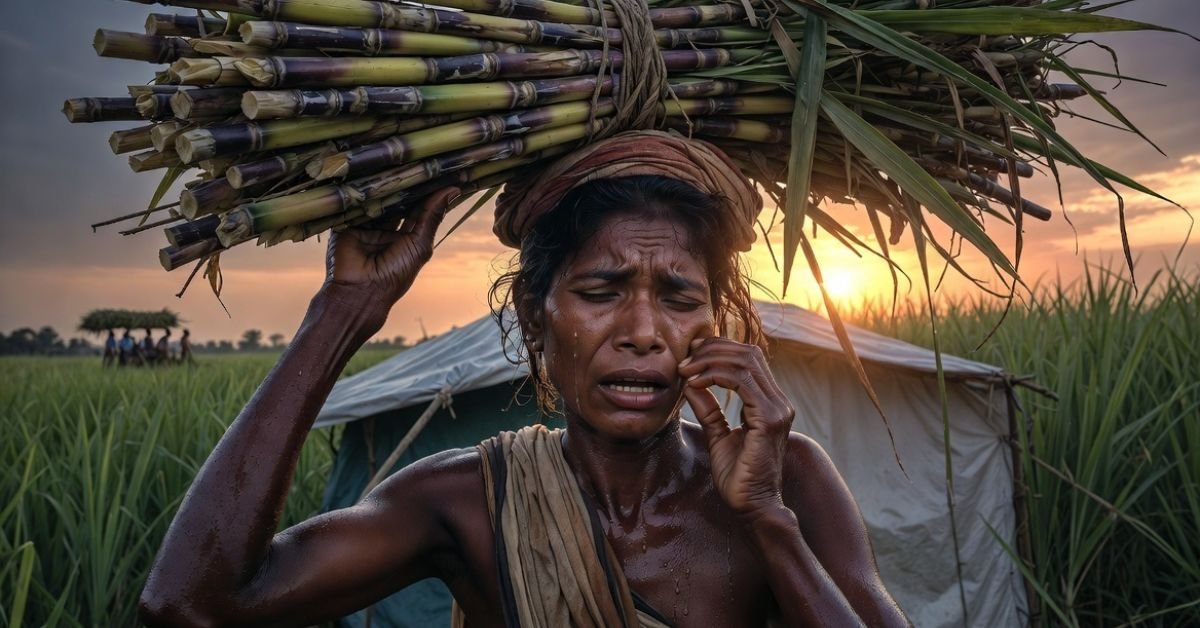
Let us be specific about what these workers go through, because numbers alone do not capture it.
Work begins before sunrise, usually around 5 or 6 in the morning.
It ends at night, sometimes at 9 PM, sometimes at midnight, sometimes later, depending on how much cane needs to be loaded onto the vehicles.
In peak season, days lasting 15 to 16 hours are not unusual.
The workers live in makeshift tents near the fields, thin fabric strung over bamboo poles, no walls, no floor, no protection from wild animals or the weather.
There are no toilets. No running water.
No sanitation facilities whatsoever.
Women manage their periods in open fields, in the dark, before dawn, because that is the only time and place available to them.
The women cook meals before they leave for the fields in the morning.
Whatever food they carry is their lunch.
When they return at midnight, they cook again, eat, and sleep for two to three hours before waking up to do it all over again.
The men eat and rest.
The women cook, eat, rest, and then wake up earlier to cook again.
This is not an exaggeration.
Multiple field testimonies, including those from journalists and researchers who have spent time in these camps, consistently confirm this pattern.
Moreover, through all of this, the exhaustion, the debt, the heat, the weight, these women are also managing their menstrual health, pregnancies, and childcare, with no support whatsoever.
The Health Crisis: What Heavy Labor Does To Women’s Bodies
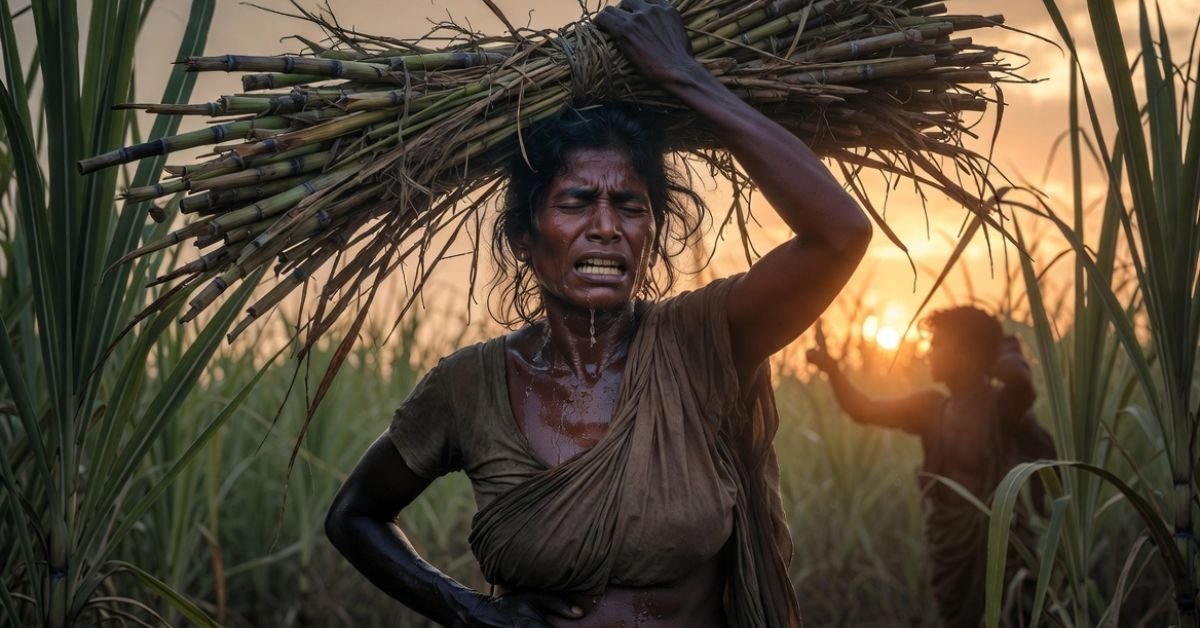
Carrying bundles that weigh between 30 and 40 kilograms on your head for 12 to 16 hours a day, six days a week, for six months of the year, year after year, does enormous damage to the human body.
For women, the damage extends to their reproductive health in particularly brutal ways.
Over time, many women develop:
Prolonged or irregular periods, bleeding that lasts far longer than normal, make daily work an ordeal of pain and exhaustion.
Excessive bleeding (menorrhagia), heavy flow that makes even standing difficult, with no access to proper sanitary care in the fields.
Uterine prolapse occurs when the uterus literally slips out of position due to chronic heavy lifting.
A condition made catastrophic by the absence of rest.
Pelvic pain is persistent, debilitating pain in the lower abdomen that women manage with over-the-counter painkillers and sheer willpower.
White discharge and infections worsened significantly due to the total lack of sanitation, hygiene facilities, and clean water.
A Ministry of Health and Family Welfare study found that among rural women aged 15 to 24 in Maharashtra with no prior schooling, only 52.4 percent had access to hygienic menstrual care methods.
In the fields, women use and reuse pieces of cloth, washed by hand, often in the same water they drink from.
When the pain becomes unbearable, women take painkillers and keep working.
They cannot afford to stop.
When the painkillers stop working, they go to a doctor, usually a private clinic in a nearby town, and this is where the story takes an even darker turn.
The Hysterectomy Crisis: Removing The Womb To Keep The Job
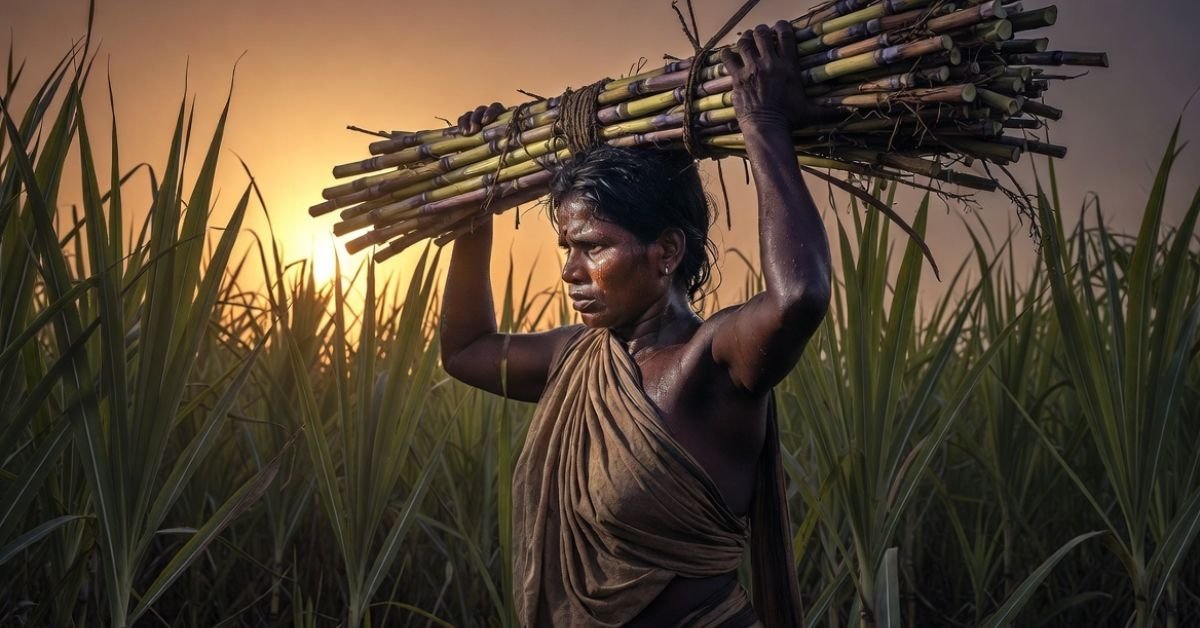
Among 82,200 female sugarcane workers surveyed in Beed by the Maharashtra government, approximately 1 in 5 had undergone a hysterectomy.
In late 2024, before the new harvesting season began, more than 843 women from Beed underwent hysterectomies, many of them aged 30 to 35.
A significant number were in their late twenties. Some were even younger.
In the rest of the world, hysterectomies for women under 40 are considered unusual and are only recommended when there is no other medical option available.
In Beed, it has become routine.
The logic, from the women’s perspective, is tragically understandable. Menstruation means pain.
Pain means they cannot work as effectively.
Not working effectively means a fine.
A fine means deeper debt.
So when a doctor, sometimes a qualified gynecologist, sometimes a quack at a small private clinic, tells a woman that her only solution is to remove her uterus, she agrees.
Stopping the periods means stopping the problem, at least in terms of the immediate pressure in the fields.
Labor contractors sometimes actively encourage this.
There are cases where mukadams have even offered loans to workers to pay for the surgery, ensuring that the women become more indebted to them, and that once the surgery is done, the women have no biological reason to miss work for menstruation ever again.
“If a woman is choosing a surgery only to remain employable, to keep getting work, that is not informed consent. That is the pressure of poverty and economic helplessness dressed up as a medical decision.”
– Dr. Amita Pitre, researcher on women’s issues
After the surgery, many women experience early menopause, sudden hormonal shifts that cause mood changes, joint pain, hot flashes, and psychological distress.
They receive no counseling before the surgery.
No preparation for what comes after.
And then, in many cases, they return to the same fields and do the same work, because the debt persists and the bills keep coming.
The Child Marriage Connection
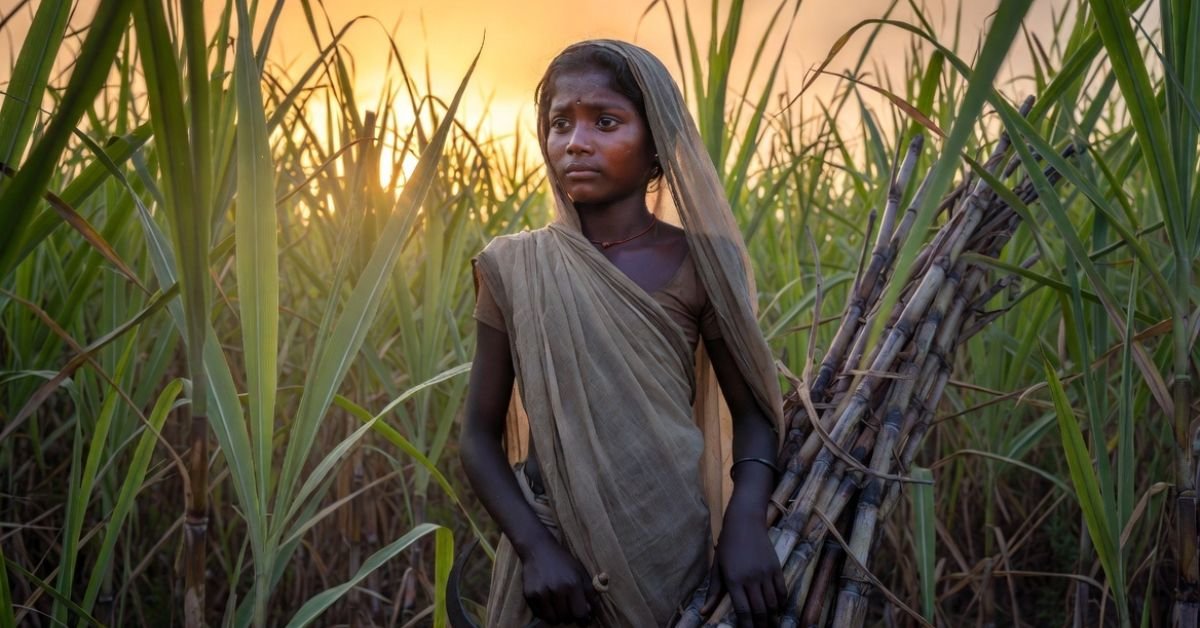
There is another layer to this crisis that is equally disturbing: the rate of child marriage among sugarcane cutter families is estimated at 70 to 80 percent.
The mukadam system requires couples. So families arrange early marriages for their daughters so that their children can be hired as a jodi.
Girls are married off at 12, 13, or 14.
By the time they are 16, many have their first child.
By 18 or 19, some have three children and have already undergone family planning surgery.
A few years later, in their mid-20s or early thirties, they undergo a hysterectomy.
This is the compressed, brutal arc of a woman’s reproductive life in the sugarcane fields of Beed.
Children who are born into these migrant families grow up in the fields alongside their parents.
Schools back in the village stay closed to them for five, six, sometimes seven months of the year.
When migration ends and the family returns, the children try to catch up.
Often, they cannot.
Education gets interrupted, then delayed, then eventually abandoned.
One child, Shailesh, had been away from his first-grade classroom since November, five whole months.
He was due to return two months later.
Asked how he would manage the missed schoolwork, he said, “Everyone at home came here. There was nobody to leave me with.”
What The Numbers Tell Us
| Metric | Value |
|---|---|
| Estimated sugarcane cutters in Maharashtra | 10 to 15 lakh (1 to 1.5 million) |
| Share from Beed district | 40 to 50 percent |
| Women among the total sugarcane cutters | 50 to 60 percent |
| Women surveyed who had a hysterectomy (2019 govt data) | approximately 1 in 5 |
| Hysterectomies before the 2024 harvest season | more than 843 women |
| Average age at hysterectomy | 30 to 35 years |
| Daily working hours | 12 to 16 hours |
| Advance (uchal) given per couple per season | ₹50,000 to ₹1,00,000 |
| Fine for missing one day of work (khada) | ₹250 to ₹1,000 |
| Approximate daily earnings per couple | ₹600 to ₹750 |
| Women with land ownership rights in rural India | only 13 percent |
| Wage gap versus men in agricultural work | up to 33 percent less |
| Child marriage rate in cane cutter families | 70 to 80 percent |
The Policy Gap: Where The System Has Failed These Women
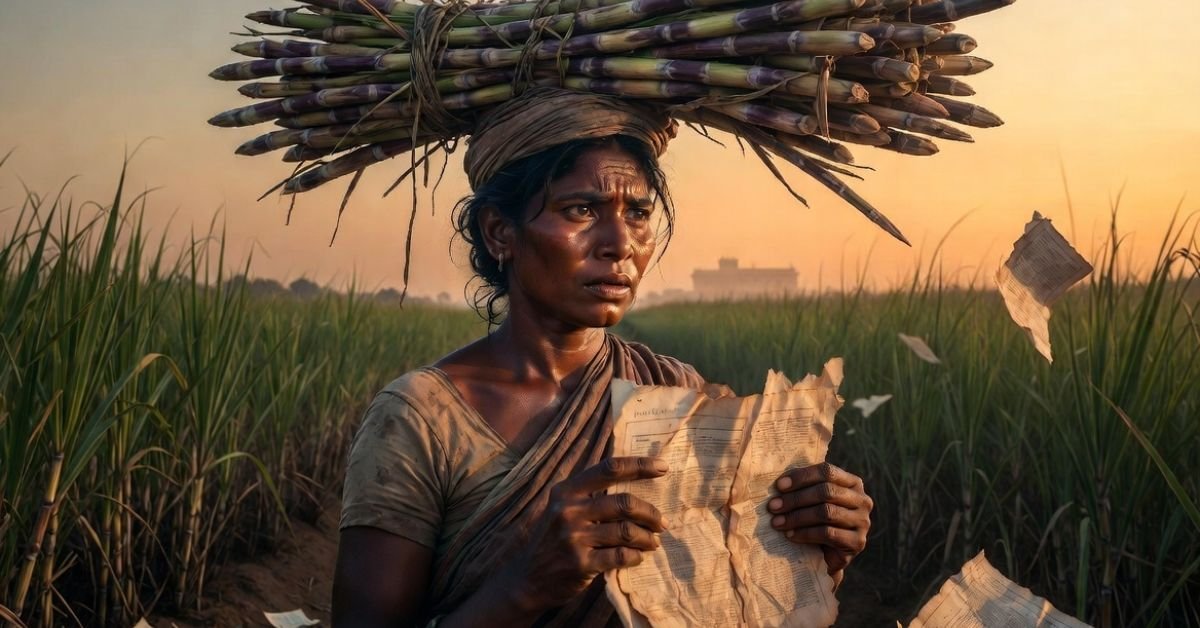
In 2007, India framed its National Policy for Farmers.
For the first time, the definition of a farmer was separated from land ownership.
Theoretically, this should have opened the door for women working in agriculture, even without land in their names, to be recognized as farmers and to gain access to the schemes and protections that come with that status.
It did not happen.
In practice, women like those in Beed’s sugarcane fields are not recognized as farmers.
They are not recognized as workers in any formal sense either.
The koyta system counts pairs, not individuals.
The woman’s labor is recorded as “ardha koyta,” meaning half a sickle.
Her contribution is literally called half.
Her wages are folded into the couple’s advance, which is managed by the man and the mukadam.
She has no individual financial identity in the system.
India’s courts have issued orders to curb unnecessary hysterectomies.
As recently as April 2023, judicial directions were given to regulate private clinics performing these procedures.
The problem has not gone away.
The 2024 data proves it.
When a journalist visited the District Magistrate’s office in Beed to get answers, she was passed along to the District Health Officer, who refused to speak on camera.
Off the record, he shared that 292 women who were more than five months pregnant had gone to work in the fields.
His official explanation was that they did not go to work but to support their husbands.
The same official expressed no apparent concern.
That, perhaps, tells you everything about how seriously these women’s situations are taken at the administrative level.
The UN’s Recognition And India’s Responsibility In 2026
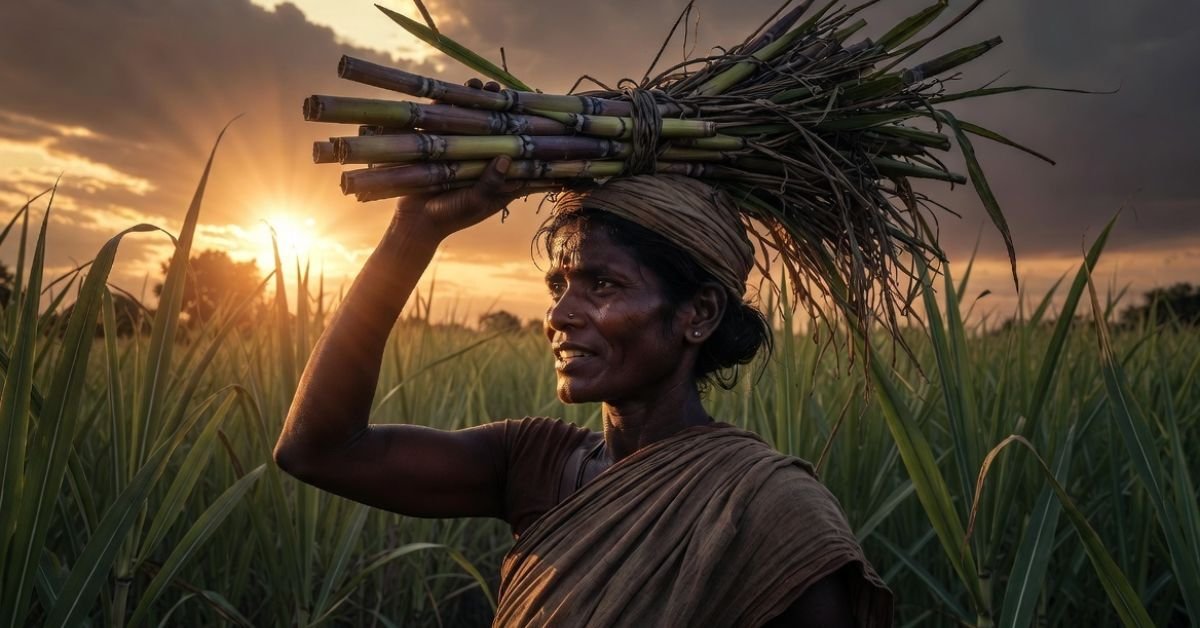
The United Nations has designated 2026 as the International Year for Female Farmers, a recognition that women do the majority of agricultural work in developing countries but receive the least recognition, the fewest rights, and the worst conditions.
In India, 80 percent of women in rural areas are engaged in agriculture or agriculture-related work.
Only 13 percent of them have land ownership rights.
This means that the vast majority of women who farm, harvest, process, and transport food in this country do so with no legal recognition, no land rights, and no formal labor protections.
The sugarcane workers of Beed are not an exception.
They are the extreme edge of a very wide problem.
What Needs To Change: Real Solutions, Not Just Sympathy
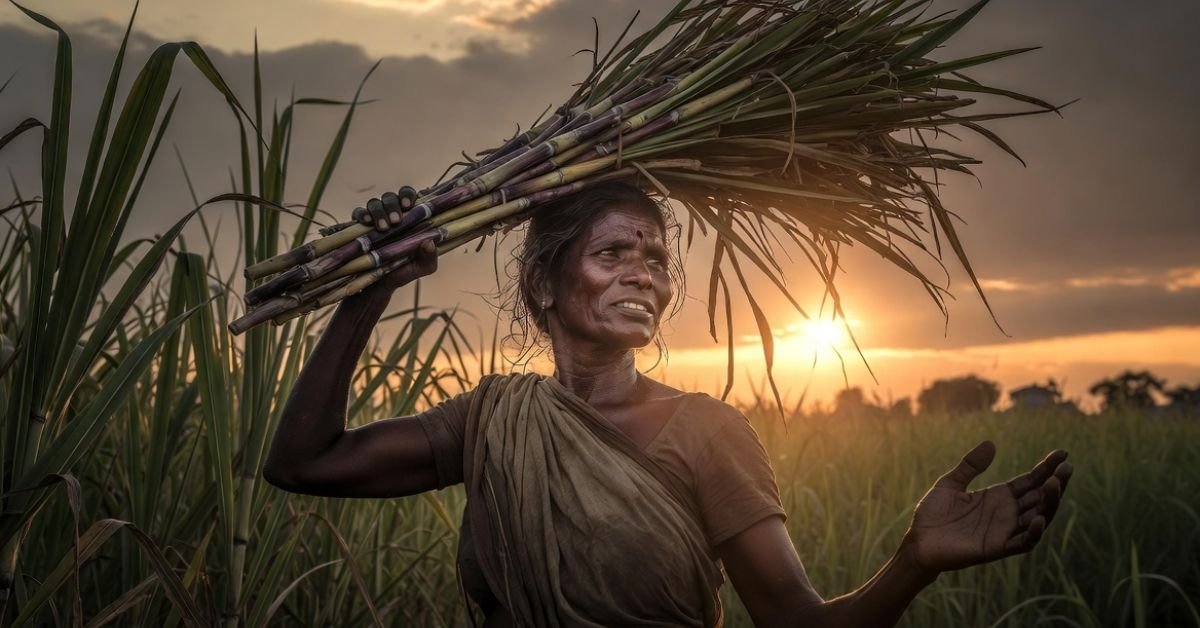
Researcher and activist voices who have studied this issue closely point to several concrete changes that could make a genuine difference.
- Employment Within Their Own Regions: The root cause of migration is the absence of livelihood options in Marathwada. Investment in local employment through schemes like MGNREGA, agricultural diversification, and small-scale industries would reduce the compulsion to migrate seasonally.
- Better Conditions If Migration Continues: If families must migrate, they need proper housing at the destination, not tarpaulin tents. They need access to medical care, sanitation, drinking water, and schools for children who travel with them.
- Paid Maternity Leave And Lighter Duty For Pregnant Women: Government rules already say pregnant women should not do heavy labor. In practice, nobody enforces this. A formal mechanism with financial compensation for reduced work during pregnancy needs to be established and monitored.
- Equal Minimum Wage, Actually Enforced: The law says minimum wage must be paid. It needs to be paid, and paid to each worker individually, not as a combined advance to a couple managed by the man.
- Formal Recognition Of Women As Independent Workers: Women should be registered as individual workers, not as the other half of their husband’s jodi. This would give them a legal identity, access to social schemes, and the ability to raise complaints independently.
- Awareness And Real Healthcare Access: Women need to know that a hysterectomy is not the only treatment for painful periods. They need access to qualified doctors, not quacks who profit from unnecessary surgeries. Free gynecological camps, community health workers, and sustained outreach are necessary.
- Stricter Monitoring Of Private Clinics: Clinics that perform hysterectomies on young women without proper diagnosis and informed consent need to be held accountable. Regulatory oversight, recommended by courts, ignored in practice, must become real enforcement.
The Women Behind The Statistics
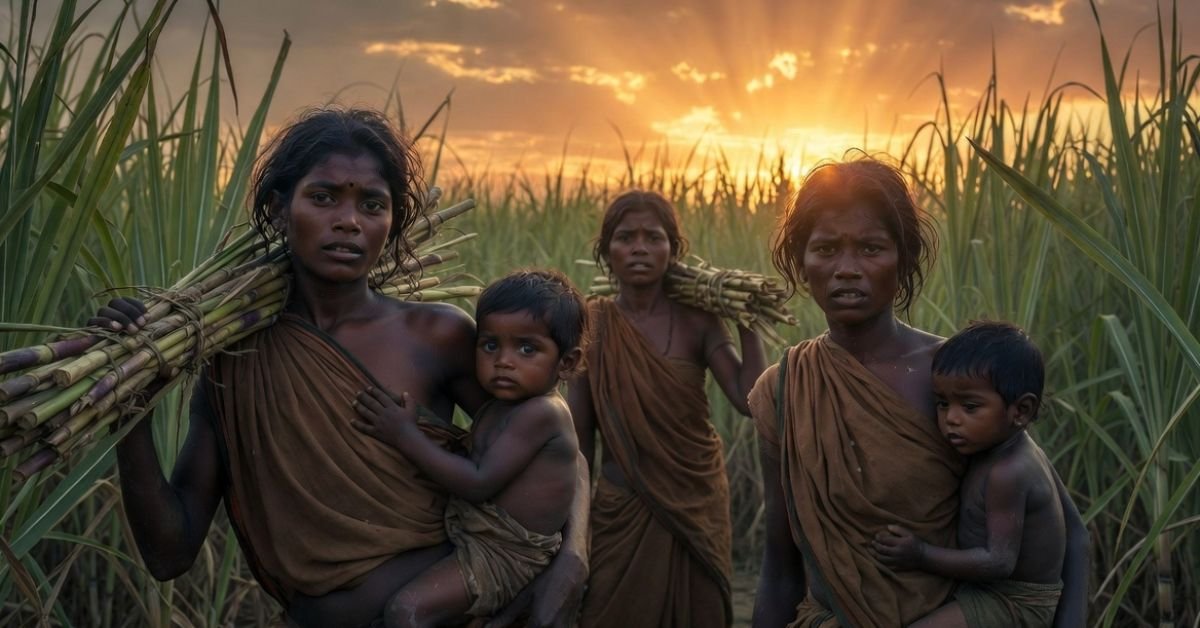
It is easy to read all of this and feel overwhelmed by numbers.
However, every number is a person.
There is the woman who studied until Class 5 and wanted to be a doctor or a collector.
Her parents married her off and sent her to the sugarcane fields.
She has been cutting cane ever since.
Her dream never got a second chance.
There is the 18-year-old who has already been married for 2 years, has 1 child, and is 8 months pregnant, standing in a field with a sickle because the debt requires it.
There is the woman who worked in the fields for 13 years, delivered one of her children with no doctor nearby, and eventually had a hysterectomy.
She still has pain in her hands, her back, and her joints.
The surgery did not fix the damage.
It just eliminated one more biological reminder of her body’s limits.
There is the older woman who delivered a baby in the sugarcane field and cut the umbilical cord with the same koyta she uses to harvest cane.
She laughs when she tells the story.
The laughter is not joy; it is a coping mechanism, perfected over years of having no other option.
These women have not failed.
The systems around them have failed them.
Did You Know
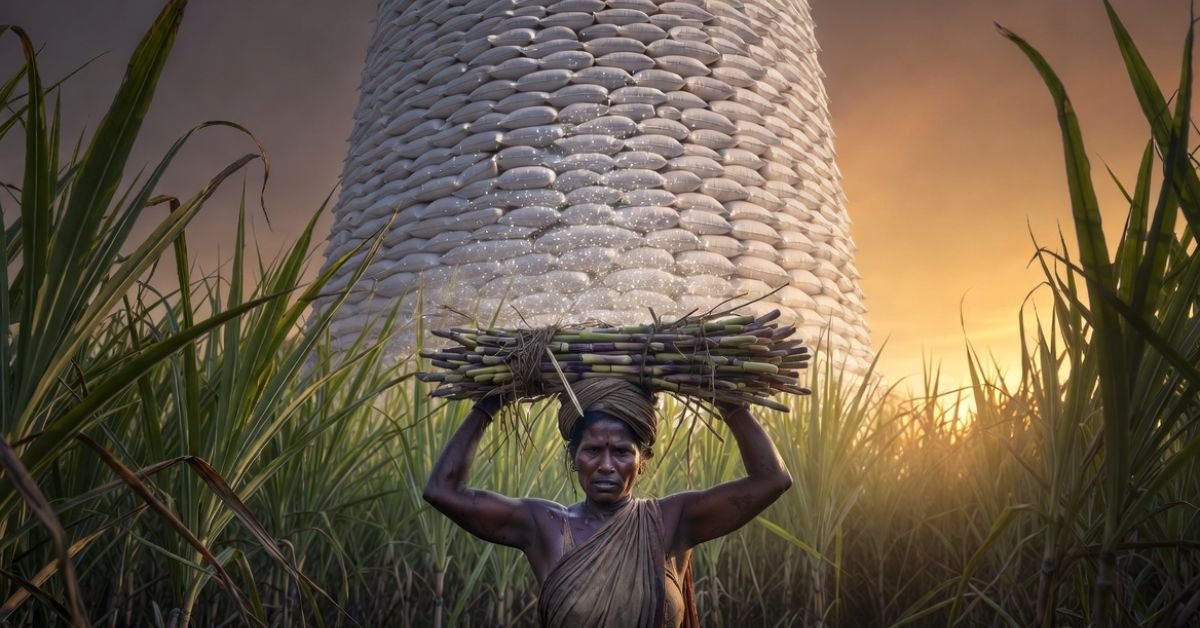
India is the second-largest producer of sugar in the world, after Brazil. In 2023 to 2024, India produced approximately 34 million tonnes of sugar. Maharashtra alone accounts for a significant share of this output, driven by migrant labor from districts like Beed.
The global sugar industry is worth hundreds of billions of dollars.
The women who carry sugarcane on their heads in Beed together earn roughly ₹300-₹375 per day.
That works out to less than ₹200 per person per day, for 14 to 16 hours of backbreaking work under the open sky.
A Final Word
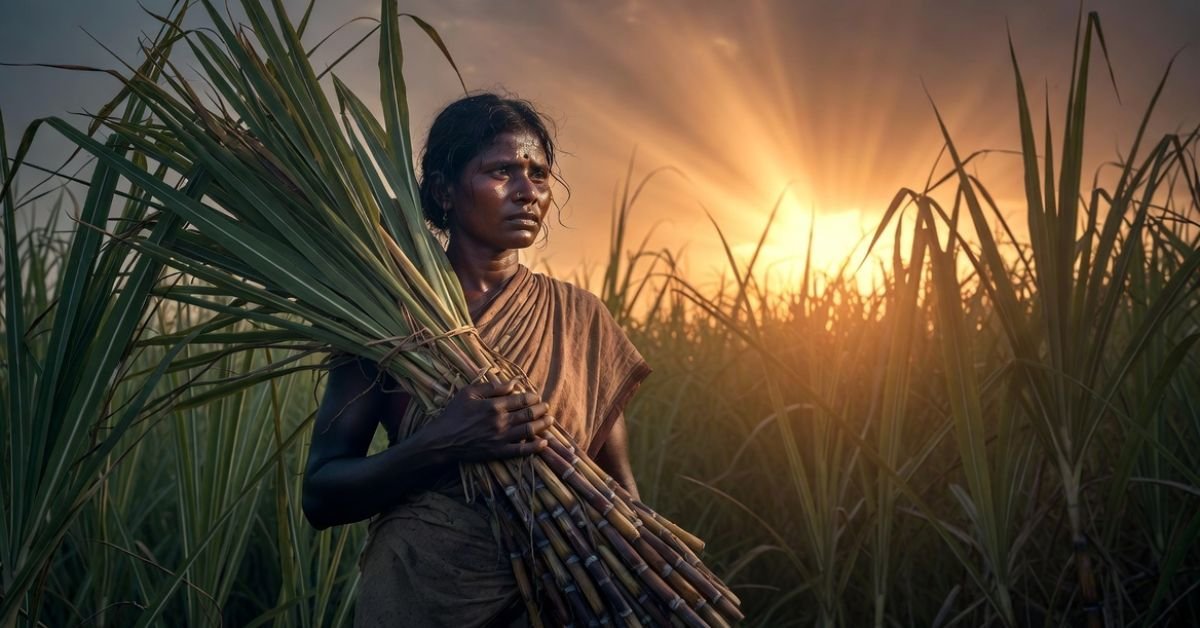
This is not a problem that began yesterday, and it will not end tomorrow.
The sugarcane fields of Maharashtra have been depriving women from Beed of their health and dignity for generations.
The issue has been reported, studied, discussed in courts, flagged by civil society, and covered by international journalists.
However, with more than 843 women undergoing hysterectomies before the 2024 season opened, the situation is not improving fast enough.
What keeps this going is a perfect storm of poverty, drought, debt, gender inequality, unregulated private healthcare, and institutional indifference.
No single intervention fixes a storm like that.
However, clear reporting, sustained public pressure, and policy accountability can, over time, begin to shift things.
We at THOUSIF Inc. – INDIA believe the same.
Awareness is the beginning of change.
Share this piece with someone who needs to read it.
Moreover, if you want to read more stories that cut through the noise and tell you what is actually happening in India, from agriculture to economy to society, explore more articles on THOUSIF Inc. INDIA.
We are here for the stories that matter.
About Author
