Table Of Contents
Varanasi
Hey everyone!
After more than a dozen trips to Varanasi over the years, from solo backpacking adventures to guiding family groups, this city never fails to pull me back.
There is something undeniably magnetic about waking up to the sound of temple bells, watching the Ganges come alive at dawn, and feeling that deep sense of peace amid the beautiful chaos.
People always hit me up with the same questions: What exactly is Varanasi?
Where is it located, and what state does it belong to?
How old is this place really?
Why do millions consider it the most sacred city on earth?
Moreover, honestly, with all the intensity, is Varanasi worth visiting in 2026?
We have poured our hearts (and fresh 2026 updates) into this massive guide so you can plan the perfect trip.
We will cover everything from its ancient origins to hidden street food spots, the best hotels for every budget, flight tips, distances to Ayodhya and Prayagraj, authentic Banarasi saree shopping, and a full 4-day itinerary.
Let us dive in!
What Is Varanasi? Where Is It, And Which State Claims This Spiritual Gem?
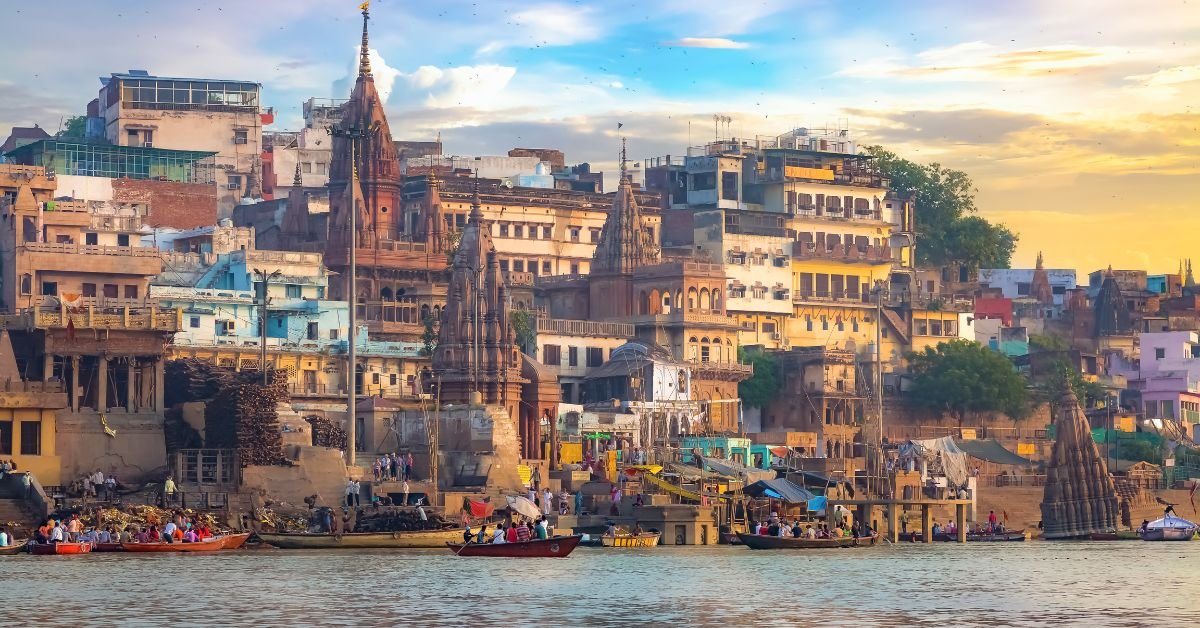
Varanasi, eternally known as Kashi (City of Light) or Banaras, sits gracefully on the western banks of the holy River Ganges in Uttar Pradesh, northern India.
Whether you type “Varanasi, India,” “Banaras Varanasi Kashi,” or simply “Varanasi city,” it is the same magical place.
This is not a polished tourist town; it is raw, vibrant, and pulsating with life from dawn till the early hours.
The name “Varanasi” derives from the Varuna and Assi rivers that once bordered the city.
Its oldest name, Kashi, reflects the belief that divine light here never fades.
Today, with the stunning Kashi Vishwanath Corridor making temple access smoother and the ghats cleaner than ever, Varanasi feels both ancient and renewed in 2026.
How Old Is Varanasi? When Was It Founded, And What Makes It So Special?
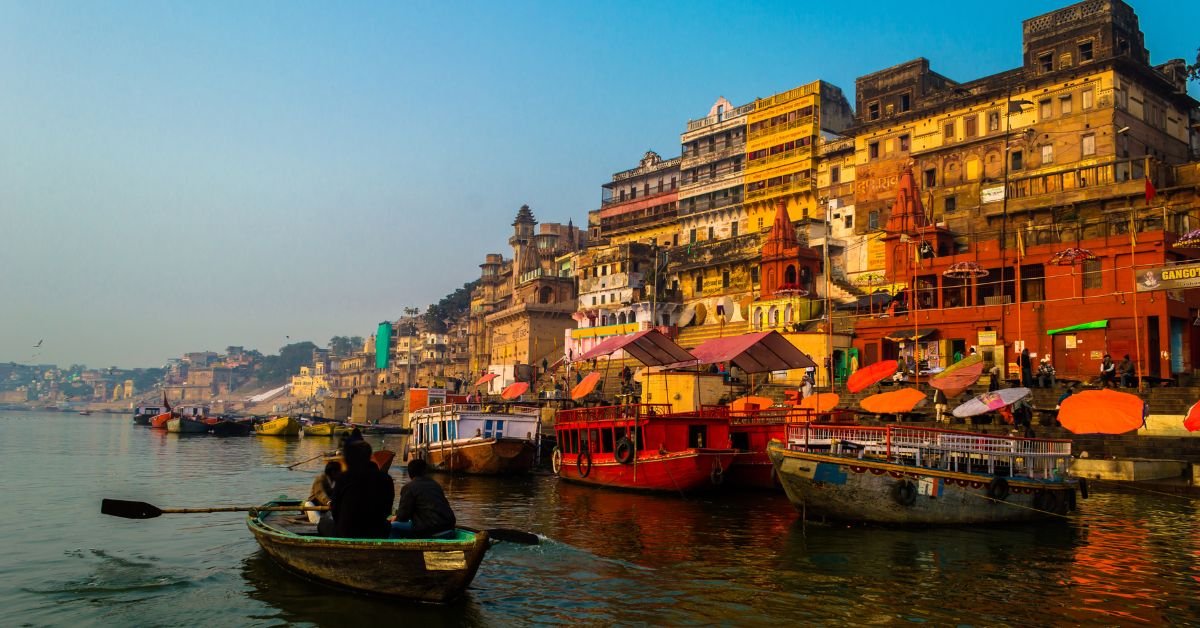
Varanasi proudly stands as one of the world’s oldest continuously inhabited cities, archaeological evidence dates settlement back over 3,000 years, with mentions in the Rigveda around 1500–1000 BCE.
Hindu legends push it even further: Lord Shiva founded Kashi eons ago, making it beyond time itself.
Mark Twain famously said it was “older than history, older than tradition, older even than legend, and looks twice as old as all of them put together.”
What is Varanasi famous for?
Absolutely everything spiritual and cultural:
- The sacred Ganges and its 88 ghats
- Being Lord Shiva’s eternal home
- The path to moksha (liberation), dying here, is believed to break the cycle of rebirth forever.
- Birthplace of classical music’s Banaras Gharana
- GI-tagged Banarasi silk sarees woven with real gold/silver zari
- UNESCO City of Music status
Why is Varanasi sacred?
Shiva resides invisibly here, whispering salvation into departing souls.
The Ganga is purest in Varanasi; a single dip cleanses lifetimes of karma.
It is holy for Hindus, Buddhists (Buddha’s first sermon in nearby Sarnath), and Jains alike.
Mind Blowing Trivia: Varanasi is cosmically designed as a massive spiritual yantra. Everything aligns in fives (Shiva’s favorite number) to keep divine energy flowing eternally.
What Is Varanasi Known For In 2026?

In 2026, Varanasi is thriving like never before.
Cleaner ghats, AI-managed crowds during festivals, and the magnificent Kashi Vishwanath Corridor have transformed the experience without losing the soul.
It is known for:
- Unmatched spiritual depth that leaves even skeptics transformed
- World-class handwoven textiles
- Street food that ruins you for anywhere else
- Living traditions – from morning yoga on the ghats to evening classical concerts
Moreover, yes, is Varanasi worth visiting? A million times over.
The intensity (crowds, rituals, open cremations) is part of what makes it profound.
Safer, cleaner, and more accessible than ever, 2026 is the perfect year.
How Many Ghats Are There?
Varanasi boasts exactly 88 ghats, 84 for bathing/rituals, a few private.
Here is an updated 2026 table of the absolute essentials:
| Ghat | Why | Time | Factor |
|---|---|---|---|
| Dashashwamedh | Epicentre of evening Ganga Aarti | Sunset – arrive 90 mins early or book a boat | ★★★★★ |
| Assi | Morning Subah-e-Banaras, yoga, live music | Sunrise – chill vibe, great coffee nearby | ★★★★ |
| Manikarnika | Main cremation ghat – eternal flame never dies | Anytime (respectfully, no photos) | ★★★★★ |
| Harishchandra | Secondary cremation ghat, electric crematorium | Daytime – quieter alternative | ★★★ |
| Scindia | Dramatic sunken Shiva temple | Morning boat ride | ★★★★ |
| Tulsi | Named after poet-saint Tulsidas, peaceful | Evening stroll | ★★★★ |
| Panchganga | Mythical confluence of five rivers | Temple visits | ★★★ |
| Rajendra Prasad | Wide steps, great for people-watching | Anytime | ★★ |
| Chet Singh | Historic fort, laser shows during festivals | Evening during Dev Deepawali | ★★★★ |
Pro Move: Book a private dawn boat (₹800–1,500 for 1–2 hours) to glide past them all while the city wakes.
Ganga Aarti Varanasi 2026: Timings, Best Views, Festival Updates
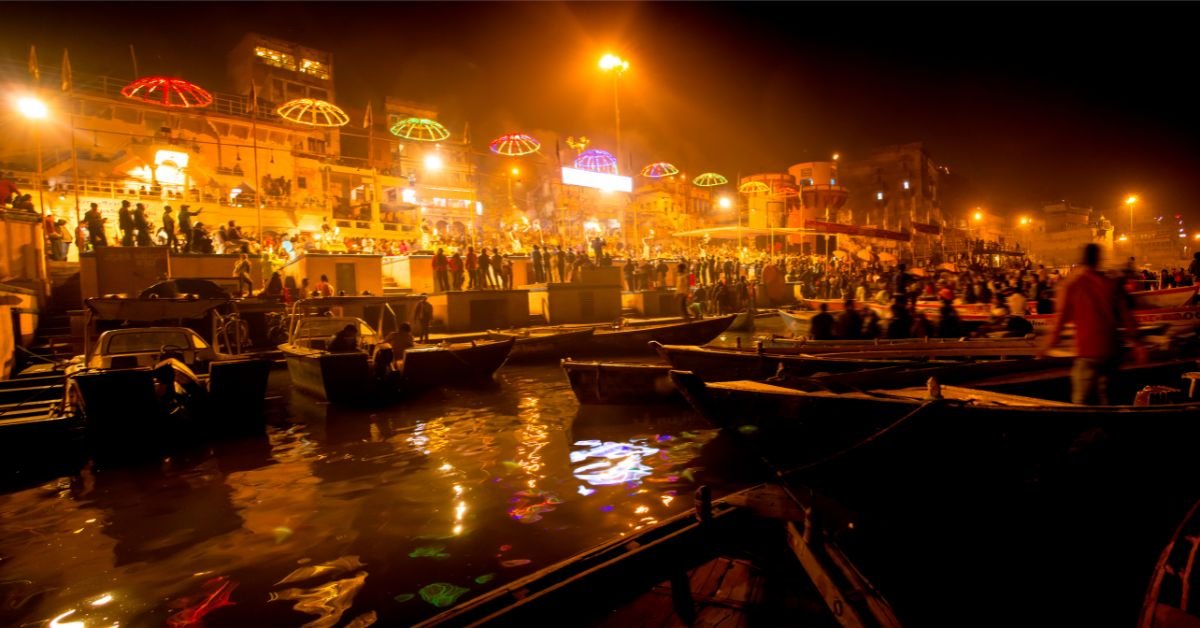
The evening Ganga Aarti at Dashashwamedh remains the emotional highlight, seven young priests offer synchronized fire, incense, conch shells, and bells to Mother Ganga for 45 spellbinding minutes.
2026 Regular Timings:
- Summer (Mar–Oct): ~7:00 PM
- Winter (Nov–Feb): ~6:00 PM
Morning Subah-e-Banaras at Assi starts ~5:30 AM – calmer, with live music and yoga.
Dev Deepawali 2026 Special (November 5 – Kartik Purnima):
The ghats explode with over 15–20 lakh eco-friendly diyas! Collective synchronized aarti at 8 major ghats, “Kashi Katha” 3D laser show at Chet Singh Ghat (7:30/8:30/9:30 PM slots), and green fireworks at 8:00 PM. Book boats and hotels 4–6 months ahead; it is heavenly chaos.
Top Things To Do In Varanasi
- Sunrise boat ride & watch laundry dhobis at work
- Evening Ganga Aarti (ghat seats or premium boat)
- Kashi Vishwanath Corridor darshan (book free online slot)
- Sarnath day trip – Buddha’s first sermon site
- Heritage walk through narrow galis
- Live classical music concert (ask your hotel)
- Wrestle-watching at a traditional akhara
- Street food marathon (details below)
- Banarasi saree shopping with a trusted local
- Yoga/meditation session on the ghats
Hidden gems for 2026:
- Nepali Temple’s wooden carvings
- Bharat Mata Temple’s marble India map
- Early-morning kushti (wrestling) at Tulsi Akhara
- Quiet evening at Lalita Ghat for laser shows during festivals
Street Food Heaven: Must-Try Banarasi Delicacies
Varanasi street food is legendary – sweet, spicy, creamy, crunchy.
| Dish | Where | Price |
|---|---|---|
| Kachori-Sabzi | Deena Chat Bhandar (Dashashwamedh) | Breakfast – ₹50 |
| Tamatar Chaat | Madhur Jalpan (Godowlia) | Anytime – ₹60 |
| Malaiyyo (winter) | Near the Kashi Vishwanath Temple stalls | Nov–Feb – ₹40 |
| Blue Lassi | Blue Lassi Shop (near Manikarnika) | Anytime – ₹80+ |
| Baati Chokha | Pahuja Sweets or local carts near Assi | Lunch – ₹100 |
| Thandai (plain/bhang) | Baba Thandai or Keshav Thandai | Anytime – ₹50–150 |
| Choora Matar | Ram Bhandar (Thatheri Bazaar) | Winter mornings |
Join a guided night food walk – locals know the cleanest, tastiest stalls.
How Many Days Do You Need In Varanasi?
| Length | For | Sample |
|---|---|---|
| 2 Days | Quick spiritual hit | Ghats, Aarti, Kashi Vishwanath, Sarnath |
| 3–4 Days | Ideal first-timer (my sweet spot) | Add food tour, shopping, heritage walk |
| 5–7 Days | Deep immersion | Yoga classes, Weaver Village visit, concerts |
Where To Stay In Varanasi – Best Hotels
Stay near Assi for calm vibes, Cantt for luxury peace, or Godowlia for total immersion.
| Category | Top | Why | Approx |
|---|---|---|---|
| Ultra-Luxury | BrijRama Palace (heritage on ghat) | 200-year-old palace, private ghat, boat entry | ₹25,000–45,000 |
| Luxury | Taj Ganges | 40-acre gardens, pool, peaceful Cantt location | ₹15,000–25,000 |
| Luxury | Taj Nadesar Palace | Royal palace stay, mango orchards | ₹40,000+ |
| Boutique | Guleria Kothi | Riverside heritage, warm family vibe | ₹10,000–18,000 |
| Mid-Range | Hotel Surya or Madin | Clean, central, great food | ₹5,000–9,000 |
| Budget/Ghat | Ganpati Guest House or Alka | Iconic river views, family-run | ₹2,000–5,000 |
| Hostel | Moustache or Zostel | Social rooftop, young crowd | ₹600–2,000 |
Where To Buy Original Banarasi Sarees
Skip tourist traps – head straight to:
- Government emporia (Sigra/Cantt) – fixed prices, Silk Mark certified
- Thatheri Bazaar & Vishwanath Gali – wholesale vibes
- Madanpura or Jaitpura – visit weaver homes (ethical & cheapest)
- Reputed shops: JDS Banaras, Sumangal Banaras, Mehrotra Silk Factory
- Look for the handloom mark, real zari test (burns to ash, not plastic), and the GI tag.
- Pure silk starts ₹6,000–8,000; heavy bridal ones ₹50,000+.
How To Reach Varanasi
| From | Duration | Fare | Road | Train |
|---|---|---|---|---|
| Delhi | 1.5 hours | ₹4,000–8,000 | 800 km | 8–12 hrs |
| Hyderabad | 2 hours | ₹5,000–10,000 | 1,400 km | 24–28 hrs |
| Ayodhya | No direct (via Lucknow) | – | 200–220 km | 4–5 hrs |
| Prayagraj | Short_connector | – | 120 km | 2–3 hrs |
Airport: Lal Bahadur Shastri (VNS) – 25 km from city, pre-paid taxis ₹600–800.
Best Time To Visit Varanasi
October–March: Cool 10–25°C, perfect for exploring. Peak: November (Dev Deepawali on the fifth!) – book everything early.
Avoid: April–June (45°C+ heat).
Sample 4-Day Itinerary For First-Timers
- Day 1: Arrive, sunset boat + Ganga Aarti, street food dinner
- Day 2: Sunrise boat, Kashi Vishwanath Corridor, heritage walk, evening music
- Day 3: Sarnath day trip, saree shopping, hidden gali exploration
- Day 4: Morning yoga at Assi, weaver village, or akhara visit, depart
One Final Trivia: The sacred fire at Manikarnika Ghat has burned continuously for thousands of years; legend says Lord Shiva himself lit it.
Varanasi will challenge you, heal you, and change you.
If this guide fired up your wanderlust, check out our other full spiritual circuit articles on the THOUSIF Inc. – INDIA blog.
Drop your questions below – happy to help plan your trip!
Safe travels and Har Har Mahadev!
About Author